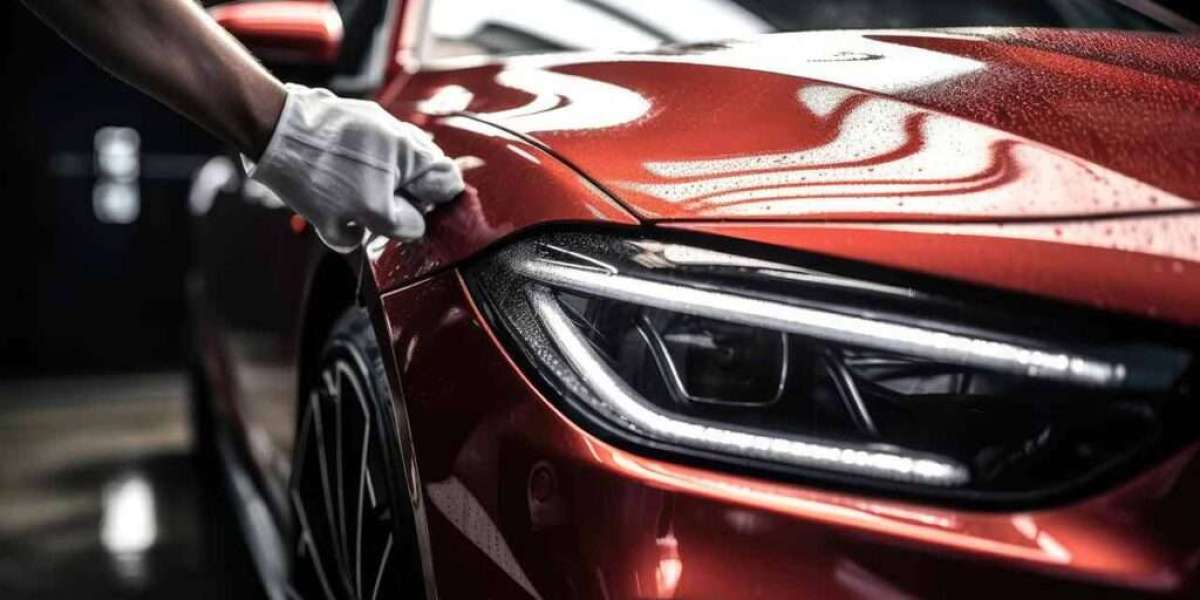

Few vehicle issues compromise both safety and appearance as silently as foggy headlights. That gradual yellowing happens so slowly that many drivers don't notice until nighttime visibility becomes genuinely dangerous. Yet this common problem has a straightforward solution—one that sits at the intersection of automotive safety and aesthetics. Understanding the options for headlight restoration, from budget DIY kits to comprehensive professional car detailing services, helps you make an informed choice that protects both your vision and your investment.
The Safety Imperative: Why Clear Headlights Matter
The numbers behind headlight degradation are startling. Clouded headlight lenses can reduce effectiveness by up to 80 percent, compromising night vision and creating a serious safety hazard . Research from AAA confirms that deteriorated headlights may produce only 22 percent of the light output compared to new ones .
To put this in perspective, discolored headlights typically project light only about 145 feet, while restored headlights can reach up to 365 feet . That extra 220 feet of visibility can mean the difference between spotting a hazard in time and reacting too late. When you consider that half of all traffic deaths occur between 6 p.m. and 6 a.m.—despite only a quarter of driving happening during those hours—the safety case becomes undeniable .
The Science Behind the Haze
Understanding why headlights degrade helps explain why restoration requires more than a quick wipe. Most modern vehicles use polycarbonate plastic lenses rather than glass . This durable thermoplastic allows manufacturers to create aerodynamic shapes, but it has one significant drawback: susceptibility to oxidation .
UV exposure is the primary culprit . Just as sunlight damages skin, it breaks down the plastic's molecular structure, causing yellowing and haze . In sunny climates like Florida, where UV intensity can reach 10 for most of the year, this degradation accelerates dramatically . Environmental factors compound the problem—road grime, salt spray, pollution, and even harsh detergents during washing all contribute to the gradual clouding .
The result is a lens that scatters light rather than focusing it, reducing both the distance and intensity of your headlight beam .
The DIY Approach: Promise vs. Reality
Walking through an auto parts store, those $20-50 headlight restoration kits look like an incredible bargain . The packaging promises showroom clarity in minutes. But the reality of DIY restoration often falls short of expectations.
The Process Deconstructed: A typical quality kit involves multiple steps—taping off surrounding paint, wet sanding with progressively finer grits (often 400, 1000, and 2000), polishing with clarifying compound, and finally applying a UV clear coat . Each step requires technique and patience.
Hidden Challenges: What the box doesn't show is the physical reality. The small sanding discs clog quickly, often requiring multiple kits for a single vehicle . Maintaining consistent pressure by hand is difficult, leading to uneven surfaces and "tiger stripes" that still scatter light . The included wipe-on sealants in many kits lack durability, often baking off within months in sunny climates . And the time investment—potentially 90 minutes per headlight—adds up quickly .
The Durability Question: Most DIY restorations last only 6-12 months before haze returns . This means repeating the entire labor-intensive process annually, essentially paying for a new kit each time.
Professional Restoration: The Comprehensive Approach
Professional headlight restoration, typically costing $75-150 per pair, follows a similar conceptual process but with critical differences in execution and materials .
Precision Equipment: Professionals use dual-action polishers that level plastic evenly, maintaining factory-specified lens thickness without the uneven pressure of hand sanding . This prevents the "thin spots" that can compromise lens integrity.
Industrial-Grade Protection: The most significant advantage is the final step. Professional services apply true UV-resistant clear coats or ceramic sealants that bond beneath the surface, blocking UV rays for 2-4 years . Some use two-part coatings that achieve 4H pencil hardness—significantly harder than the 2B-3B hardness of basic kit coatings .
Efficiency and Convenience: The entire professional process typically takes 40-60 minutes for both lenses, completed at your location with no effort on your part . Results are documented, and reputable services offer warranties .
Cost Comparison: Short-Term Savings vs. Long-Term Value
The financial analysis reveals an interesting picture. A $30 DIY kit that lasts 6-12 months requires repurchase annually—$60-90 over three years plus hours of personal labor . A $150 professional restoration lasting 2-4 years costs about $37-75 annually, includes no personal time investment, and delivers superior, guaranteed results .
For those who enjoy DIY projects and have the patience for meticulous work, the kit route can be satisfying. But for consistent, durable results, professional restoration typically offers better long-term value.
Beyond Safety: The Aesthetic and Resale Impact
Clear headlights transform a vehicle's appearance. That simple act makes the entire front end look newer and signals meticulous ownership . For sellers, this matters enormously—cloudy headlights create doubt about a vehicle's maintenance history, potentially reducing resale value by hundreds of dollars . Professionally restored headlights eliminate that hesitation and help justify stronger pricing .
Maintaining Your Investment
After professional restoration, simple habits extend the life of your clear headlights:
Use pH-balanced car wash soap—household detergents strip protective coatings
Park in shade when possible to reduce UV exposure
Rinse bug splatter promptly before acids can etch the surface
Consider periodic ceramic booster sprays to refresh protection
Conclusion
Headlight restoration sits at the perfect intersection of safety necessity and aesthetic enhancement. The choice between DIY and professional service ultimately depends on your priorities—budget and personal involvement versus guaranteed, long-lasting results with zero time investment. What's not optional is addressing those cloudy lenses. With nighttime visibility compromised by up to 80 percent and half of all traffic deaths occurring after dark, clear headlights are a safety essential, not a cosmetic luxury. For those seeking the convenience of expert results without the hassle, professional mobile car detailing services bring specialized headlight restoration directly to your location, ensuring your path forward is always clearly illuminated.
Frequently Asked Questions
How do I know if my headlights need restoration?
If your headlights appear yellowed, hazy, or cloudy, and nighttime visibility seems reduced, restoration is needed. A simple test: park facing a wall at night and note the beam pattern and brightness. Compare to photos of new headlights online if needed .
Will headlight restoration really improve nighttime visibility?
Absolutely. Testing shows restored headlights can project light up to 365 feet compared to 145 feet from oxidized lenses—a 220-foot improvement that provides crucial extra reaction time .
How long does professional headlight restoration last?
With quality UV-protective coating, professional restoration typically lasts 2-4 years . Durability depends on climate and maintenance—harsh sun and salt accelerate degradation.
What's the risk of doing it myself?
Primary risks include uneven sanding that creates light-scattering patterns, accidentally sanding through the protective UV layer entirely, and inadequate final sealing that leads to rapid re-oxidation within months .
Can I just replace the headlights instead?
Replacement is always an option, but costs significantly more—typically $200-500 per headlight assembly versus $75-150 for professional restoration of both lenses . Restoration is the economical choice for otherwise functional assemblies.
Does insurance cover headlight restoration?
Generally no. Restoration is considered routine maintenance, not damage repair. However, if headlights were damaged in an accident, replacement might be covered under your comprehensive or collision policy .