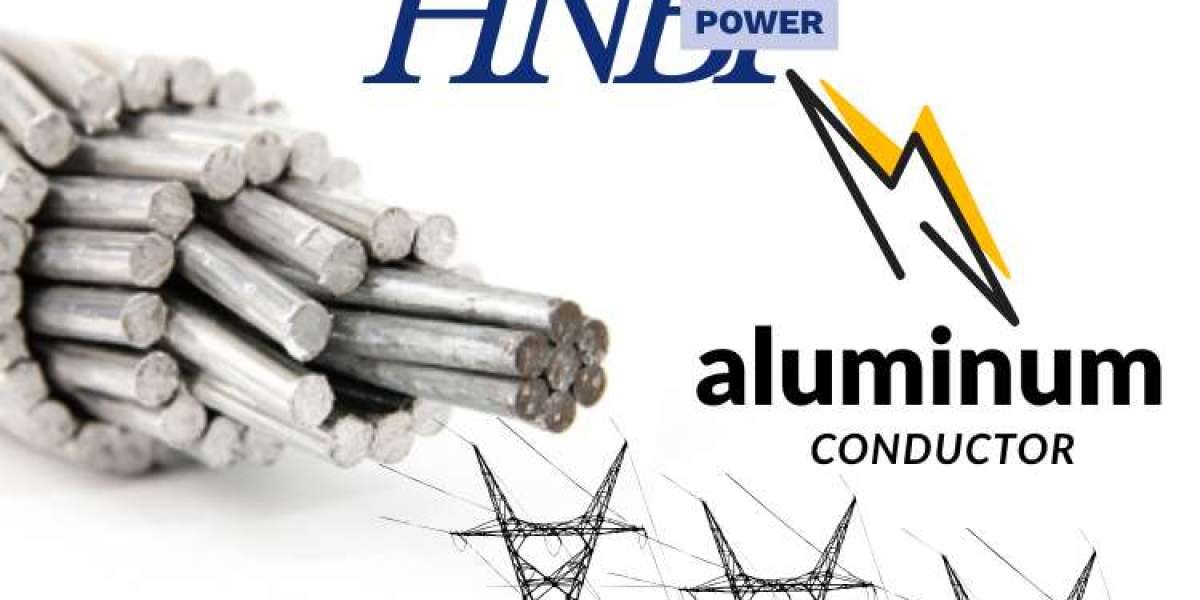

As global utilities and EPC contractors accelerate grid expansion, the aluminum conductor has become one of the most trusted solutions for overhead power transmission and distribution networks. For power engineers and procurement teams, selecting the right aluminum conductor is not only a matter of price it directly impacts line performance, reliability, mechanical safety, and long-term operating cost.
At HNBF Power, we design and manufacture a full portfolio of aluminum conductors and power cables to meet the demanding requirements of modern utility infrastructure projects worldwide.
Why Aluminum Conductor Is the Backbone of Overhead Lines
An aluminum conductor is an electrical conductor primarily made from aluminum or aluminum alloy strands. It is widely used in overhead lines because it delivers an excellent balance of:
High electrical conductivity
Low weight per kilometer
Superior corrosion resistance
Competitive lifecycle cost
Compared with copper, aluminum offers a much lighter solution, which allows utilities to reduce tower loads, extend span lengths, and simplify installation for long-distance transmission and distribution routes.
From urban distribution feeders to high-voltage transmission corridors, aluminum conductors remain the standard choice for modern grid construction.
Key Types of Aluminum Conductor Used in Power Networks
HNBF Power supplies a complete range of industry-approved aluminum conductor products for utility and industrial applications.
AAC – All Aluminum Conductor
AAC conductors are manufactured from pure aluminum strands. They are mainly used for:
Urban distribution lines
Short to medium span networks
Coastal and highly corrosive environments
AAC provides excellent conductivity and corrosion resistance, making it ideal for distribution grids where mechanical load requirements are moderate.
AAAC – All Aluminum Alloy Conductor
AAAC uses aluminum-magnesium-silicon alloy strands. Compared with AAC, it offers:
Higher tensile strength
Better sag performance
Improved resistance to vibration
AAAC aluminum conductor is commonly specified for medium and long spans in distribution and sub-transmission projects.
ACSR – Aluminum Conductor Steel Reinforced
ACSR combines aluminum strands with a galvanized steel core. This structure provides:
High mechanical strength
Longer span capability
Improved performance under heavy wind and ice loads
ACSR is widely used in high-voltage and extra-high-voltage transmission lines where mechanical reliability is critical.
ABC – Aerial Bundled Conductor
ABC systems bundle insulated aluminum conductors together. They are widely applied in:
Low-voltage distribution
Densely populated areas
Theft-prone or vegetation-rich regions
ABC significantly improves safety, reduces outages, and minimizes right-of-way clearance requirements.
Technical Advantages of Aluminum Conductor for Utilities
For utility engineers and project planners, aluminum conductor solutions offer several practical advantages:
Lightweight Construction
The lower mass of aluminum conductors reduces structural loading on towers and poles. This allows for lighter support structures and optimized foundation designs.
High Current Carrying Capacity
Modern aluminum conductor designs deliver high ampacity when properly selected with appropriate strand configuration, surface area, and operating temperature limits.
Excellent Corrosion Performance
Aluminum naturally forms a protective oxide layer, enabling stable operation in coastal, industrial, and high-humidity environments.
Optimized Installation Efficiency
Lower conductor weight improves handling, tensioning, and stringing operations during construction, reducing installation time and overall project risk.
Standards and Quality Compliance
For transmission and distribution projects, compliance with international standards is essential. HNBF Power manufactures aluminum conductor products in accordance with major global specifications such as:
International Electrotechnical Commission (IEC)
ASTM International
IEEE
All conductors undergo strict dimensional checks, tensile testing, electrical resistance measurement, and surface inspection to ensure consistent performance and traceability for utility procurement requirements.
How to Select the Right Aluminum Conductor for Your Project
Electrical Design Requirements
Engineers should evaluate:
Rated current and emergency ampacity
Line voltage class
System losses and efficiency targets
Mechanical and Environmental Conditions
Project designers must consider:
Span length and terrain
Wind pressure and ice loading
Seismic and vibration exposure
Installation and Lifecycle Cost
Procurement teams often assess:
Availability and lead time
Transportation and handling
Long-term maintenance strategy
By matching electrical performance with mechanical safety margins, utilities can achieve optimal network reliability and total cost of ownership.
HNBF Power’s Aluminum Conductor Manufacturing Capabilities
HNBF Power is a global manufacturer of overhead conductors and power cables, offering complete solutions including:
AAC, AAAC, ACSR, and ABC conductors
Low-voltage and concentric cables
Customized conductor constructions based on project specifications
Our production lines support multiple strand configurations, customized lay lengths, and special surface treatments for harsh environmental conditions. Every aluminum conductor batch is supported with full quality documentation to meet utility tender and EPC project requirements.
Our engineering team works closely with utilities, consultants, and contractors to recommend the most suitable conductor type for each transmission or distribution application.
Applications Across Utility and Industrial Projects
HNBF Power aluminum conductor solutions are widely used in:
National grid transmission lines
Urban and rural distribution networks
Renewable energy interconnection projects
Industrial and mining power infrastructure
Substation outgoing feeders
These applications demand stable electrical performance, consistent mechanical reliability, and long-term operational safety.
FAQs - Aluminum Conductor for Power Networks
1. What is the main benefit of using aluminum conductor instead of copper?
Aluminum conductors offer significantly lower weight and lower overall project cost while still delivering excellent electrical performance for overhead applications.
2. Which aluminum conductor type is best for long spans?
ACSR is commonly selected for long spans due to its steel-reinforced core, which provides higher tensile strength and improved sag control.
3. Is aluminum conductor suitable for coastal or industrial environments?
Yes. AAC and AAAC conductors perform particularly well in corrosive environments because aluminum naturally resists oxidation.
4. Can aluminum conductor be customized for special projects?
Yes. Strand structure, conductor diameter, alloy type, and mechanical performance can all be customized to match specific transmission or distribution requirements.
Partner with HNBF Power for Reliable Aluminum Conductor Solutions
Selecting the right aluminum conductor is essential for building safe, efficient, and future-ready power networks. Whether you are planning a new transmission corridor or upgrading an existing distribution system, HNBF Power delivers proven conductor solutions backed by engineering expertise and global manufacturing capability.
Contact HNBF Power today to discuss your project requirements and receive customized aluminum conductor solutions tailored to your utility or EPC applications.