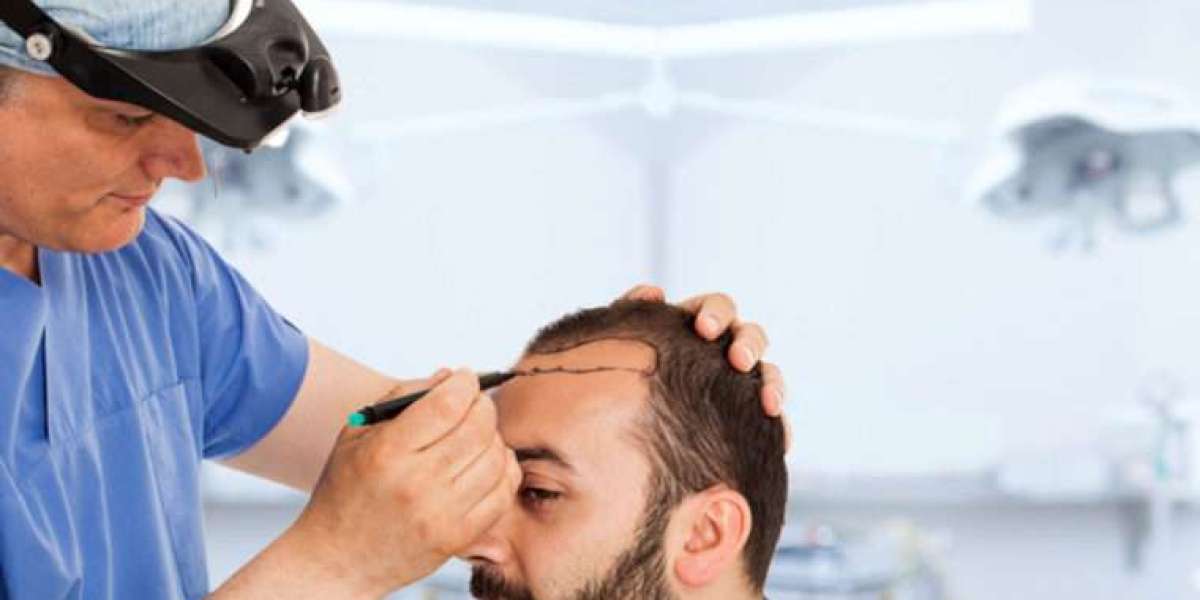
Embarking on a journey to restore your hair is a life-changing decision that often begins with a visit to one of the Kingdom’s high-end medical suites. A Hair Transplant in Riyadh has become a hallmark of personal grooming for the modern executive, blending the latest 2026 technology with world-class clinical expertise. However, while the brochures focus on the glamorous "before and after" shots, there is a layer of surgical reality that often goes unsaid during a standard consultation.
To ensure your investment in your image is successful, you need to look beyond the marketing. Here are 10 insider truths your surgeon might not explicitly mention, but that every patient in Riyadh should know.
1. The "Final Result" is a 12-Month Marathon
Surgeons often highlight that you can return to work in a week. While true, your hair will not look "restored" for a long time.
The Shedding Phase: Around week 3, your newly transplanted hair will likely fall out. This "shock loss" is a normal biological response, but it can be startling if you aren't prepared for it.
The Ugly Duckling Phase: Between months 2 and 4, your scalp may look thinner than before you started. The real transformation only begins to peak at the 9 to 12-month mark.
2. Your Donor Area is a Finite Resource
The most important "secret" is that you have a limited supply of "permanent" hair at the back of your head. If a clinic over-harvests your donor area to give you extreme density today, you may not have enough hair left for a second procedure if your natural hair loss continues as you age. A great surgeon in Riyadh prioritizes long-term graft management over immediate, temporary density.
3. "No-Shave" Comes with a Success Trade-off
The "Executive" or "No-Shave" FUE is highly popular in Riyadh's business districts because it offers total discretion. However, what surgeons won't always highlight is that shaving the head allows for much higher precision. Shaving gives the surgical team a clearer view of the hair's exit angle, which can result in a higher graft survival rate and better overall density.
4. Post-Op Medications are Often Mandatory
A transplant doesn't stop your natural hair loss; it only fixes the bald spots. To keep the rest of your non-transplanted hair from falling out, many surgeons will quietly expect you to stay on medications like Finasteride or Minoxidil indefinitely. Without these, you might end up with a "floating" island of transplanted hair as the native hair around it continues to recede.
5. The "Technician Factor" Matters
In many high-volume clinics globally, the lead surgeon may only design the hairline and leave the thousands of extractions and implantations to technicians. In Riyadh’s 2026 medical market, the best results come from clinics where the surgeon remains hands-on for the critical phases of the procedure. Always ask exactly who will be holding the punch tool.
6. Local Anesthesia is the Only "Painful" Part
Clinics often call the procedure "painless." While you won't feel anything once the scalp is numb, the initial 5 to 10 minutes of local anesthesia injections can be quite uncomfortable. Many top Riyadh clinics now offer "Needle-Free" anesthesia (pressure-based delivery), which significantly reduces this initial discomfort—but you usually have to ask for it.
7. Your Lifestyle Directly Impacts the Yield
Surgeons provide aftercare sheets, but they may not emphasize how strictly you must follow them.
Smoking: In a city where social smoking is common, it’s vital to know that nicotine constricts blood vessels, potentially "starving" your new grafts of the oxygen they need to survive the first 72 hours.
Prayer Positions: For Muslim patients, surgeons may advise modifying prayer positions (avoiding deep prostration) for the first few days to prevent blood pressure spikes in the scalp.
8. Scalp Laxity and Texture Influence Results
Not all scalps are created equal. If your scalp skin is very tight or very thick, the extraction process is more difficult and can lead to higher "transection rates" (damaged grafts). A surgeon may not tell you that your specific scalp type makes you a "difficult" candidate, which is why a thorough pre-op scalp analysis is non-negotiable.
9. Hidden Costs: The "Aftercare Bundle"
The sticker price of a Hair Transplant in Riyadh usually covers the surgery. However, for optimal results, you will likely need:
PRP Therapy: 3 to 6 sessions to boost growth.
Specialized Shampoos: Medical-grade kits for the first month.
Laser Caps: Low-level laser therapy (LLLT) devices for home use.
Always ask if these are included or if they will be an additional cost.
10. The Surgeon’s "Aesthetic Style" Varies
Just like painters, surgeons have styles. Some prefer a very straight, aggressive "Turkish" hairline, while others prefer a softer, more irregular "European" look. Surgeons won't tell you their style is a mismatch for your face—they will simply do what they do best. You must look at their portfolio of previous Riyadh patients to ensure their artistic vision aligns with yours.
Comparison of Riyadh Hair Transplant Options (2026)
| Feature | Standard FUE | Sapphire FUE | DHI (Direct Hair) |
| Recovery Time | 10 - 14 Days | 5 - 7 Days | 3 - 5 Days |
| Graft Survival | High | Very High | Maximum |
| Shaving Required? | Yes | Usually | No (Optional) |
| Price (Est. SAR) | 8k - 15k | 12k - 25k | 15k - 35k |
Conclusion: Knowledge is Your Best Density
A Hair Transplant in Riyadh is an incredible tool for self-transformation, but it is a medical procedure that requires honesty and realistic expectations. By understanding these ten "untold" factors, you can walk into your consultation not just as a patient, but as an informed partner in your own restoration.