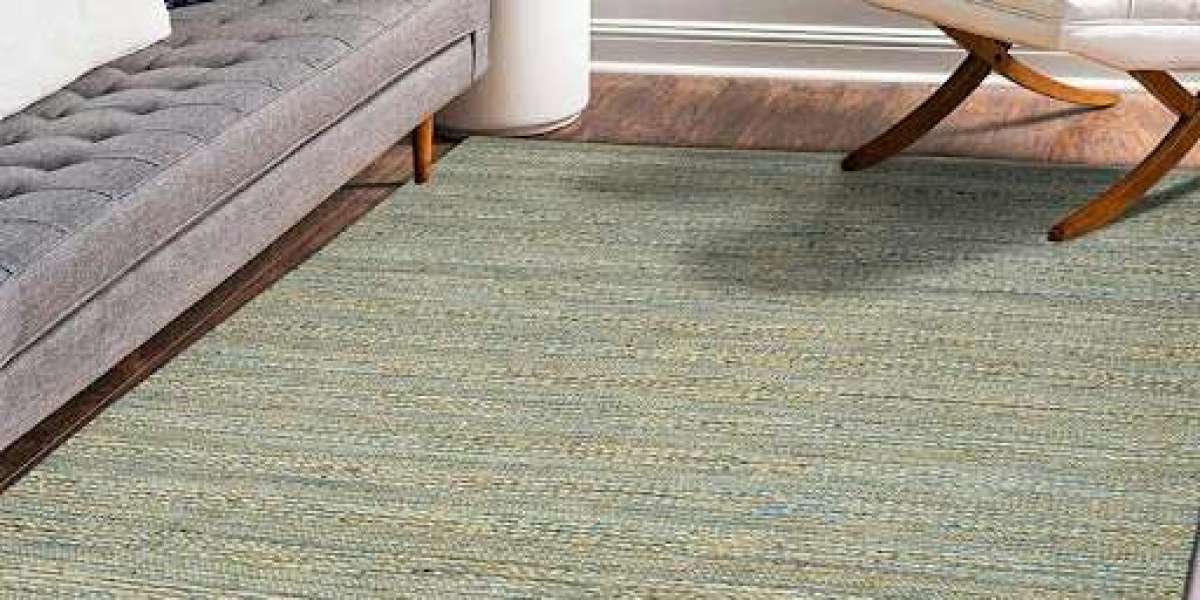

Modern interiors keep leaning toward organic texture, rooms that breathe, materials that aren't just plastic dressed up to look nice. Hardwood, polished concrete, architectural stone — all of it gives you clean lines, sure, but it can also leave a room feeling stark, a little cold acoustically too. Natural fiber floor coverings fill this need. There is warmth, texture, and an organic quality that no synthetic product made from petroleum can achieve.
Saraswati Global works direct-to-trade. We create sustainable, handcrafted floor coverings using traditional Indian handloomed techniques while incorporating a broader, global design perspective. Our products are available throughout the United States and other countries.
The Material Partnership: Why Jute & Cotton Belong Together
An engineered fabric would use two different types of plant fibers, each with its own role.
Jute is a fast-growing plant that creates products with a natural look and a golden brown color. Its fibers are rough and therefore ideal for creating a contemporary boho, coastal, or transitional style space. In addition to being physically supportive due to its high tensile strength, jute creates a strong base for rugs when the fibers are utilized in the production process. As such, the rug will not stretch or distort under the weight of heavy furniture. Lastly, jute is a sustainable option because it is fully biodegradable and renewable, and requires little water or chemicals to produce; this is important if one of the reasons you are considering natural fibers is their sustainability.
Cotton is really there to soften all of that. Cotton yarn softens the harshness of jute, making it easier on bare feet when used in a family room or master suite. Also, because cotton absorbs dye easily, weavers can create clean geometric border designs, subtle stripe patterns, and two-colored contrast designs throughout the rug with little difficulty. In addition, the warp and weft of cotton allow the entire rug to be more flexible than other rugs made with only jute. This flexibility enables the rug to lay flat on hardwood floors rather than curl up at the ends.
Comparing Jute & Cotton Blends to Alternative Rug Materials
Seeing how a jute-cotton blend compares with other popular types of rugs will help you determine which of the options best fits your needs in terms of placement within a floor plan.
The combination of Jute and Cotton provides a chunky, organic texture that is softened by a smooth and breathable cotton. Structural strength is high — good for medium-to-high foot traffic in a dry room. Moisture tolerance is low, though, so keep it away from a humid bathroom, a damp basement, or an uncovered patio. Works well in casual living room rugs, relaxed bedroom rugs, entry foyers, sunrooms.
Pure jute rugs feel firm, heavily textured, ruggedly natural underfoot. Wear resistance against dry foot traffic is excellent. But jute absorbs ambient moisture pretty readily, and standing water can actually weaken the plant fiber over time. Best kept to low-moisture formal living room carpets, a cozy reading nook, a dry dining space.
Hand-knotted rugs and hand-tufted rugs go a different direction entirely — dense, springy, genuinely plush underfoot. Longevity is outstanding, and the natural lanolin in wool resists spills and daily dirt almost entirely. Moderate moisture resistance provides enough protection for professional immersion washing or standard localized stain removal. They are best suited for primary master bedroom suites, formal living rooms, and high-traffic family lounge areas.
The Recycled PET Rug is made with fibers produced from recycled plastic bottles. It provides the same softness as wool while being extremely durable and completely resistant to all types of weather. This rug is totally water repellent – no spills, no humidity will penetrate its surface. This rug would be great in many different areas such as on your covered porch, in your mudroom, in your kitchen, or even in any dining area where there may be frequent spills.
Weaving Construction Techniques: Crafting Durability
The way that you construct a jute-cotton rug will determine its durability, the surface texture of the rug, and the amount of flexibility in the rug.
Hand-loomed rugs and flat-woven jute-cotton builds are made by artisans who use manual hand-looms to interlock thick jute warps with soft cotton wefts. The result is a flat, reversible rug with no raised pile. They last approximately 10-15+ years. These rugs are completely glueless, lightweight, and breathable; therefore, they lie flat and can easily be placed under doors that have low clearances, or pieces of furniture.
Braided and block-woven styles take a different approach — individual braided strands of jute and cotton stitched together into concentric ovals or geometric panels. Lifespan's a bit shorter: 8 to 12 years. What you get in return is a casual, handcrafted farmhouse look, with reinforced edges and a natural variation in texture piece to piece.
Shape and Geometry: Selecting the Right Silhouette
Getting the form correct affects both spatial relationships and how easily people will navigate through the space.
Classic rectangular rugs remain the most popular choice when defining areas of an open-plan living or dining space. A 8x10 or 9x12 jute-cotton rug placed beneath a group of seating will provide a sense of structure to the placement of the sofas and accent chairs while also providing an additional layer of natural warmth in what is otherwise a modern, hard-surfaced environment.
The oval rug is somewhat unique. When used in the entryway (foyer), long and thin hallways, or even the round breakfast area, the oval shape will soften the sharp corners, while the curved edges guide walking patterns throughout the space in a casual manner.
Essential Care & Maintenance Guidelines
Plant fiber reacts to moisture pretty differently than wool does, so the care routine here actually matters.
Vacuum regularly on a suction-only setting, or just switch off the beater bar. Skip the aggressive carpet rollers — they'll pull at natural fiber and fray a woven edge over time.
Keep it strictly dry. Jute and cotton belong in dry indoor spaces only — never soak it, never run a steam cleaner over it, since too much moisture can make jute shrink, warp, or worse, start growing mold.
Blot spills the second they happen, with a dry, un-dyed white cotton cloth. Don't scrub — aggressive rubbing just pushes the liquid deeper into the plant fiber instead of lifting it out.
Always put a dense, non-slip, breathable rug pad underneath. It cushions impact, stops slipping, and lets air actually circulate under the rug rather than trapping moisture against the floor.
And rotate it 180 degrees every six months, so foot traffic and natural sunlight wear the rug evenly instead of fading or flattening one side faster.
Discover Handcrafted Jute & Cotton Collections
Bringing organic warmth, sustainable material, and a style that doesn't really date into your home lifts modern interior design without much effort at all.
Explore our curated collections of handcrafted natural fiber textiles, or consult with our trade design team online at Saraswati Global Jute & Cotton Rugs.