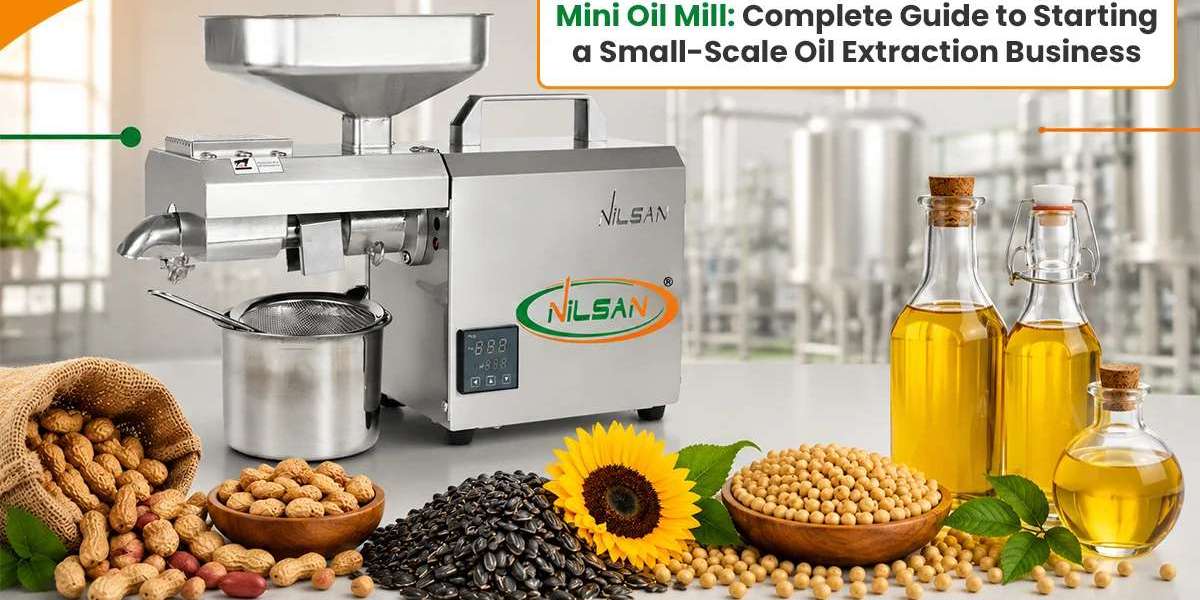

A Mini Oil Mill is a compact oil extraction setup designed to produce edible oil from seeds and oil-bearing materials on a small or medium scale. It can be suitable for entrepreneurs, farmers, local retailers, and businesses that want to process seeds into fresh cooking oil without setting up a large industrial plant.
Compared with a large-scale oil processing facility, a Mini Oil Mill generally requires less space, equipment, and manpower. Depending on the machine and seed being processed, it can be used for materials such as groundnut, sesame, mustard, sunflower, coconut, and other oilseeds.
For someone planning to enter the oil production business, understanding the equipment, working process, production requirements, and maintenance needs is important before investing in a setup.
What Is a Mini Oil Mill?
A Mini Oil Mill is a small-scale oil processing unit that uses mechanical pressure to extract oil from seeds and nuts. It generally combines an oil press with supporting equipment such as a seed cleaning system, oil filtration unit, and storage containers.
The main purpose is to convert oil-bearing raw materials into usable oil while separating the remaining solid material as oil cake.
A mini setup can be useful where production requirements are lower than those of a full-size commercial oil mill. It can also provide flexibility for businesses that want to process different types of seeds according to local demand.
How Does a Mini Oil Mill Work?
The basic operation of a Mini Oil Mill involves several stages. Each stage contributes to the quality and consistency of the final product.
1. Seed Cleaning
The first step is to remove stones, dust, husks, and other unwanted materials from the seeds. Clean raw materials help protect the machinery and maintain consistent processing.
2. Seed Preparation
Depending on the type of seed, preparation may involve drying, conditioning, or other suitable treatment. The correct preparation can affect both machine performance and oil recovery.
3. Oil Extraction
The prepared seeds are fed into the oil press. A rotating screw mechanism moves the material through the pressing chamber while pressure is applied. This pressure releases oil from the seeds.
The extracted oil is collected separately, while the compressed solid material exits as oil cake.
4. Oil Filtration
Freshly extracted oil can contain small seed particles and natural sediment. An oil filtration machine can be used to remove these particles before the oil is transferred to storage or packaging.
5. Storage and Packaging
Filtered oil should be stored in clean, food-appropriate containers. If the oil is being sold directly to customers, proper packaging and labelling should also be considered as part of the overall production process.
What Equipment Is Required for a Mini Oil Mill?
A complete setup may involve more than just an oil press. The equipment required depends on the scale of production and the type of seeds being processed.
Mini Oil Press Machine
The oil press is the main machine responsible for extracting oil from the prepared seeds. Machine capacity should be selected according to the expected daily production.
Seed Cleaner
A seed cleaner helps remove foreign materials before the seeds enter the pressing machine. This can help reduce unnecessary wear on the pressing components.
Oil Filter Machine
Filtration helps separate fine solid particles from freshly extracted oil and prepares the oil for storage or packaging.
Storage Tanks
Clean food-grade storage containers or tanks are needed to hold the filtered oil before it is packaged or supplied to customers.
Packaging Equipment
For businesses selling bottled oil, packaging equipment can help maintain consistent filling and presentation.
A conveyor may also be added when the production layout requires materials to be moved between different processing stages.
Which Seeds Can Be Processed in a Mini Oil Mill?
The suitability of a Mini Oil Mill depends on the machine model and its specifications. Many small-scale oil processing setups can be used for a range of oil-bearing seeds.
Common examples include:
- Groundnut
- Mustard
- Sesame
- Sunflower
- Flaxseed
- Coconut and copra
- Soybean
- Castor
- Neem
- Safflower
Different seeds have different moisture levels, oil content, hardness, and processing requirements. Therefore, it is important to confirm that the selected machine is suitable for the specific raw materials you plan to use.
Benefits of Setting Up a Mini Oil Mill
A Mini Oil Mill can provide several practical advantages for small-scale oil producers.
Lower Space Requirement
A compact oil processing setup generally requires less floor space than a large commercial plant. This can make it easier for small businesses to organise their production area.
Suitable for Small-Scale Production
Businesses do not always need industrial-level production from the beginning. A mini setup can be selected according to current requirements and expanded later as demand increases.
Multiple Product Opportunities
Different oilseeds can produce different types of edible oil. This allows businesses to create a product range rather than depending on a single oil.
For example, a producer may offer groundnut oil, sesame oil, and mustard oil according to customer demand and raw material availability.
Easier Local Distribution
Small oil producers can focus on nearby households, grocery stores, restaurants, health-food retailers, and other local customers. This can reduce the need to immediately build a large distribution network.
Value Addition to Oilseeds
Farmers and agricultural businesses can process their own oilseeds instead of selling only the raw material. Processing can turn the seed into a finished oil product while also producing oil cake as a secondary output.
Mini Oil Mill vs. Large Oil Mill
The main difference between a Mini Oil Mill and a large oil mill is production scale.
A mini setup is generally designed for lower production volumes, smaller workspaces, and a limited number of operators. It can be suitable for local sales and small businesses.
A large oil mill, on the other hand, is designed for significantly higher production volumes and may require larger premises, more equipment, higher power requirements, multiple operators, and a more extensive processing system.
The right choice depends on your expected production rather than simply choosing the largest available machine.
Factors to Consider Before Buying a Mini Oil Mill
Before purchasing equipment, consider the following factors carefully.
Production Capacity
Estimate how many kilograms of seeds you need to process per hour and per day. This gives you a realistic starting point for selecting machine capacity.
Seed Type
Identify the primary seeds you intend to process. If you plan to process several types, confirm their compatibility with the machine.
Power Requirement
Check the motor power and electrical supply required by the selected model. Your available electricity connection should be suitable for the machine.
Machine Construction
For edible oil production, pay attention to the materials used in parts that come into contact with the seeds and oil. Food-grade materials can make cleaning and hygiene management easier.
Maintenance and Spare Parts
Ask about routine maintenance, replacement components, and availability of spare parts before purchasing. Easy access to service support can help reduce unnecessary downtime.
Future Expansion
Consider whether your expected production may increase in the future. A machine that matches your current requirements while allowing room for business growth can be more practical than replacing equipment too soon.
Mini Oil Mill Business Applications
A Mini Oil Mill can be used in several types of businesses and operations.
Small oil brands: Entrepreneurs can produce and sell their own packaged oil to local customers.
Farm-based processing: Farmers can process suitable oilseeds into finished oil rather than selling only raw seeds.
Local grocery businesses: Retailers can add locally produced oil to their product range.
Restaurants and food businesses: Businesses that require specific cooking oils can source or produce oils according to their requirements.
Small-scale oil processing units: Entrepreneurs can establish a dedicated processing unit focused on selected oilseeds and local demand.
In each case, the business model should be planned around raw material availability, production capacity, operating costs, packaging, and the target customer base.
Maintenance Tips for a Mini Oil Mill
Regular maintenance is important for keeping the equipment operating properly.
Clean the pressing chamber and other relevant components after production to prevent oil and seed residue from building up. Check the screw shaft, pressing parts, and other wear components regularly.
Lubricate moving and mechanical components according to the manufacturer's maintenance instructions. Avoid continuously operating the machine beyond its recommended capacity, as excessive loading can increase wear.
It is also useful to keep a regular maintenance record. Recording cleaning, lubrication, inspections, and replacement of worn parts can make routine servicing easier to manage.
Why Choose Nilsan India for Mini Oil Mill Equipment?
Nilsan India offers mini commercial oil press machines and other oil-processing equipment for different production requirements. Its product range includes domestic oil presses, mini commercial oil presses, commercial oil press machines, cold and organic oil press machines, and oil filtration equipment.
This range allows businesses to consider equipment based on their intended production scale, seed type, and processing requirements. Nilsan India also manufactures other food-processing machinery, which can be useful for businesses developing a wider processing setup.
Conclusion
A Mini Oil Mill can be a practical option for entrepreneurs, farmers, retailers, and small businesses looking to enter or expand in oil processing. Its smaller production scale and compact setup can make it suitable for local oil production without the infrastructure associated with a large industrial oil mill.
Before investing, consider the type of seeds, required production capacity, power supply, machine construction, filtration requirements, maintenance, and future business plans. Selecting equipment based on actual production needs can help create a more suitable and manageable oil processing operation.
With the right equipment and proper operating practices, a mini-scale setup can support the production of different edible oils while providing a foundation for future business expansion.