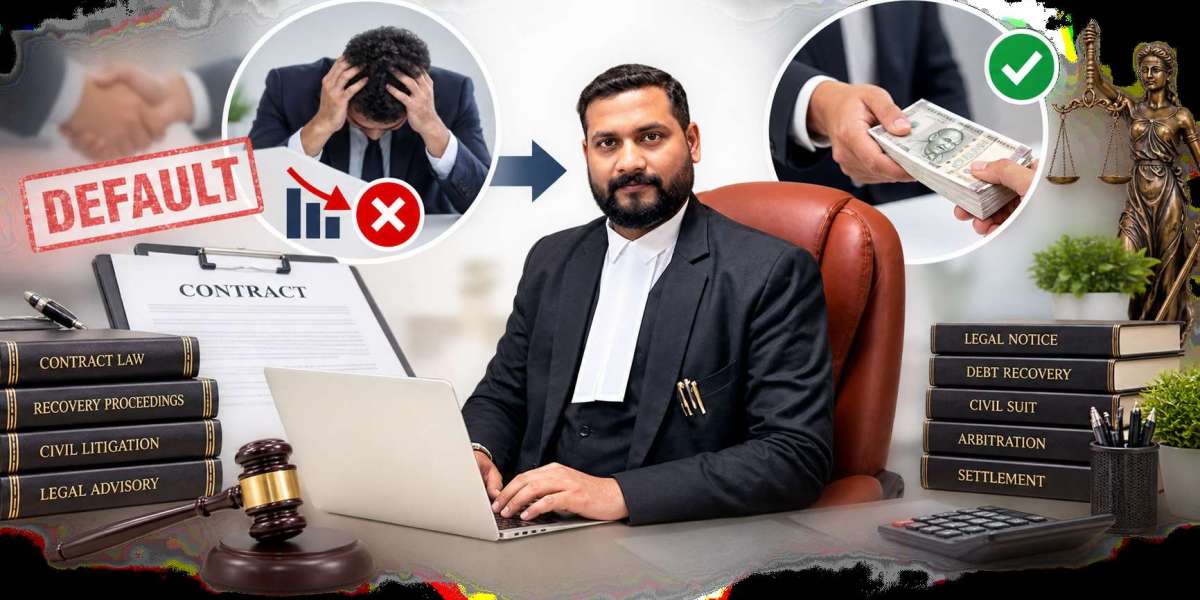

Late or unpaid invoices can create serious problems for any business. A company may deliver products, complete a project, or provide professional services on time, but sometimes a client fails to make the agreed payment. When reminders and follow-ups do not work, businesses may need to consider legal options to recover their dues.
However, money recovery should be handled carefully and through proper legal procedures. Aggressive calls, threats, or improper pressure can create additional disputes instead of solving the problem. Consulting a lawyer for money recovery in Noida can help a business understand its available remedies and choose an appropriate legal route based on the agreement, documents, amount involved, and circumstances of the default.
Start With Proper Documentation
Before taking legal action, businesses should collect all documents connected with the transaction. Strong documentation can make it easier to establish that money is genuinely due.
Important records may include contracts, purchase orders, invoices, delivery receipts, account statements, emails, WhatsApp conversations, acknowledgment of debt, payment commitments, and bank transaction details. If services were provided, records showing completion or acceptance of the work may also be useful.
Businesses should preserve original records wherever possible. Clear documentation helps establish what was agreed, what was supplied or performed, when payment became due, and how much remains outstanding.
Communicate With the Client First
Legal proceedings are not always the first step. Sometimes a payment remains pending because of an accounting issue, temporary financial difficulty, disagreement over an invoice, or communication gap.
A business can initially send a professional written reminder mentioning the invoice number, outstanding amount, due date, and payment details. Keeping this communication professional is important because these records may later become relevant if the dispute reaches a legal forum.
If the client acknowledges the outstanding payment and requests additional time, businesses should consider documenting any revised payment arrangement clearly.
Send a Formal Legal Notice
When normal reminders fail, a formal legal notice may be considered. A legal notice generally communicates the nature of the transaction, the outstanding amount, relevant contractual obligations, previous requests for payment, and the action that may follow if the matter remains unresolved.
A lawyer for money recovery in Noida can review the transaction documents before preparing a notice. This is useful because the legal remedy and wording of the notice may depend on the nature of the transaction and the available evidence.
In some cases, receiving a formal notice encourages a defaulting client to respond, negotiate, or clear the outstanding amount without further proceedings.
Consider Negotiation and Settlement
Going to court can require time and resources. Therefore, businesses may consider negotiation or settlement when appropriate.
For example, a client facing temporary cash-flow problems may agree to make payment in installments. In another situation, both parties may resolve a genuine disagreement regarding the amount payable.
Any settlement should ideally be documented clearly. The document can specify the accepted amount, payment schedule, deadlines, consequences of default, and other agreed terms. This reduces the possibility of confusion later.
Explore Civil Money Recovery Proceedings
If settlement efforts are unsuccessful, a business may consider civil proceedings for recovery of money, subject to the facts and applicable law.
The appropriate procedure depends on factors such as the nature of the agreement, amount involved, supporting documents, jurisdiction, and applicable limitation period. Certain claims based on specified written documents may potentially qualify for summary procedures, while others may require ordinary civil proceedings.
Businesses should also pay attention to limitation periods. Waiting too long to pursue a claim can affect the legal remedies available. Professional advice can help determine the applicable timeline in a particular case.
Use Arbitration When the Contract Requires It
Many commercial agreements contain arbitration clauses. Such clauses may require disputes between the parties to be resolved through arbitration rather than ordinary court proceedings.
Businesses should therefore review the dispute-resolution section of their contracts before initiating proceedings. If a valid arbitration clause applies, the recovery dispute may need to follow the agreed arbitration mechanism.
Arbitration can be particularly relevant in business-to-business transactions where parties have already agreed on how contractual disputes will be handled.
Consider Remedies Available to MSMEs
Micro and small enterprises may have additional remedies for delayed payments under India's MSME legal framework, subject to eligibility and applicable statutory requirements.
Eligible enterprises may be able to approach the appropriate Micro and Small Enterprises Facilitation Council regarding certain delayed-payment disputes. Because eligibility, registration status, transaction details, and procedural requirements matter, businesses should verify whether this mechanism applies to their particular situation.
Dishonoured Cheques May Require Separate Action
If a client issues a cheque toward a legally enforceable debt and that cheque is dishonoured, separate legal remedies may become relevant under applicable Indian law.
Such cases can involve strict procedural requirements and deadlines. Businesses should therefore avoid delaying once they receive information about a dishonoured cheque. The underlying documents, cheque details, bank return information, and communication between the parties should be preserved carefully.
How Legals365 Can Assist Businesses
Every recovery dispute has different facts. At Legals365, businesses can seek legal assistance in reviewing agreements, invoices, communications, payment records, and other supporting documents before deciding how to proceed.
Depending on the circumstances, legal assistance may involve drafting notices, evaluating settlement possibilities, reviewing contractual dispute-resolution provisions, or pursuing an appropriate recovery process. The objective should be to use a lawful and commercially sensible approach rather than escalating a dispute unnecessarily.
Conclusion
Recovering money from a defaulting client requires more than repeatedly asking for payment. Businesses should maintain proper documentation, communicate clearly, understand contractual terms, and take legal action within applicable timelines.
From professional reminders and legal notices to settlement, arbitration, MSME mechanisms, or civil proceedings, different options may be available depending on the case. Consulting a lawyer for money recovery in Noida can help businesses understand these options and take appropriate steps while protecting their legal and commercial interests.