
UPSC Mains preparation is different from simply reading books and making notes. The written papers require you to understand a topic, connect it with the question and present your thoughts clearly within a limited time.
Many aspirants spend months collecting study material but give very little time to writing answers. A better approach is to combine reading, revision and answer writing from the beginning.
Understand What UPSC Mains Requires
Before starting your UPSC Mains preparation, spend some time with the syllabus and previous-year papers.
The syllabus tells you what areas you need to cover, while previous-year questions show how those areas are asked in the examination.
This combination can help you study with a clearer purpose. Instead of reading everything about a topic, try to understand the parts that are relevant to the syllabus.
Build Your Study Material Around the Syllabus
There is plenty of UPSC exam study material available, including books, notes, question papers and online resources. You do not need to use all of them.
Try to keep your sources limited and organised.
For each subject, you can maintain:
- One main book or study source
- Short revision notes
- Previous-year questions
- Current-affairs examples
- Answer-writing practice
This makes revision easier because you know exactly where to return when you need to revise a topic.
Reading for Mains Is Different
While reading a chapter, do not focus only on remembering facts. Ask yourself how the information could be used in an answer.
For example, if you are studying a topic related to governance, think about:
What is the issue? Why does it happen? What are its effects? What examples can I use? What can be done?
This style of reading helps you develop the habit of analysing topics instead of simply memorising them.
Start UPSC Mains Answer Writing Early
You do not have to wait until your complete syllabus is finished before starting answer writing.
Initially, you can write one or two answers at a time. The main purpose is to become comfortable with understanding questions and presenting information within a word limit.
For UPSC Mains answer writing, focus on three basic things:
Relevance: Answer what the question actually asks.
Structure: Present your points in an organised manner.
Clarity: Keep your language simple and make your argument easy to follow.
With regular practice, you can gradually improve your speed and answer structure.
A Simple Answer Structure
There is no single format that every answer must follow, but a basic structure can make writing easier.
Introduction
Start by directly introducing the topic. Depending on the question, you can use a definition, context, fact or short explanation.
Main Body
Break the main part into logical points. Use headings or subheadings where they improve readability.
Where relevant, include:
- Examples
- Government initiatives
- Constitutional provisions
- Reports or data
- Current affairs
- Advantages and challenges
- Different perspectives
Conclusion
End with a short and relevant conclusion. If appropriate, mention a practical way forward rather than simply repeating the introduction.
Learn From Your Mistakes
Writing more answers is not enough if you do not review them.
After completing an answer, check:
- Did I address every part of the question?
- Was my answer properly structured?
- Did I use relevant examples?
- Was I able to finish within the word limit?
- Were my points repetitive?
- Was my introduction and conclusion relevant?
Keep track of repeated mistakes. Over time, this can show you exactly where you need to improve.
Revision Should Be Part of Your Routine
One common problem in UPSC preparation is reading new material continuously while forgetting older topics.
Set aside regular time for revision. You can revise a topic after a few days, then again after a longer interval.
Short notes can be particularly useful at this stage. Instead of rewriting entire chapters, note down important concepts, examples, facts and points that you are likely to use in answers.
Use Current Affairs With Static Subjects
Current affairs become more useful when you connect them with the subjects you are already studying.
For example, when a new development relates to governance, environment, economy or international relations, consider how it connects with your static syllabus.
This gives you examples that can make your Mains answers more relevant without turning your preparation into a collection of current-affairs facts.
Don't Ignore Previous-Year Questions
Previous-year questions should remain part of your preparation throughout the process.
You can use them in different ways:
During study: Check how a topic has been asked.
During revision: Try answering questions without looking at your notes.
During practice: Set a time limit and write complete answers.
This also helps you identify topics that repeatedly require deeper understanding.
Keep Your Book List Practical
You do not need a separate book for every possible topic. Choose resources that cover your syllabus properly and that you can revise.
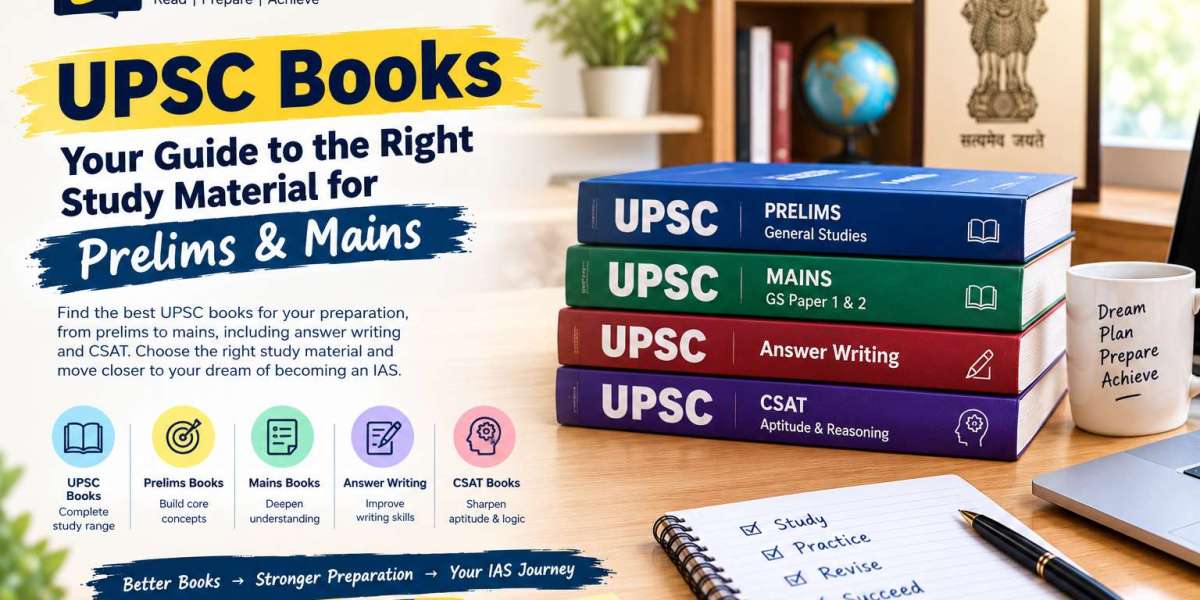
You can explore UPSC Mains preparation books when building your Mains study material.
The important thing is to avoid constantly switching between resources. Once you have a useful source, spend more time understanding and revising it.
A Simple Daily Routine
A practical Mains-focused routine can include four activities:
Reading: Learn a new topic.
Revision: Review something studied earlier.
Answer Writing: Write one or more questions.
Current Affairs: Connect recent developments with the syllabus.
You can adjust the amount of time spent on each activity according to your preparation stage.
Final Thoughts
UPSC Mains preparation is a gradual process. Strong answers do not usually develop after writing just a few questions. They improve through repeated practice, revision and learning from mistakes.
Keep your study material manageable, understand the syllabus, use previous-year questions regularly and start answer writing before the final stage of preparation.
The aim is not to write complicated answers. It is to understand the question, present relevant information in a logical structure and complete the answer within the given time.