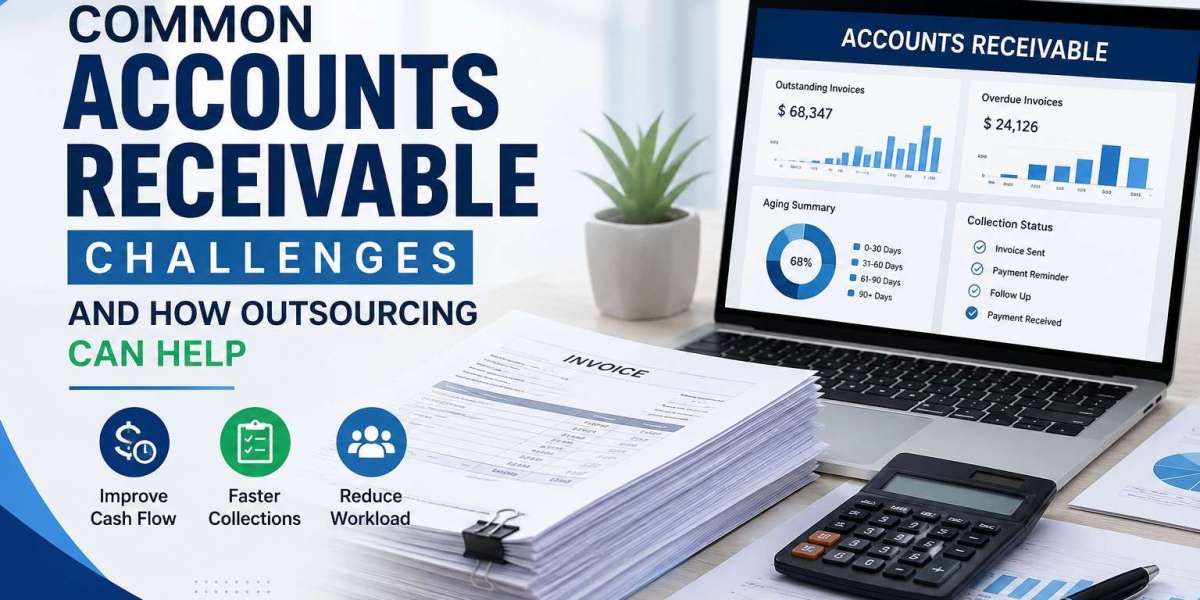

Efficient accounts receivable management is essential for maintaining steady cash flow and healthy business operations. When invoices are delayed, payments remain outstanding, or customer accounts are not properly reconciled, businesses can face unnecessary financial pressure. As volume transactions increase, managing these activities internally can also place additional demands on accounting teams.
From invoice errors to inconsistent payment follow-ups, businesses face several challenges in managing receivables. Accounts Receivable Outsourcing can help address these issues by providing professional support, structured processes, and scalable solutions.
What Is Accounts Receivable Management?
Accounts receivable management is the process of monitoring and collecting payments owed to a business by its customers. It typically includes creating and sending invoices, tracking outstanding balances, following up on overdue payments, recording payments, reconciling customer accounts, and preparing receivables reports.
A well-managed AR process helps businesses maintain better cash flow visibility and reduces the risk of delayed or missed payments.
Common Accounts Receivable Challenges
1. Delayed Customer Payments
Late payments can create cash flow challenges, especially for businesses that rely on predictable customer payments to manage operating expenses. Without regular monitoring and follow-ups, overdue invoices can continue to accumulate.
A structured collection process can help businesses identify overdue accounts and take timely action.
2. Invoice Errors and Delays
Incorrect invoice amounts, missing information, duplicate invoices, or billing errors can lead to payment delays and customer disputes. Resolving these issues often requires additional communication between accounting teams and customers.
Accurate and timely invoicing is therefore an important part of effective receivables management.
3. Inconsistent Payment Follow-Ups
Following up with customers about unpaid invoices requires regular attention. Internal accounting teams may struggle to maintain consistent communication when they are also responsible for bookkeeping, reporting, tax preparation, and other financial tasks.
Inconsistent follow-ups can result in longer payment cycles and increased outstanding receivables.
4. Difficulty Tracking Outstanding Receivables
Businesses need to know which invoices are current, approaching their due dates, or already overdue. When receivables are tracked manually or across multiple systems, obtaining an accurate overview can become challenging.
Better tracking and reporting can help management identify potential collection issues earlier.
5. Reconciliation and Payment Matching Issues
Payments may not always match invoices correctly. Partial payments, credit notes, incorrect payment references, and other discrepancies can make customer account reconciliation time-consuming.
Unresolved discrepancies can also affect the accuracy of financial records and reporting.
6. Limited Accounting Resources
Growing businesses may not have enough staff to manage increasing volumes of invoices and customer accounts. Even larger organizations can experience resource constraints during periods of expansion or seasonal increases in transactions.
When AR tasks accumulate, internal teams may have less time for higher-value financial activities.
Key Benefits of Accounts Receivable Outsourcing
Businesses may experience several benefits when they outsource their receivables processes, including:
- Improved invoice and payment tracking
- More consistent collection follow-ups
- Better cash flow visibility
- Reduced administrative workload
- Improved financial record accuracy
- Access to experienced accounting professionals
- Flexible support as business needs change
- Greater focus on core business activities
The results can vary depending on the company's processes, technology, transaction volume, and outsourcing provider.
How to Choose the Right Accounts Receivable Outsourcing Partner
Choosing the right outsourcing provider is an important decision because AR operations involve financial data, customer communication, and payment-related activities. Businesses should evaluate a provider's accounting experience, data security practices, technology capabilities, reporting procedures, communication standards, and scalability.
It is also important to choose a provider that understands the company's specific industry and accounting requirements. CapActix Business Solutions provides professional Accounts Receivable Outsourcing support to help businesses manage invoicing, payment tracking, collections, reconciliation, and other receivables activities. Evaluating service capabilities, processes, communication, and security can help businesses select a partner that aligns with their operational needs.
Final Thoughts
With the right Accounts Receivable Outsourcing partner, businesses can streamline routine receivables activities, improve financial visibility, reduce administrative pressure, and allow their internal teams to focus on more strategic priorities. A well-structured outsourcing approach can support greater efficiency while providing scalable assistance as the business grows.
Looking to streamline your receivables process? Connect with CapActix Business Solutions for reliable Accounts Receivable Outsourcing support tailored to your business needs.