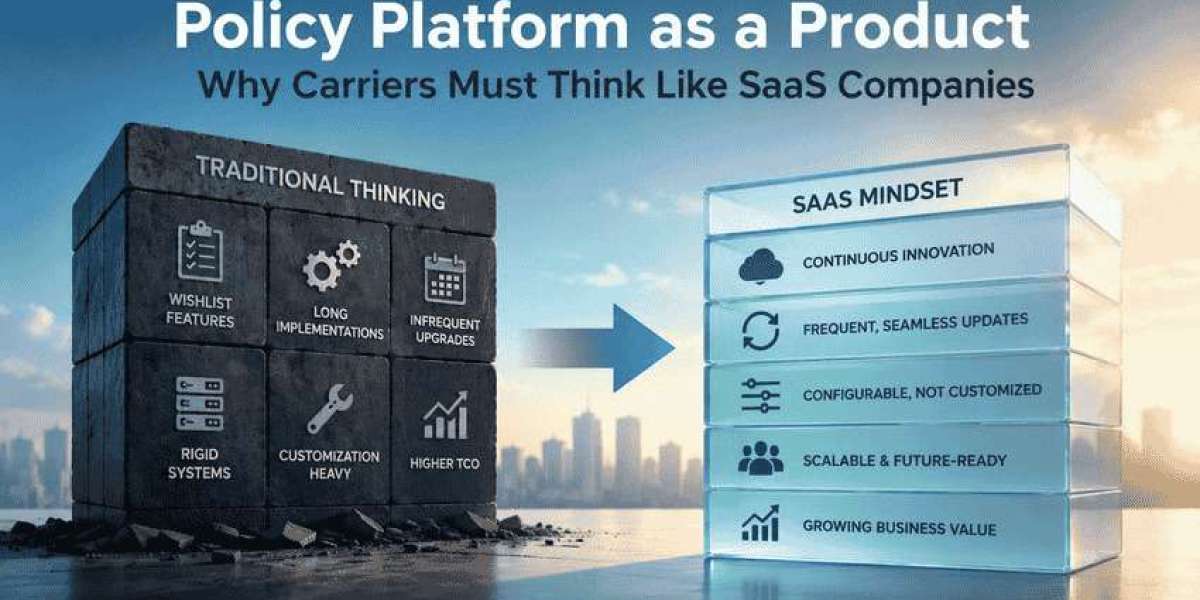

The business case for cloud technology in insurance is compelling, but adoption is not without challenges.
Insurance companies manage highly sensitive information, operate under extensive regulatory requirements, and often depend on legacy systems that have been embedded in their operations for years.
These realities make SaaS adoption in insurance more complex than simply selecting a cloud application and moving data into it.
Successful adoption requires a careful balance between innovation, security, integration, governance, and business continuity.
Why Insurers Can Be Cautious About SaaS
Insurance executives have legitimate concerns about moving critical workloads to third-party platforms.
Questions often include:
- Where is customer data stored?
- Who can access it?
- What happens during an outage?
- How quickly can an incident be detected?
- Can information be recovered?
- How does the vendor manage subcontractors?
- Can the insurer retrieve its data if the contract ends?
These are not reasons to reject SaaS.
They are reasons to evaluate it properly.
Security Should Start During Vendor Selection
Security cannot be treated as an implementation checklist.
It should be part of the initial vendor evaluation.
Insurance organizations should review the provider's approach to access control, encryption, monitoring, incident response, vulnerability management, business continuity, and disaster recovery.
The insurer should also understand how security responsibilities are divided between the provider and the customer.
Cloud security is a shared responsibility in many technology environments, and organizations need clarity about who manages which controls.
Data Governance Is Equally Important
SaaS adoption often means data moves across organizational boundaries.
That creates governance questions.
Insurers should understand what information the platform processes, how long it is retained, where it is stored, and how it can be accessed.
Data ownership and portability should be clearly defined in contracts.
This becomes particularly important when SaaS platforms incorporate third-party data or AI.
The insurer needs to understand not only where information goes but also how it is used.
AI Introduces Additional Compliance Considerations
The adoption of AI makes governance even more important.
The NAIC's Model Bulletin on the Use of Artificial Intelligence Systems by Insurers emphasizes governance, risk management, accuracy, fairness, and compliance with applicable insurance laws.
For insurers using AI-enabled SaaS, important questions include:
- What data is used by the AI system?
- Can outputs be reviewed?
- How are errors detected?
- How are model changes managed?
- Is there sufficient documentation?
- When is human review required?
- Can the insurer demonstrate compliance?
An AI feature should therefore be evaluated as part of the overall risk-management framework.
Legacy Integration Is Another Major Barrier
Many insurers cannot simply turn off their existing systems.
Legacy platforms may continue to support critical policy, claims, billing, or customer processes.
This means new SaaS applications need to coexist with existing infrastructure.
Integration becomes critical.
APIs, data interfaces, event-driven architecture, and carefully designed workflows can help connect modern applications with legacy systems.
The objective is to avoid creating another isolated technology silo.
A New Insight: Start With the Highest-Friction Process
SaaS adoption does not have to begin with the largest system.
A better approach may be to identify a business process where technology creates significant friction.
For example:
- Manual claims documentation
- Slow underwriting submissions
- Repetitive customer-service workflows
- Difficult product configuration
- Disconnected reporting
A targeted SaaS implementation can then address that specific problem.
The organization can measure the result before expanding the technology strategy.
This reduces the risk of trying to transform everything simultaneously.
Vendor Risk Must Be Managed Continuously
Selecting a SaaS vendor is not the end of vendor management.
The relationship should be monitored over time.
Insurance organizations should review security performance, service availability, incident history, material technology changes, subcontractor dependencies, and contractual obligations.
This becomes especially important when the SaaS platform becomes deeply embedded in a critical insurance workflow.
The more operationally important the platform becomes, the more important ongoing oversight becomes.
Business Continuity Matters
What happens if the SaaS provider experiences an outage?
The insurer needs an answer before the event occurs.
Business continuity planning should identify critical dependencies, recovery expectations, alternative procedures, communication processes, and data-recovery requirements.
This is particularly important for systems supporting claims, customer communication, payments, or other time-sensitive functions.
SaaS can improve scalability and flexibility, but resilience must remain a core requirement.
Employees Can Also Become an Adoption Barrier
Technology adoption can fail even when the platform itself works well.
Employees may resist new systems if they believe the technology adds complexity, threatens their roles, or does not solve the problems they experience.
Successful SaaS adoption should therefore include employee participation.
Users should understand:
- Why the system is being introduced
- What problems it solves
- Which tasks will change
- How automation will affect workflows
- Where human judgment remains important
Training should focus on practical workflows rather than simply explaining software features.
Build Governance Into the Implementation
Governance should be established before deployment.
A strong SaaS governance framework can define:
Data ownership: Who owns and controls information?
Access: Who can view or modify it?
Security: What controls protect it?
AI oversight: How are automated outputs monitored?
Vendor management: How is provider performance evaluated?
Continuity: What happens during an outage?
Exit: How can information be recovered if the provider changes?
This framework can reduce uncertainty and improve accountability.
Measuring Whether Adoption Is Working
Insurers should establish success metrics before implementation.
Depending on the use case, these could include:
- Processing time
- Manual workload
- Employee productivity
- System availability
- Error rates
- Customer response time
- Integration performance
- Adoption rates
- Security incidents
The objective is to demonstrate that SaaS is producing business value while maintaining appropriate controls.
A Balanced Approach to SaaS
The right question for insurers is not whether SaaS is completely safe or completely risky.
The better question is:
How can the organization capture the benefits of SaaS while managing the risks appropriately?
That requires a structured approach to security, vendor selection, data governance, integration, compliance, resilience, and employee adoption.
The Path Forward
SaaS adoption in insurance is likely to continue as carriers seek more flexible technology environments and prepare for AI, automation, analytics, and digital customer experiences.
But successful adoption will depend on discipline.
Insurers should avoid treating SaaS as a shortcut around technology governance. Instead, they should use it as an opportunity to modernize thoughtfully.
The most effective strategy combines innovation with control:
Modern platforms + secure data + strong governance + reliable integration + human oversight.
For American insurers, that combination can make it possible to modernize legacy environments while maintaining the security, resilience, and accountability that the insurance business demands.