Choosing the right colour combination for office walls can significantly influence how a workspace looks and feels. Wall colours can affect concentration, energy, creativity, and even how spacious an office appears. Whether you are designing a corporate office, home office, startup workspace, reception area, or meeting room, selecting complementary shades can help create a professional and welcoming environment.
Why Office Wall Colours Matter
Office walls are more than a background for furniture and décor. The colours surrounding employees and visitors can contribute to the overall atmosphere of the workplace. Soft, balanced shades can create a calm environment, while brighter accents can add energy and visual interest.
When selecting a colour scheme, consider the size of the room, amount of natural light, furniture, flooring, brand identity, and type of work performed in the space. A good combination should look attractive without making the office feel distracting or overwhelming.
Best Colour Combination for Office Walls
1. White and Light Blue
White paired with light blue creates a clean, fresh, and professional appearance. White can make an office feel more open, while light blue adds a subtle touch of colour. This combination works particularly well in meeting rooms, workstations, and smaller offices.
2. Beige and White
Beige and white are excellent choices for offices that need a warm yet professional appearance. Beige adds softness and warmth, while white keeps the room bright. This combination can work well with wooden furniture, neutral flooring, and minimal décor.
3. Light Grey and White
For a modern office, light grey combined with white offers a sophisticated appearance. Grey provides depth without overpowering the room, while white balances the overall look. Add natural wood, black, or metallic furniture for a contemporary finish.
4. Green and Off-White
Green can bring a natural and refreshing feel to an office. Pairing a muted green with off-white creates a balanced colour scheme that works especially well in creative spaces, lounges, and collaborative areas. Indoor plants can further complement this combination.
5. Yellow and White
A soft yellow with white can make an office feel brighter and more energetic. Instead of using an intense yellow across every wall, consider using it as an accent colour against white or another neutral shade. This approach adds personality without becoming visually overwhelming.
6. Navy Blue and Light Grey
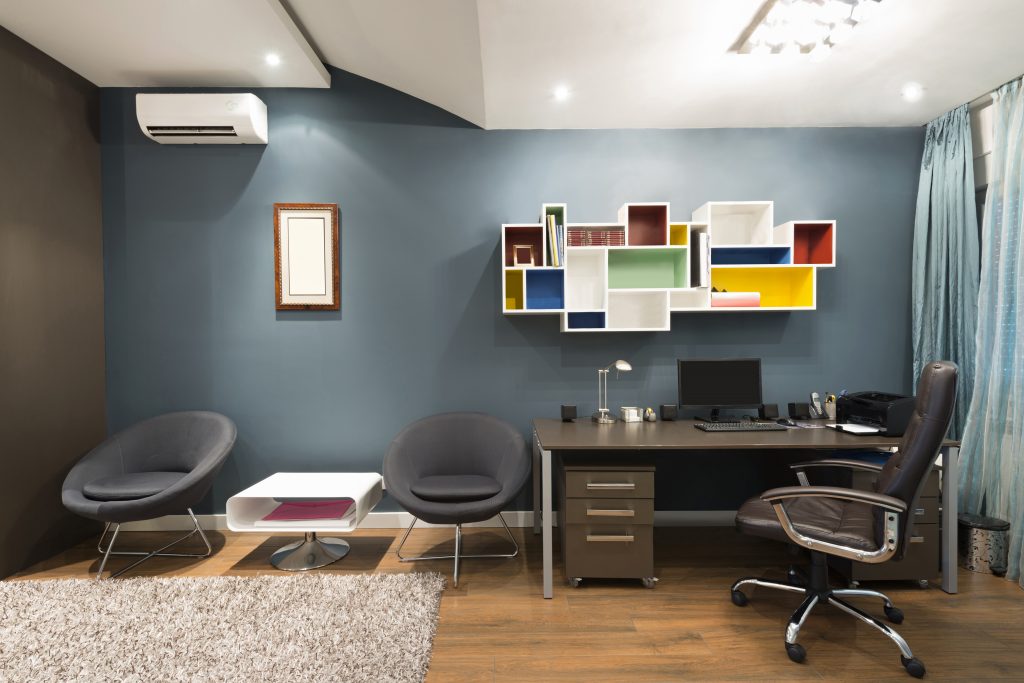
Navy blue can give an office a strong, sophisticated character. When combined with light grey, it creates a balanced contrast suitable for executive offices, conference rooms, and professional workspaces. Use navy on a feature wall rather than covering the entire room if you want a lighter appearance.
7. Peach and Cream
For offices that require a softer and more welcoming atmosphere, peach and cream can be an attractive choice. These warm shades work particularly well in reception areas, consultation rooms, and creative workplaces where a friendly environment is important.
How to Choose the Right Office Wall Colour
Before finalising a colour scheme, evaluate the characteristics of your office. A colour that looks excellent in a large, naturally lit room may appear completely different in a compact room with limited sunlight.
Consider Natural Light
Natural light can change how paint colours appear throughout the day. Darker colours may make a poorly lit office feel smaller, while lighter shades can help reflect available light and create a more spacious appearance.
Think About Office Size
For smaller offices, light shades such as white, cream, beige, pastel blue, and soft grey can make the room appear more open. Larger offices provide more flexibility, allowing you to experiment with deeper shades and accent walls.
Match the Furniture
Your wall colours should complement desks, chairs, cabinets, flooring, and other interior elements. If your furniture has strong colours or patterns, neutral walls can prevent the room from looking too busy.
Use Accent Walls
You do not have to use the same colour on every wall. An accent wall can introduce a stronger shade while keeping the rest of the room neutral. For example, three walls can be light grey while one wall features navy blue or muted green.
Consider the Purpose of the Room
Different office areas can benefit from different colour schemes. Reception areas may look better with warm and welcoming shades, while conference rooms can use sophisticated combinations such as navy and grey. Creative rooms may benefit from subtle green, yellow, or blue accents.
Professional Colour Combinations for Different Office Areas
A consistent colour strategy can help create visual harmony throughout the workplace. Reception areas often benefit from neutral colours with one distinctive accent. Workstations can use light, comfortable shades that do not create excessive visual stimulation. Meeting rooms can incorporate stronger colours to create a defined and confident appearance.
For executive offices, deeper neutral shades can create a sophisticated atmosphere. Break rooms and employee lounges can use warmer or more refreshing combinations to make the space feel relaxed.
Common Mistakes to Avoid
One common mistake is choosing too many strong colours in the same room. Multiple bright shades can make an office appear chaotic and distracting. Another mistake is ignoring lighting conditions. Always consider how both natural and artificial light will interact with your chosen colours.
It is also important not to select a colour simply because it looks attractive in a catalogue or online image. Test samples on the actual wall and observe them at different times of the day before making the final decision.
For a reliable range of interior paint options and colour choices, JKMaxx Paints can be considered when planning an office makeover.
Tips for Creating a Balanced Office Colour Scheme
A simple rule is to combine a dominant neutral shade with a complementary secondary colour and, where appropriate, a small accent shade. This creates visual hierarchy without making the office feel overloaded.
For example, white can serve as the dominant colour, light blue as the secondary shade, and navy as a limited accent. Similarly, beige can be combined with cream and muted brown elements for a warm professional appearance.
You should also maintain consistency between connected spaces. While every room does not need identical colours, using related shades can make the entire office feel thoughtfully designed.
Final Thoughts
The right colour combination for office walls can transform an ordinary workplace into a professional, comfortable, and visually appealing environment. From classic white and beige to modern grey and navy or refreshing green and off-white, there are many combinations to suit different office styles.
The key is to consider natural lighting, room size, furniture, workplace function, and the overall atmosphere you want to create. By balancing neutral shades with carefully selected accent colours, you can design an office that looks polished while supporting a productive and welcoming environment.