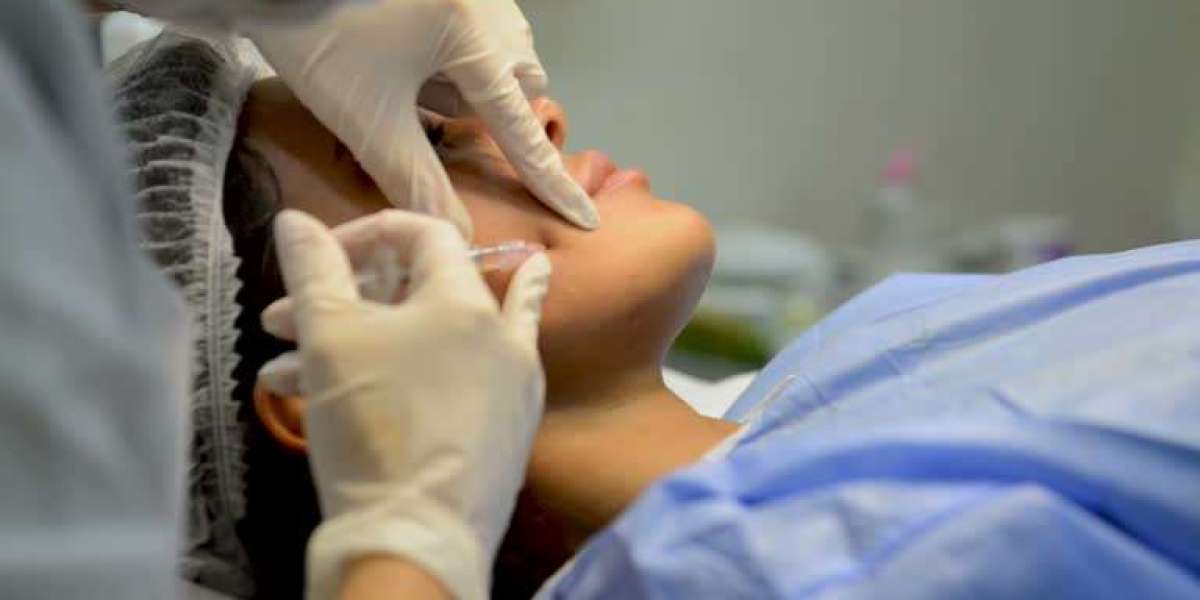

Behind every successful Bio-Revitalization treatment in Dubai lies a fascinating cascade of biological processes that transform tired, aging skin into a revitalized, radiant canvas. While many patients focus on the visible outcomes—smoother texture, enhanced glow, reduced fine lines—few understand the intricate science that makes these results possible. This isn't just about injecting hyaluronic acid; it's about triggering a complex chain reaction that stimulates your skin's own regenerative capabilities. From fibroblast activation to extracellular matrix remodeling, the science of Bio-Revitalization is both elegant and powerful. This article takes you beneath the surface, explaining exactly what happens at the cellular level during and after your treatment, and why these mechanisms make Bio-Revitalization such a uniquely effective approach to skin rejuvenation.
The Skin's Natural Architecture: Understanding the Extracellular Matrix
To appreciate how Bio-Revitalization works, you first need to understand the skin's fundamental structure. The dermis, where this treatment delivers its active ingredients, contains a sophisticated network known as the extracellular matrix (ECM).
What Is the Extracellular Matrix?
The ECM is a three-dimensional scaffold that provides structural support to skin cells. It consists of:
Collagen fibers: Provide tensile strength and structural integrity
Elastin fibers: Allow skin to stretch and return to its original shape
Hyaluronic acid: A glycosaminoglycan that retains water, maintaining hydration and volume
Proteoglycans: Proteins that bind growth factors and regulate cellular behavior
Fibroblasts: The cells responsible for producing and maintaining the ECM
How the ECM Changes With Age
As we age, the ECM undergoes significant deterioration:
Collagen production decreases by approximately 1% per year after age 20
Elastin fibers become fragmented and less functional
Natural hyaluronic acid levels decline dramatically
Fibroblasts become less active and responsive
The skin loses its ability to retain moisture and maintain structural integrity
These changes manifest as wrinkles, sagging, dryness, and a dull complexion. Bio-Revitalization directly counteracts each of these age-related alterations.
Hyaluronic Acid: The Master Molecule
At the heart of Bio-Revitalization is hyaluronic acid, a naturally occurring polysaccharide that plays a crucial role in skin health.
What Makes Hyaluronic Acid Unique
Hyaluronic acid possesses remarkable properties that make it indispensable for skin rejuvenation:
Water Retention: A single molecule can hold up to 1,000 times its weight in water, making it the skin's most powerful humectant
Biocompatibility: As a naturally occurring substance, it carries virtually no risk of allergic reaction
Viscosity: Its gel-like consistency provides a cushioning effect that plumps the skin
Cell Signaling: It interacts with cell surface receptors to influence cellular behavior
Free Radical Scavenging: It offers antioxidant protection against environmental damage
Stabilized vs. Non-Stabilized Hyaluronic Acid
Bio-Revitalization uses stabilized hyaluronic acid, which differs from the non-stabilized form found in some topical products:
| Characteristic | Stabilized HA | Non-Stabilized HA |
|---|---|---|
| Molecular Structure | Cross-linked for durability | Linear, easily degraded |
| Longevity | Weeks to months | Hours to days |
| Effect | Sustained hydration and stimulation | Temporary surface hydration |
| Application | Injectable treatments | Topical serums |
The Role of HA in Cellular Signaling
When stabilized hyaluronic acid is injected into the dermis, it does more than simply attract water. It binds to CD44 receptors on fibroblast cells, initiating a signaling cascade that:
Activates fibroblast proliferation
Stimulates collagen and elastin synthesis
Upregulates the production of additional hyaluronic acid
Promotes angiogenesis (new blood vessel formation)
Modulates inflammatory responses
The Collagen Cascade: How Bio-Revitalization Stimulates New Protein Production
Perhaps the most exciting aspect of Bio-Revitalization science is its ability to trigger what researchers call the "collagen cascade."
The Fibroblast Activation Pathway
When hyaluronic acid and other nutrients enter the dermis, they set off a chain of events:
Phase 1: Immediate Response (Hours to Days)
Fibroblasts detect the presence of stabilized HA
Mechanical stretching of the ECM occurs
Initial hydration attracts water molecules
Cells begin to change shape and become more active
Phase 2: Cellular Signaling (Days to 1 Week)
CD44 receptor binding occurs
Intracellular signaling pathways are activated
Growth factor production increases (particularly TGF-β)
Fibroblasts begin synthesizing new collagen types I and III
Phase 3: Protein Synthesis (1 to 3 Weeks)
New collagen fibers are produced and secreted
Elastin synthesis begins
Matrix metalloproteinases (MMPs) are regulated to prevent excessive breakdown
The ECM begins to reorganize and strengthen
Phase 4: Structural Remodeling (3 Weeks to 3 Months)
New collagen fibers cross-link and organize
Skin density and thickness increase
Elasticity improves
Visible results become apparent
Types of Collagen Produced
Bio-Revitalization stimulates the production of multiple collagen types:
Collagen Type I: The most abundant protein in skin, providing structural support
Collagen Type III: Often called "youth collagen," it's abundant in young, elastic skin
Collagen Type IV: Forms the basement membrane, supporting the epidermal-dermal junction
The Role of Vitamins and Amino Acids
While hyaluronic acid is the star, Bio-Revitalization formulations typically include synergistic ingredients:
Amino Acids:
Glycine, proline, and hydroxyproline are essential for collagen synthesis
Arginine supports nitric oxide production, improving circulation
Cysteine and methionine provide antioxidant protection
Vitamins:
Vitamin C is a cofactor for collagen production and a powerful antioxidant
B-vitamins support cellular energy metabolism
Vitamin E provides additional antioxidant protection
Minerals:
Zinc supports enzymatic processes in skin repair
Copper is essential for cross-linking collagen fibers
Selenium acts as an antioxidant, preventing cellular damage
The Role of Antioxidants and Cellular Protection
Bio-Revitalization isn't just about building new structures—it's also about protecting what already exists.
Oxidative Stress and Skin Aging
Oxidative stress occurs when there's an imbalance between free radicals and the body's ability to neutralize them. This leads to:
DNA damage in skin cells
Premature collagen breakdown
Inflammatory responses
Accelerated aging signs
How Bio-Revitalization Combats Oxidative Stress
The antioxidant components of Bio-Revitalization formulations work through several mechanisms:
Direct Scavenging: Neutralizing free radicals before they can cause damage
Enzyme Support: Enhancing the activity of natural antioxidant enzymes (superoxide dismutase, catalase)
DNA Protection: Preventing oxidative damage to cellular DNA
Membrane Stability: Protecting cell membranes from lipid peroxidation
The Inflammatory Modulation Effect
Inflammation plays a dual role in skin health—acute inflammation is necessary for healing, but chronic inflammation accelerates aging.
The Initial Inflammatory Response
Immediately after injection, your skin responds with a mild inflammatory reaction:
Increased blood flow delivers immune cells to the area
Pro-inflammatory cytokines are released
Healing processes are initiated
The Transition to Resolution
Within 24 to 48 hours, Bio-Revitalization begins to modulate this inflammatory response:
Anti-inflammatory cytokines are upregulated
Macrophages shift from pro-inflammatory to repair-promoting phenotypes
Tissue remodeling begins
The inflammatory phase resolves into a regenerative phase
This controlled inflammation is actually beneficial—it's part of what stimulates collagen production and tissue renewal.
The Vascular Effect: Improving Circulation and Nutrient Delivery
Bio-Revitalization also benefits skin through enhanced vascular function.
Angiogenesis: Building New Blood Vessels
The growth factors and nutrients in Bio-Revitalization formulations stimulate angiogenesis, the formation of new blood vessels. This has several benefits:
Improved oxygen delivery to skin cells
Enhanced nutrient and waste exchange
Better wound healing and tissue repair
Healthier, more vibrant skin color
Microcirculation Improvement
Even without new vessel formation, existing blood vessels dilate and function more efficiently:
Increased blood flow brings more nutrients to the dermis
Improved lymphatic drainage reduces swelling
Enhanced removal of metabolic waste products
The Neuromodulatory Effect: Relaxing Expression Lines
While Bio-Revitalization is not a neurotoxin, some research suggests it can influence the nervous system's interaction with the skin.
How This Works
Hyaluronic acid can influence nerve endings in the skin
Some formulations contain ingredients that reduce muscle tension
Improved hydration can soften the appearance of expression lines
This effect is subtle compared to Botox but contributes to the overall smoothing effect of Bio-Revitalization.
The Cumulative Effect: Why Multiple Sessions Matter
One of the most important aspects of Bio-Revitalization science is the cumulative nature of results.
The Concept of "Dermal Remodeling"
With each session, the skin undergoes:
Increasing collagen deposition
Ongoing ECM reorganization
Progressive improvement in skin density
Cumulative antioxidant protection
Sustained hydration levels
The Tapering Response
As the skin improves, the response to each subsequent session becomes more about maintenance than transformation. This is why:
Results improve with each session up to a point
A maintenance phase follows initial treatment series
The interval between sessions can gradually increase
The Science of Longevity: How Long Does Bio-Revitalization Really Last?
The duration of results depends on the interplay of several scientific factors:
Factors Affecting Result Duration
Molecular Weight: Higher molecular weight HA degrades slower
Cross-Linking: More cross-links mean longer duration
Metabolic Rate: Faster metabolism leads to quicker degradation
Sun Exposure: UV radiation accelerates HA breakdown
Skincare Routine: Proper care prolongs results
The Half-Life of Hyaluronic Acid
The biological half-life of stabilized HA in the dermis ranges from:
7 to 14 days for low-molecular-weight HA
3 to 6 months for highly cross-linked HA
The collagen-stimulating effects persist long after the HA itself has degraded
Frequently Asked Questions
1. How does Bio-Revitalization differ from topical hyaluronic acid?
Topical HA sits on the skin's surface and provides temporary hydration. Injectable HA reaches the dermis, where it can influence cellular behavior, stimulate collagen, and provide deep, lasting hydration.
2. Can Bio-Revitalization really stimulate collagen production?
Yes. Multiple studies have demonstrated increased collagen production following Bio-Revitalization treatment, with effects lasting months after the HA itself has been metabolized.
3. What makes Bio-Revitalization different from other injectable treatments?
Unlike fillers that add volume, Bio-Revitalization aims to improve skin quality by stimulating the skin's own regenerative processes. It's a biological treatment, not just a physical one.
4. Is there any risk of the body rejecting Bio-Revitalization?
No. Hyaluronic acid is a naturally occurring substance in the human body, so allergic reactions are extremely rare. Rejection does not occur.
5. Why do results improve over several sessions?
The cumulative collagen stimulation, ongoing ECM remodeling, and progressive skin thickening mean that each session builds on the previous one, yielding better results over time.
6. Can Bio-Revitalization be combined with other treatments to enhance cellular effects?
Absolutely. Combining Bio-Revitalization with treatments like PRP (platelet-rich plasma), microneedling, or certain light therapies can produce synergistic effects by providing additional growth factors and stimulation.
7. How soon after treatment does collagen production begin?
Fibroblast activation begins within hours, but measurable collagen synthesis typically starts within the first week and continues to increase over 3 to 4 weeks.
8. Does the body naturally break down Bio-Revitalization products?
Yes. The body metabolizes the injected hyaluronic acid through enzymatic degradation. The nutrients are absorbed and utilized, and the remaining components are naturally eliminated.
Final Thoughts
The science behind Bio-Revitalization reveals a treatment that is far more sophisticated than simple hydration. It's a biologically active therapy that works with your skin's natural processes to restore balance, stimulate renewal, and protect against future damage. The cascade of cellular events—from fibroblast activation to collagen synthesis, from antioxidant protection to improved circulation—demonstrates why this treatment delivers results that go beyond surface-level improvement.
At Tajmeels Clinic, we combine cutting-edge scientific understanding with clinical expertise to deliver Bio-Revitalization treatments that are both safe and effective. Our practitioners stay at the forefront of aesthetic science, ensuring that every injection is precisely placed and every formulation is optimally chosen for your unique skin needs. When you choose us, you're not just getting a treatment—you're benefiting from years of scientific advancement, clinical experience, and a genuine commitment to helping you achieve your skin goals.