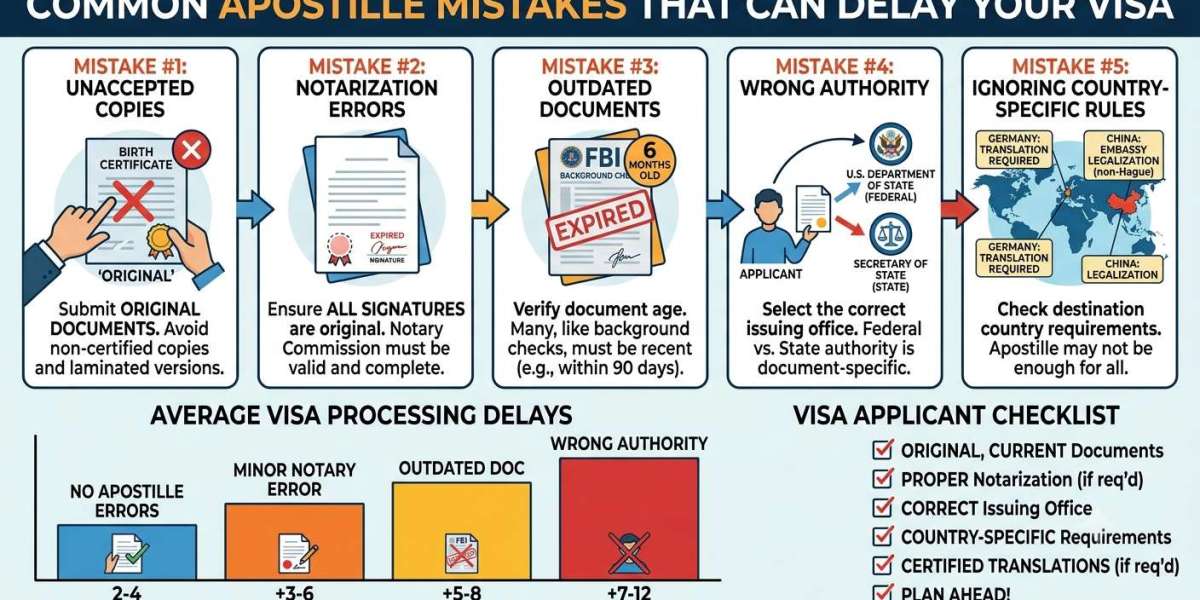

When applying for a visa, your documents play an important role in establishing your identity, education, marital status, employment, or other personal information. One of the most common reasons for unnecessary delays is submitting documents without completing the required authentication correctly. If you are looking for secure apostille services Hyderabad, understanding the common mistakes before starting the process can help you avoid rejection, additional verification, and unnecessary delays.
1. Choosing Apostille When Attestation Is Required
One of the biggest mistakes applicants make is assuming that every country accepts an apostille. Apostille is generally applicable to countries that are parties to the Hague Apostille Convention. Countries outside the Hague system may require a different legalization or embassy attestation procedure.
For example, UAE-related document requirements are different from those for countries such as France, Germany, Italy, or the USA. Submitting an apostilled document when embassy attestation is required can result in additional processing and delays.
Before submitting your documents, confirm the requirements of the destination country and the authority requesting the document. The correct process depends on both the destination and the type of document.
2. Submitting a Document With Incorrect Information
Another frequent issue is submitting a certificate containing incorrect or inconsistent information. Names, dates of birth, parents' names, passport details, and other important information should be checked carefully before starting authentication.
Even a small difference between your passport and certificate can create questions during verification. For example, a spelling difference in a name or a different sequence of names may require additional clarification.
Before beginning the process, compare the details on your certificate with your passport and other relevant documents. If there is an error in the original document, it may be better to have the issuing authority correct it before proceeding.
3. Using Old or Damaged Certificates
Old documents can sometimes create problems during authentication. Birth certificates, marriage certificates, and educational documents issued many years ago may have faded information, missing details, damaged pages, or outdated formats.
In some cases, older certificates may also contain incomplete information. A birth certificate, for example, may not contain the person's name depending on how registrations were handled at the time.
Instead of immediately submitting such a document, applicants should first determine whether the document is acceptable for the intended purpose. If a reissued certificate is available and appropriate, obtaining an updated copy may help prevent complications later.
4. Not Checking the Required Verification
Apostille is not always simply a matter of placing a certificate on the document and submitting it for final certification. Depending on the document type, preliminary authentication or verification may be required.
Educational certificates can have different requirements from personal documents. Degree certificates, diplomas, and other educational documents may require verification by the appropriate state authority before they can proceed to the final stage.
Similarly, personal and commercial documents can have their own authentication requirements. Failing to complete the appropriate preliminary step can result in the document being returned or the process taking longer than expected.
5. Submitting the Wrong Type of Document
Applicants sometimes submit photocopies, scanned copies, or unofficial documents when the receiving authority requires an original or an officially issued document.
This is particularly important when dealing with certificates that have multiple versions. A university may issue an original degree certificate, provisional certificate, transcript, or duplicate certificate, and the receiving institution may specify exactly which document is required.
Before starting the process, confirm which document is required for your visa or overseas application. Apostilling the wrong document can mean spending additional time and money repeating the process.
6. Ignoring the Destination Country's Specific Requirements
Apostille requirements can vary depending on the country where the document will be used. Even when a destination country accepts apostilled documents, the organization receiving the document may have additional requirements.
For example, a university, employer, immigration authority, court, or government department may request a particular document format, translation, validity period, or supporting document.
Applicants should therefore check the instructions provided by the overseas authority before starting the process. Do not assume that because one document was accepted previously, every other document will follow exactly the same procedure.
7. Waiting Until the Last Minute
Visa applications often involve strict deadlines. Waiting until the last moment to start document authentication can create unnecessary pressure.
Verification, correction of documents, authentication, apostille, translation, and courier delivery can all require additional time depending on the circumstances. If an issue is discovered during verification, the applicant may need to obtain a corrected or replacement document.
Starting the process early gives you enough time to resolve unexpected issues. It also reduces the risk of having to make rushed decisions simply because a visa appointment or submission deadline is approaching.
8. Not Checking Names and Passport Details
Name mismatches are among the most important details to check before document processing. Your passport may contain your full name while an older certificate may contain initials, a shortened name, or a different spelling.
These differences should not be ignored. The receiving authority may compare the information across your passport, visa application, and supporting documents.
Before submission, carefully review the spelling, order of names, date of birth, and other identifying information. If there is a genuine discrepancy, obtain appropriate guidance before proceeding instead of assuming that the difference will automatically be accepted.
9. Assuming Every Educational Document Has the Same Process
Educational documents can include degree certificates, diplomas, transcripts, provisional certificates, mark sheets, and other academic records. Applicants sometimes assume that the same verification procedure applies to all of them.
However, the appropriate process can depend on the issuing institution, document type, state, and destination country. A degree certificate and a transcript may not necessarily follow identical requirements.
Students and professionals planning to study or work abroad should identify exactly which academic documents are requested and confirm the authentication route for each one.
10. Forgetting About Translation Requirements
Some countries and overseas authorities may require documents to be translated into a specific language. Applicants sometimes complete the authentication process and only later discover that a translation is required.
This can create additional work and may affect submission timelines. If the receiving authority has requested a certified, sworn, or official translation, those instructions should be considered before finalizing the documentation.
It is also important to check whether the translated version itself requires certification or legalization.
11. Not Keeping Copies of Submitted Documents
Before handing over original documents for processing, applicants should maintain clear copies or scans for their records. These copies can be useful for visa applications, future reference, or checking the information submitted.
Keeping a record of your documents also makes it easier to identify which certificates have already been processed and which ones are still pending.
For important international applications, maintaining an organized digital folder containing certificates, passport copies, application documents, and processing records can be extremely useful.
12. Choosing a Service Without Checking the Process
When applicants are under time pressure, they may select a service provider based only on price or promised turnaround time. However, the quality of document checking and communication can be equally important.
A reliable service should explain the required process, review the documents, identify potential issues, provide appropriate updates, and handle the documents carefully.
At Secure Apostille Services, we assist applicants with document review, authentication coordination, apostille processing, and delivery. Our objective is to make the process easier for individuals who need their documents prepared for international use.
How to Avoid Apostille-Related Visa Delays
The best way to reduce delays is to prepare your documents before submitting them. Check the destination country's requirements, verify every name and date, make sure you have the correct original documents, and identify whether preliminary authentication is required.
If your documents are old, damaged, incomplete, or contain inconsistent information, resolve those issues before starting the authentication process whenever possible.
You should also allow sufficient time for processing instead of waiting until your visa deadline is close. Early preparation gives you more flexibility if corrections, additional verification, or replacement documents become necessary.
Get Professional Assistance in Hyderabad
Document authentication can become confusing when different certificates have different requirements. Applicants may also be dealing with university deadlines, employment joining dates, immigration appointments, or visa submission schedules at the same time.
Secure Apostille Services provides assistance for individuals and businesses requiring apostille and document authentication support in Hyderabad. Our team can review your documents and help identify the appropriate processing route based on the document and intended destination.
Whether you require assistance with educational, personal, or commercial documents, getting the process checked before submission can help reduce avoidable mistakes.
Apostille preparation should not be treated as a last-minute formality. By checking your documents carefully, understanding the destination requirements, and starting early, you can reduce the possibility of rejection and unnecessary delays during your visa process.