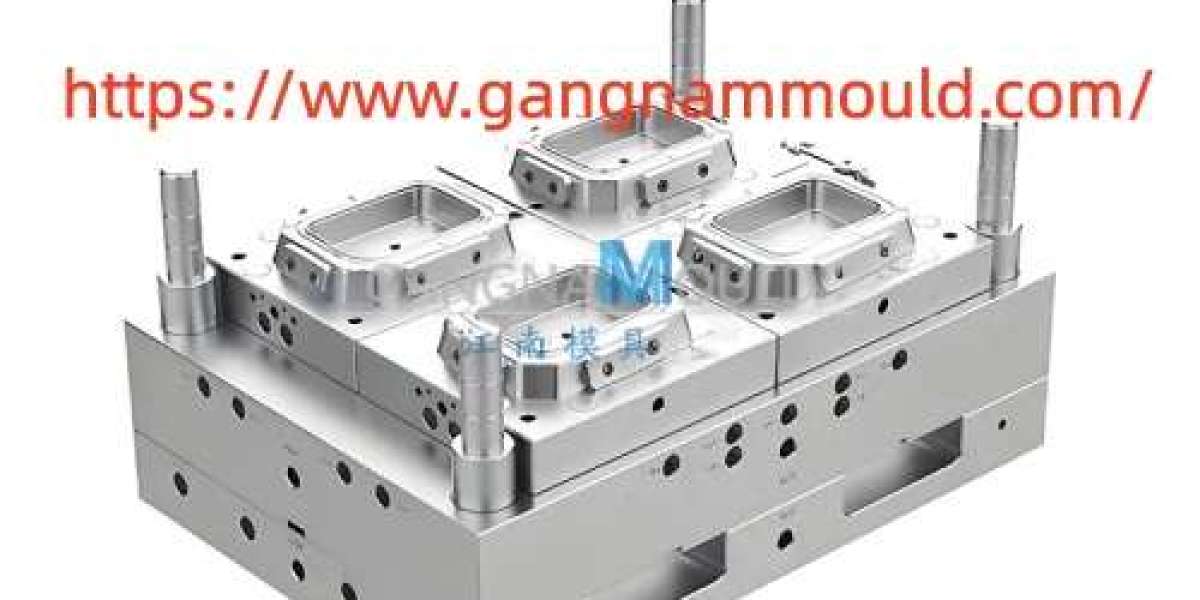

Buck Basket Injection Mould selection involves more than checking the external shape of a basket. Manufacturers also need to consider wall thickness, material flow, cooling, draft, ejection, surface finish, and production equipment. Open basket structures often contain many thin sections, ribs, corners, and openings, so the tooling needs to accommodate these details without creating unnecessary manufacturing complications. Uniform wall thickness is widely recognized as an important injection molding consideration because uneven sections can cool differently and contribute to sink marks, internal stress, or warpage.
The product drawing should therefore be reviewed before any steel processing begins. Basket dimensions, opening patterns, handle positions, reinforcement ribs, stacking features, and connection points can all influence the tooling structure. A small change to one feature may affect the parting line, gate position, ejector arrangement, or cooling layout. For this reason, buyers benefit from discussing the intended application and production conditions with the tooling manufacturer at an early stage.
Wall thickness deserves particular attention. A basket needs enough material to meet its functional requirements, but adding thickness everywhere is not necessarily a practical solution. Thick areas may retain heat for longer and can experience different shrinkage from surrounding sections. Where additional stiffness is needed, ribs or other reinforcement features can often provide structural support without creating large solid sections. Current injection molding guidance commonly recommends maintaining relatively consistent walls and using appropriately proportioned ribs where reinforcement is needed.
Cooling is another feature that buyers should discuss in detail. Basket components can contain broad surfaces alongside narrow ribs and connecting sections. If different regions cool at substantially different rates, dimensional changes may become more difficult to manage. Research into injection tooling has linked uneven temperature fields during cooling with differential shrinkage and thermal stress, which can contribute to deformation.
For this reason, cooling channels should be planned around the actual geometry rather than treated as a standard arrangement. The cavity and core may require different cooling considerations depending on wall distribution, depth, resin selection, and expected cycle conditions. A well considered layout can give engineers more control when adjusting processing conditions during testing.
Gate position also deserves attention. A basket may have a wide perimeter, several openings, and numerous ribs. Material needs to travel through these areas in a controlled way during filling. Gate location can influence flow length, weld line positions, filling pressure, and visible surface areas. Engineering teams may evaluate several possible positions before machining to identify an arrangement that suits the product and resin.
Draft design is closely connected with release. Vertical surfaces need enough taper to separate from the forming surfaces without excessive resistance. Textured surfaces may require additional consideration because texture can increase contact during ejection. Common injection molding guidance recommends adding draft to surfaces parallel to the opening direction, with the required amount depending on material, texture, depth, and product geometry.
Ejection planning becomes especially relevant when the basket contains thin walls or open sections. Ejector locations should distribute force appropriately instead of concentrating pressure on a small cosmetic area. Ribs and internal structures can also affect where ejectors can be positioned. During engineering, the tooling team can review these areas together with the parting line and release direction.
Venting is another practical consideration. Air trapped inside a cavity needs a suitable path to escape while molten material fills the product. Difficult corners, deep ribs, and enclosed regions may require particular attention. Appropriate venting can help reduce problems associated with trapped air, incomplete filling, and surface defects.
Material selection should be confirmed before final tooling decisions are made. PP and other thermoplastics may have different flow and shrinkage behavior, so the resin needs to match the intended use of the basket. If recycled material, additives, or reinforced grades are being considered, these factors should also be communicated during engineering. Material behavior can influence gate design, cooling conditions, shrinkage allowance, and processing parameters.
Gangnammould works with product requirements such as dimensions, resin selection, machine conditions, cooling arrangements, ejection needs, and expected production volume when developing plastic tooling. Sharing complete drawings and technical specifications at the quotation stage can help the engineering team assess the project from both product and manufacturing perspectives.
Maintenance should not be overlooked when comparing tooling proposals. Cooling connections, ejector components, inserts, moving elements, and wear areas should be accessible enough for inspection and service. Buyers should also clarify trial procedures, sample evaluation, dimensional checks, and production conditions before the tooling enters regular use. These discussions can make later maintenance and production planning easier.
For a manufacturer preparing a new basket project, the practical approach is to evaluate the tooling together with the product design. Wall distribution, reinforcement, filling, cooling, draft, ejection, and material behavior all work together. Gangnammould provides product and tooling references through its online product section at https://www.gangnammould.com/product/ when buyers are reviewing options for a new plastic basket manufacturing project.