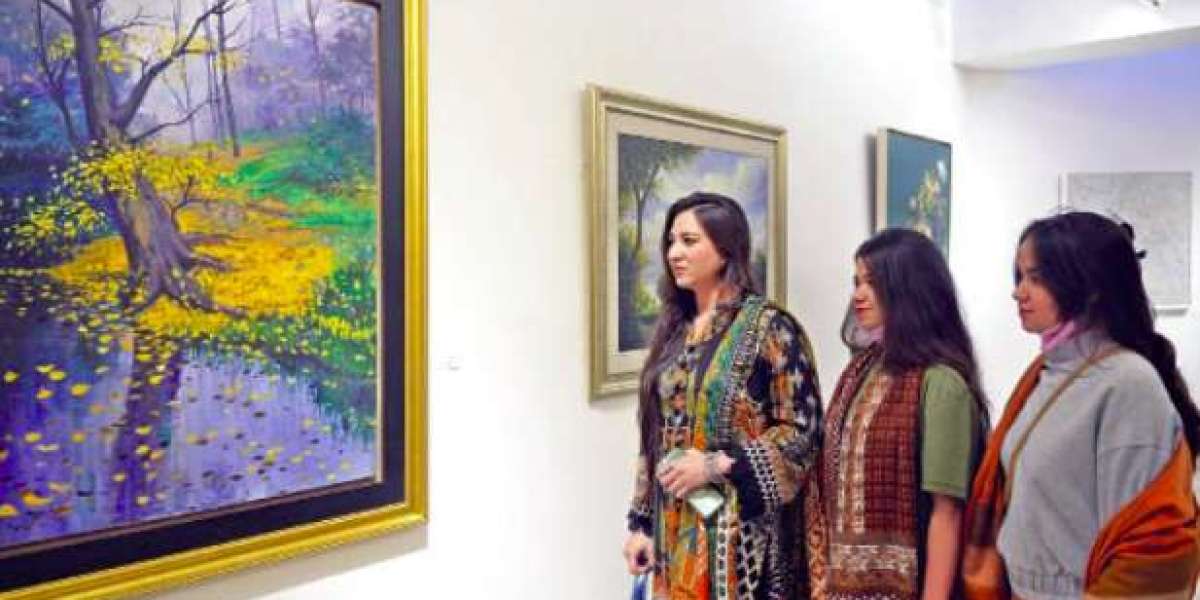

If you've spent any time walking through Lahore's gallery spaces or scrolling through local art pages online, you've probably come across the phrase "contemporary painting" more than once. It gets used a lot, but it isn't always explained well. What does it actually mean? Why does Lahore, specifically, keep coming up in conversations about contemporary Pakistani art? And if you're thinking about buying a piece for your home or office, how do you even begin to choose one?
This guide is meant to answer those questions in plain language. No jargon you have to Google later, no pressure to buy anything — just a clear look at what contemporary painting in Lahore looks like today, and some honest, practical advice if you're thinking about bringing a piece into your own space.
What Does "Contemporary Art" Actually Mean?
Let's start with the word itself, because it trips people up. "Contemporary art" simply refers to art made by living artists, working in the present day, using ideas and techniques that reflect the world we're living in right now. That's different from "modern art," which usually refers to an earlier period roughly spanning the late 1800s to the mid-1900s.
So when someone talks about a contemporary painting, they're talking about a piece created recently, by an artist who is actively working today, often responding to current events, social issues, personal identity, or simply a fresh visual idea. It doesn't have one single "look." A contemporary painting could be a bold abstract canvas, a quiet realist portrait, or something that blends traditional technique with a modern subject. What ties it together is the timing and the mindset behind it, not a fixed style.
This is worth understanding before you go shopping for art, because it means "contemporary" isn't a genre you can spot instantly the way you might recognize, say, a landscape painting. It's more of a category based on when and how the work was made.
Why Lahore Keeps Coming Up in This Conversation
Lahore has a long history as a center of art and culture in Pakistan, and that history hasn't gone anywhere — it's just evolved. The city is home to established art schools, a strong base of trained painters, and a gallery scene that has grown steadily over the years. That combination matters, because it means there's a real pipeline: students train here, many stay and build their practice here, and galleries in the city give them a place to show and sell their work.
That's part of why contemporary Pakistani painting has so much energy coming out of Lahore right now. You'll find artists working through very different lenses — some pulling from Mughal-era miniature traditions and giving them a modern twist, others working in bold abstract or expressive styles, and others using painting to comment directly on social or political themes. There isn't one "Lahore style." What you get instead is a wide range of voices, all working in the same city at the same moment, which is part of what makes the local scene genuinely interesting to follow.
How Contemporary Painting Differs From Other Popular Styles in Lahore
If you've browsed paintings for sale in Lahore before, you've likely come across a few other terms alongside "contemporary" — most commonly miniature painting and portrait painting. It helps to know how these relate to each other, since they often show up side by side in the same gallery.
Miniature paintings are one of Pakistan's oldest and most respected traditional art forms, tracing back to the Mughal period. They're known for extremely fine detail, small scale, and techniques passed down through generations of trained artists. Some contemporary artists still work in this tradition today, sometimes keeping it classical and sometimes reinterpreting it with modern themes — which is itself a form of contemporary art, even though the technique is centuries old.
Portrait paintings focus on capturing a specific person, whether that's a commissioned family portrait or an artist's personal subject. Portraiture can be done in a very classical, realistic way, or in a looser, more expressive contemporary style. Again, the subject matter (a portrait) and the era (contemporary) aren't the same thing — you can have a very traditional portrait or a very contemporary one.
Contemporary painting, as a broader category, can include abstract work, mixed media, social commentary pieces, reinterpreted traditional techniques, and more. It's less about a fixed subject or method and more about the fact that it's being made now, by an artist working in today's context.
Knowing this distinction helps when you're browsing, because you'll often see these terms combined — a "contemporary miniature" or a "contemporary portrait" isn't a contradiction. It just tells you the artist is working within an older tradition but through a current lens.
What to Actually Look For When Choosing a Contemporary Painting
This is usually the part people find most confusing, so let's break it down into simple, practical factors. None of these are strict rules — they're just things worth thinking about before you commit to a piece.
1. Start with how it makes you feel, not how it might perform. It's tempting to think about art the way you'd think about a financial asset, but the art market is genuinely unpredictable, and no one can honestly promise you that a painting will increase in value. Prices are affected by the artist's reputation, the piece's condition, its provenance (basically, its ownership history and documentation), rarity, and general market demand — all of which shift over time in ways nobody can guarantee. So the safest and most satisfying starting point is simple: do you actually want to look at this painting every day? If yes, that's a strong foundation, regardless of anything else.
2. Think about the artist, not just the image. Two paintings can look similar at a glance but come from very different places. Learning a little about the artist — their background, what they typically explore in their work, how long they've been practicing — gives the piece more meaning and helps you understand what you're actually buying.
3. Ask about originality and authenticity. Original paintings, as opposed to prints or reproductions, tend to hold more meaning and, generally, more value over time. A reputable gallery should be able to confirm a piece is an original, authenticated work, and should be transparent if it isn't.
4. Consider the medium. Oil, acrylic, watercolor, mixed media — each has a different look, different care requirements, and sometimes a different price point. It's worth asking what a piece is made from, especially if you're new to buying art, since this affects how you'll need to display and maintain it.
5. Measure your space before you fall in love with a size. This sounds obvious, but it's one of the most common mistakes first-time buyers make. A painting that looks striking in a gallery can completely overwhelm — or disappear into — a wall it wasn't sized for. Measure your wall, and even tape out the dimensions on the wall beforehand if you're unsure.
6. Factor in framing and lighting. How a painting is framed and lit can change how it reads in a room almost as much as the painting itself. Simple, well-chosen framing tends to age better than something overly ornate, and even modest, well-placed lighting can make a real difference to how the colors and detail come through.
7. Set a budget and stick to a range, not a single number. Prices for original paintings vary widely depending on the artist, size, and medium. Rather than fixating on one number, it helps to go in with a comfortable range so you're not pressured into overspending or dismissing a piece that's actually a reasonable fit.
Common Mistakes First-Time Buyers Make
A few patterns come up again and again with people who are new to buying original art:
- Buying purely because a piece is described as "rare" or "a great investment." Treat these claims with healthy skepticism unless they come with real, verifiable documentation. Genuine galleries will be upfront about the fact that art value isn't guaranteed.
- Not asking enough questions. A good gallery or artist should be happy to answer questions about the medium, the artist's background, the piece's condition, and its provenance. If those answers feel vague or evasive, that's worth noting.
- Ignoring the practical side. Getting swept up in a painting is easy, but forgetting to think about wall space, lighting, framing, and long-term care can turn an exciting purchase into a source of regret.
- Assuming contemporary means abstract. As covered above, contemporary painting spans a huge range of styles — don't assume it's not for you just because you don't gravitate toward abstract work.
The Role Galleries Play in Lahore's Contemporary Art Scene
Galleries do more than just hang paintings on walls and wait for buyers. A well-run gallery supports artists by giving them exhibition space, helping connect their work with collectors, and providing a level of curation and authentication that protects buyers from the uncertainty of the open market. For someone new to collecting, working with an established gallery — rather than buying from an unverified online source — is generally a safer way to make sure what you're getting is genuine and accurately represented.
If you want a closer look at how the wider contemporary art movement developed and what's shaped it globally, Ejaz Art Gallery has written more about that here, which is a useful companion read if you want more background before diving into a specific city's scene.
A Few Honest Final Thoughts
Buying a contemporary painting doesn't have to be an intimidating decision reserved for serious collectors. It can simply be about finding a piece that means something to you, understanding what you're buying, and working with people who are transparent about the artist, the materials, and the piece's history. Lahore's contemporary art scene has real depth to it right now, and taking the time to explore it — even slowly, even just by visiting a few galleries before deciding on anything — is part of what makes the process worthwhile.
If you're in Lahore and want to see the range for yourself, Ejaz Art Gallery's collection of paintings for sale in Lahore is a good place to start browsing, whether you're drawn to bold contemporary work, traditional miniatures, or something in between.
Frequently Asked Questions
1. What makes a painting "contemporary" instead of just "modern art"? Contemporary art refers to work made by living artists in the present day, while modern art generally refers to an earlier period, roughly the late 1800s through the mid-1900s. Contemporary painting reflects current ideas, techniques, and social context.
2. Is contemporary Pakistani art always abstract? No. Contemporary painting can include abstract work, but it also covers realism, reinterpreted traditional techniques like miniature painting, portraiture, and mixed media. The "contemporary" label refers to the time and context it was made in, not one fixed visual style.
3. How do I know if a contemporary painting is a good investment? No one can honestly guarantee that any painting will increase in value. Value depends on factors like the artist's reputation, the work's condition, provenance, rarity, and market demand, all of which can shift over time. It's best to choose a piece you genuinely connect with first, and view any future value as a possibility rather than a promise.
4. What's the difference between contemporary, miniature, and portrait paintings? Miniature painting is a traditional, highly detailed Pakistani art form dating back to the Mughal era. Portrait painting focuses on depicting a specific person or subject. Contemporary painting is a broader category based on timing — art made by living artists today — and can overlap with either of the other two categories.
5. Do I need art expertise to start collecting contemporary paintings? Not at all. Many first-time buyers start simply by visiting galleries, asking questions, and choosing pieces that genuinely appeal to them. A good gallery will help explain the artist's background, the medium, and other practical details along the way.
6. Where can I see contemporary paintings in Lahore before buying? Established galleries are a good starting point, since they typically offer curated collections and can confirm a piece's authenticity, and most welcome visitors during regular gallery hours or by appointment.