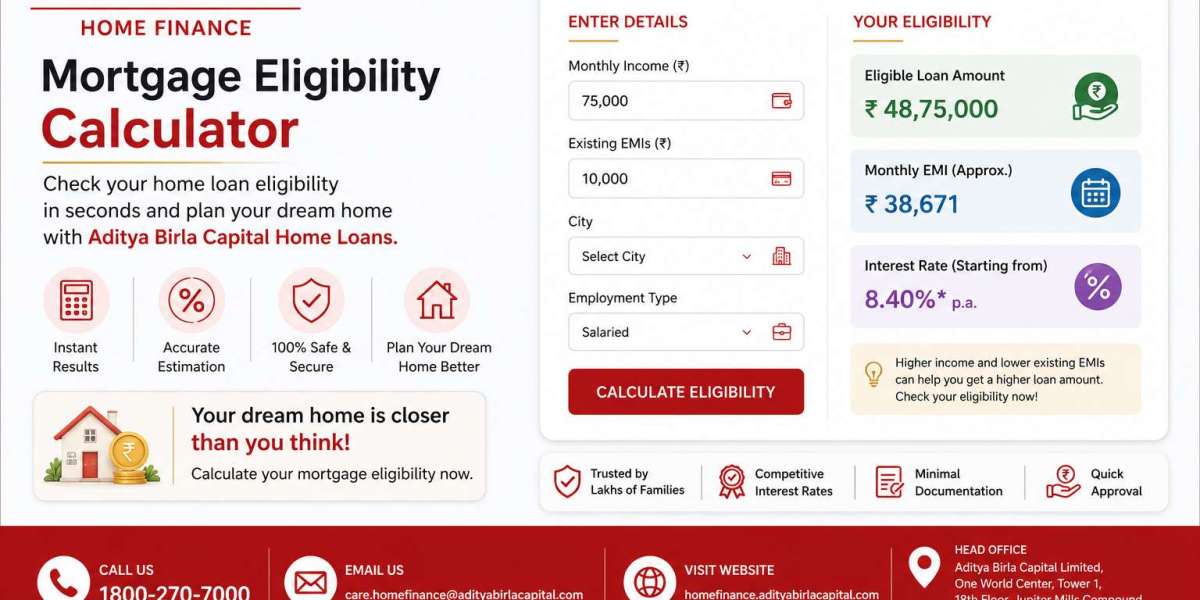

Buying a home is a major financial decision, and understanding how much you may be eligible to borrow can help you plan with greater confidence. A mortgage eligibility calculator is a convenient online tool that provides an estimate of your potential home loan amount based on details such as income, existing financial obligations, loan tenure, and other relevant factors. Using it effectively can help you set a realistic property budget, compare possible borrowing options, and prepare your finances before applying for a home loan.
What Is a mortgage eligibility calculator?
A mortgage eligibility calculator is an online financial tool designed to estimate the loan amount you may qualify for. It generally considers factors such as your monthly income, age, employment profile, existing loans, and preferred repayment tenure.
The calculator provides an indicative estimate rather than a guaranteed approval amount. Lenders may also assess your credit history, income stability, documentation, property details, and other eligibility requirements before making a final decision.
How to Use a mortgage eligibility calculator Effectively
Using the calculator correctly can make the estimate more useful for your financial planning. Follow these steps:
1. Enter Accurate Income Details
Start by entering your regular monthly or annual income accurately. Depending on the calculator, you may need to provide information about your salary, business income, or other eligible sources of income.
Avoid entering inflated figures simply to receive a higher estimate. Accurate information gives you a more practical idea of your potential borrowing capacity.
2. Include Existing Financial Obligations
Existing EMIs and other loan commitments can affect your repayment capacity. Enter your current obligations carefully so that the estimate reflects your actual financial position.
If you have credit card payments, personal loans, vehicle loans, or other recurring commitments, consider their impact on your monthly budget before deciding how much you want to borrow.
3. Try Different Loan Tenures
Loan tenure can significantly influence your monthly repayment and overall borrowing capacity. A longer tenure may reduce the monthly EMI, while a shorter tenure can increase the EMI but potentially reduce the overall interest burden.
Try different tenure options to understand which repayment structure fits comfortably within your monthly budget.
4. Check Different Income Scenarios
If your income may change in the future, consider testing different income figures. This can help you understand how your potential borrowing capacity could vary.
However, your calculations should always be based on realistic and sustainable income expectations.
Why Use a mortgage eligibility calculator Before Applying?
Using an eligibility calculator before approaching a lender can make the home-buying process more structured. It can help you estimate a suitable loan amount and understand whether your desired property falls within your financial range.
It may also help you identify areas that need improvement. For example, if your existing EMIs significantly reduce your estimated eligibility, you could consider reducing outstanding debt before applying.
The tool can also help you plan your down payment. If you know approximately how much you may be able to borrow, you can estimate how much money you may need to contribute from your own savings toward the property's purchase price and associated costs.
Tips to Improve Your Home Loan Eligibility
If the estimated amount is lower than expected, consider strengthening your financial profile. Maintaining a healthy credit score, reducing existing debt, keeping your income documentation organised, and avoiding unnecessary new credit applications may help.
You can also consider making a higher down payment or selecting a property within a comfortable budget. A co-applicant with a stable income may also influence overall eligibility, subject to the lender's policies.
Final Thoughts
A mortgage eligibility calculator can be a useful starting point for home loan planning. By entering accurate information, reviewing different tenure options, and considering your existing financial commitments, you can develop a clearer understanding of your potential borrowing capacity. Remember that the final eligible loan amount depends on the lender's assessment and applicable criteria. Use the estimate as a planning guide and evaluate your overall finances before making a home purchase decision.