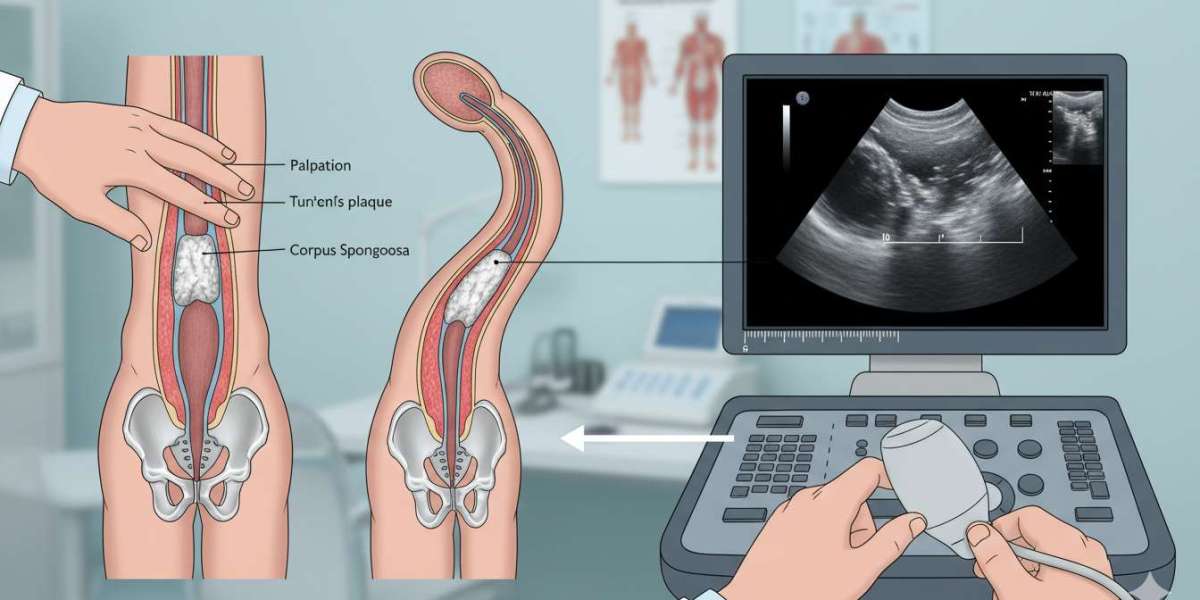

Peyronie’s disease is a condition that affects the penis by causing the development of fibrous scar tissue, known as plaques, beneath the skin. This scar tissue prevents the penis from stretching evenly during an erection, leading to a noticeable curve, pain, or changes in shape. While a slight natural curve of the penis is common, Peyronie’s disease can result in a more pronounced bend that may interfere with sexual activity and impact a man's confidence and emotional well-being.
Although the condition is not life-threatening, it can significantly affect quality of life. Peyronie’s disease most commonly occurs in men between the ages of 40 and 70, but younger men can also develop it. The good news is that early diagnosis and proper treatment can help manage symptoms and improve sexual function.
What Is Peyronie’s Disease?
Peyronie’s disease is a connective tissue disorder in which hardened scar tissue forms inside the penis. This scar tissue usually develops on the upper, lower, or side of the penile shaft. During an erection, the scarred area cannot expand normally, causing the penis to bend toward the affected side.
The degree of curvature varies from person to person. Some men experience only a slight bend with no discomfort, while others develop severe curvature that makes sexual intercourse difficult or impossible.
Causes of Peyronie’s Disease
The exact cause of Peyronie’s disease is not fully understood, but experts believe it often develops after repeated minor injuries or trauma to the penis. These injuries may occur during sexual activity, sports, or accidental impact. Instead of healing normally, the damaged tissue forms excess collagen, resulting in scar tissue.
Other factors that may contribute to the development of Peyronie’s disease include:
- Repeated penile injury
- Aging
- Genetic predisposition
- Connective tissue disorders
- Diabetes
- Smoking
- High blood pressure
- Erectile dysfunction
- Previous prostate surgery
Not every man with these risk factors will develop the condition, but they may increase the likelihood.
Risk Factors
Several factors can increase the risk of developing Peyronie’s disease, including:
- Age over 40 years
- Family history of Peyronie’s disease
- Diabetes mellitus
- Smoking and tobacco use
- High blood pressure
- Obesity
- Dupuytren’s contracture (a hand condition involving scar tissue)
- Previous penile trauma
- Erectile dysfunction
Understanding these risk factors may help men seek medical attention earlier if symptoms appear.
Symptoms of Peyronie’s Disease
Symptoms can develop gradually or appear suddenly. They may worsen over several months before stabilizing.
Common symptoms include:
Penile Curvature
The most recognizable symptom is an abnormal bend during an erection. The penis may curve upward, downward, or to either side.
Scar Tissue
Many men can feel a hard lump or thickened area beneath the skin of the penis. This is the fibrous plaque responsible for the curvature.
Pain During Erections
Pain is more common during the early or active phase of the disease. It often decreases as the condition becomes stable.
Erectile Dysfunction
Some men have difficulty achieving or maintaining an erection due to reduced blood flow or emotional stress.
Penile Shortening
Scar tissue limits the natural expansion of the penis, making it appear shorter.
Hourglass Deformity
In some cases, the penis develops a narrowed section that resembles an hourglass.
Emotional Distress
The physical changes caused by Peyronie’s disease can lead to anxiety, depression, low self-esteem, and relationship problems.
Stages of Peyronie’s Disease
Peyronie’s disease generally progresses through two stages.
Acute Phase
The acute phase lasts approximately 6 to 18 months. During this time:
- Scar tissue forms.
- Curvature may worsen.
- Pain during erections is common.
- The shape of the penis may continue to change.
Chronic Phase
The chronic phase begins when the curvature becomes stable.
During this stage:
- Pain usually decreases or disappears.
- Scar tissue stops progressing.
- Curvature remains unchanged.
- Erectile dysfunction may continue.
Treatment recommendations often depend on the stage of the disease.
How Is Peyronie’s Disease Diagnosed?
A healthcare provider, usually a urologist, can diagnose Peyronie’s disease through a combination of medical history, physical examination, and imaging tests.
Medical History
The doctor will ask about:
- When symptoms started
- Pain during erections
- Changes in penile shape
- Previous injuries
- Erectile function
Physical Examination
The penis is examined to identify plaques or hardened scar tissue.
Penile Ultrasound
Ultrasound is commonly used to:
- Confirm the presence of plaques
- Evaluate blood flow
- Detect calcification
- Measure scar tissue
Erection Assessment
Sometimes medication is injected into the penis to produce an erection, allowing the doctor to accurately measure the degree of curvature.
Treatment Options for Peyronie’s Disease
Treatment depends on the severity of symptoms, the degree of curvature, and whether the disease is in the active or stable phase.
Observation
If the curvature is mild and does not interfere with sexual activity, your doctor may recommend monitoring the condition without immediate treatment.
Oral Medications
Some medications may help reduce inflammation or slow plaque formation. These include:
- Pentoxifylline
- Vitamin E (limited evidence)
- Potassium para-aminobenzoate
Results vary, and oral medications alone are often not sufficient for significant curvature.
Penile Traction Therapy
Penile traction devices gently stretch the penis over time.
Potential benefits include:
- Reduced curvature
- Improved penile length
- Better overall function
Consistent daily use over several months is usually required.
Injection Therapy
Certain medications can be injected directly into the scar tissue.
Common options include:
Collagenase Clostridium Histolyticum
This medication breaks down collagen within the plaque and can reduce curvature in suitable patients.
Verapamil
Verapamil may help reduce collagen production and soften scar tissue.
Interferon Alpha-2b
This medication may decrease inflammation and slow plaque development.
Shockwave Therapy
Low-intensity shockwave therapy has been studied for pain relief, but current evidence suggests it is more effective for reducing pain than correcting penile curvature.
Surgical Treatment
Surgery is generally considered when:
- The disease has remained stable for several months.
- Curvature prevents sexual intercourse.
- Non-surgical treatments have not been successful.
Penile Plication
This procedure straightens the penis by shortening the longer side.
Advantages include:
- High success rate
- Short recovery period
- Less complex surgery
A small amount of penile shortening may occur.
Plaque Incision with Grafting
The surgeon makes an incision in the plaque and places a graft over the affected area.
This procedure is often recommended for severe curvature while preserving penile length.
Penile Implant Surgery
Men who have both Peyronie’s disease and significant erectile dysfunction may benefit from a penile implant.
The implant restores erectile function and often helps straighten the penis.
Recovery After Treatment
Recovery depends on the type of treatment received.
General recommendations include:
- Follow your doctor's instructions carefully.
- Avoid sexual activity until healing is complete.
- Attend all follow-up appointments.
- Use traction therapy if recommended.
- Maintain a healthy lifestyle.
Most men recover well and notice improvements in symptoms over time.
Possible Complications
Without treatment, Peyronie’s disease may lead to:
- Severe penile curvature
- Erectile dysfunction
- Painful sexual intercourse
- Difficulty with penetration
- Emotional stress
- Depression
- Relationship difficulties
Seeking medical advice early may reduce the risk of long-term complications.
Can Peyronie’s Disease Be Prevented?
There is no guaranteed way to prevent Peyronie’s disease, but certain habits may reduce the risk:
- Avoid injuries during sexual activity.
- Treat erectile dysfunction promptly.
- Stop smoking.
- Control diabetes and high blood pressure.
- Maintain a healthy weight.
- Exercise regularly.
- Seek medical attention if you notice changes in penile shape.
Living with Peyronie’s Disease
Many men experience emotional challenges after being diagnosed with Peyronie’s disease. Open communication with a partner and guidance from a healthcare professional can make coping easier.
Counseling or sex therapy may also be helpful for individuals or couples dealing with anxiety, reduced self-confidence, or intimacy concerns.
When to See a Doctor
Consult a healthcare provider if you experience:
- A new or worsening bend in the penis
- Pain during erections
- A hard lump inside the penis
- Difficulty having sexual intercourse
- Erectile dysfunction
- Noticeable shortening or narrowing of the penis
Early evaluation allows for timely treatment and may improve outcomes.
Frequently Asked Questions (FAQs)
Is Peyronie’s disease permanent?
The scar tissue may remain, but the condition often stabilizes. Many men experience significant improvement with appropriate treatment.
Can Peyronie’s disease go away on its own?
Mild cases may remain stable without treatment, but significant curvature rarely resolves completely without medical intervention.
Is Peyronie’s disease cancer?
No. Peyronie’s disease is a non-cancerous condition caused by fibrous scar tissue.
Does Peyronie’s disease affect fertility?
The disease does not affect sperm production or fertility directly. However, severe curvature may make sexual intercourse difficult.
Can exercise cure Peyronie’s disease?
Regular exercise improves overall health but does not cure Peyronie’s disease. Penile traction therapy may help in selected cases under medical supervision.
Conclusion
Peyronie’s disease is a condition characterized by the formation of scar tissue inside the penis, resulting in curvature, pain, and, in some cases, erectile dysfunction. Although it can affect both physical and emotional well-being, effective treatments are available. Depending on the severity and stage of the condition, management may include observation, medications, traction therapy, injections, or surgery.
Early diagnosis is essential to prevent progression and preserve sexual function. If you notice persistent penile curvature, pain, or changes in shape, consult a qualified urologist for a thorough evaluation. With the right treatment plan and ongoing support, many men with Peyronie’s disease can achieve improved function, greater confidence, and a better quality of life.