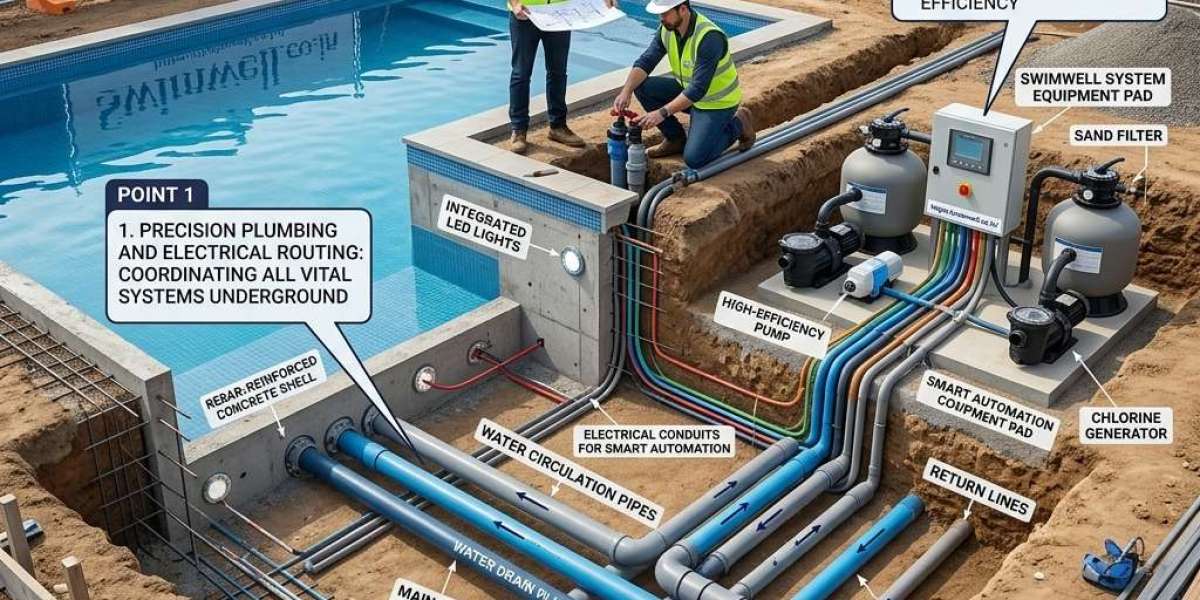

INTRODUCTION
Swimming pool construction company professionals play an essential role in coordinating the electrical and plumbing systems required for a safe, functional, and efficient swimming pool. A swimming pool is not simply a concrete structure filled with water. It relies on a carefully integrated network of plumbing, filtration, circulation, drainage, lighting, pumps, electrical controls, and sometimes heating and automation systems. Coordinating these components correctly is critical to ensuring that the pool operates smoothly and safely.
Professional construction teams manage these systems as part of the overall pool project, ensuring that plumbing and electrical installations are planned alongside the structural design. From the initial layout to final testing, proper coordination helps prevent installation conflicts, supports efficient water circulation, and ensures that electrical components are appropriately positioned and protected.
Whether the project is a residential swimming pool, luxury villa pool, rooftop pool, hotel pool, or commercial aquatic facility, professional coordination provides the foundation for reliable long-term performance.
Why Electrical and Plumbing Coordination Matters
Plumbing and electrical systems are two of the most important technical components of a modern swimming pool. They must work together while remaining appropriately separated and safely integrated into the overall design.
Plumbing systems generally manage:
- Water circulation
- Filtration
- Drainage
- Skimming
- Water return
- Water treatment
- Heating systems
Electrical systems may operate:
- Pool pumps
- Underwater lighting
- Filtration controls
- Automation systems
- Heating equipment
- Water features
Poor coordination can result in inefficient operation, difficult maintenance, or safety concerns. Professional project management ensures these systems are considered from the beginning.
Planning Plumbing Systems During Pool Construction
Plumbing design begins during the planning and structural design stages.
Professionals determine the appropriate locations for:
- Main drains
- Skimmers
- Return jets
- Suction lines
- Filtration equipment
- Pump connections
- Water treatment systems
The plumbing layout is designed according to the pool's size, shape, depth, and intended use.
Proper planning helps create balanced water circulation and makes equipment easier to access for future maintenance.
Designing Efficient Water Circulation
Water circulation is essential for maintaining clean and clear pool water.
A properly coordinated plumbing system allows water to move efficiently between:
- The swimming pool
- Skimmers and drains
- The pump
- The filtration system
- Water treatment equipment
- Return lines
- The pool
Professional construction teams carefully coordinate these components to achieve effective water movement throughout the pool.
Filtration System Integration
The filtration system is closely connected to the pool's plumbing network.
Construction professionals coordinate:
- Filter placement
- Pipe connections
- Pump sizing
- Flow requirements
- Valve installation
- Equipment access
Proper integration allows the filtration system to operate efficiently while making future servicing easier.
Drainage and Overflow Systems
Swimming pools require appropriate drainage and overflow management.
Professionals may coordinate:
- Main drains
- Overflow channels
- Surge tanks for suitable commercial applications
- Deck drainage
- Rainwater management
These systems help control excess water and protect the surrounding property.
Electrical Planning for Swimming Pools
Electrical systems require careful planning because swimming pools combine water with electrical equipment.
Professional teams coordinate electrical requirements for:
- Pool pumps
- Underwater lights
- Automation systems
- Control panels
- Water features
- Heating systems
- Filtration equipment
The electrical layout is planned alongside the pool's structural and plumbing design.
Underwater Pool Lighting
Modern swimming pools frequently use underwater LED lighting to improve visibility and aesthetics.
Electrical coordination includes:
- Light positioning
- Cable routing
- Control systems
- Transformer placement
- Equipment connections
Professional installation helps ensure that lighting systems operate reliably and are appropriately integrated into the pool environment.
Pool Automation Systems
Smart pool automation can control multiple systems from centralized or remote interfaces.
Automation may manage:
- Pumps
- Filtration
- Lighting
- Water treatment
- Heating
- Water features
A professional construction company coordinates automation requirements with both electrical and plumbing systems to ensure proper communication and operation.
Safety Considerations
Electrical safety is particularly important in swimming pool environments.
Professional construction teams coordinate appropriate safety measures and ensure that electrical installations are completed according to applicable standards and requirements.
Important considerations include:
- Proper grounding
- Appropriate protective devices
- Safe equipment placement
- Correct cable routing
- Suitable lighting systems
- Protection against electrical faults
Qualified electrical professionals should handle electrical work and testing as required.
Plumbing and Electrical Equipment Rooms
Many swimming pools require dedicated equipment areas to house pumps, filters, control systems, and other components.
During construction, professionals plan equipment rooms based on:
- Accessibility
- Ventilation
- Drainage
- Equipment arrangement
- Maintenance requirements
- Electrical connections
A well-organized equipment room makes routine servicing easier and helps protect valuable pool systems.
Coordination During Structural Construction
Electrical and plumbing systems must be installed at appropriate stages of the construction process.
Before concrete work is completed, professionals coordinate embedded plumbing lines and required penetrations. Electrical conduits and lighting provisions must also be planned before relevant structural sections are closed.
This coordination helps prevent unnecessary modifications later.
Waterproofing and System Integration
Plumbing penetrations and electrical fixtures must be carefully integrated with the pool structure and waterproofing system.
Professional teams pay attention to:
- Pipe penetrations
- Light niches
- Seals
- Waterproofing layers
- Equipment connections
Proper integration helps reduce the risk of leaks and protects the structural integrity of the pool.
Testing Plumbing Systems
Before the pool is completed, plumbing systems undergo testing.
Testing may include:
- Pressure testing
- Leak detection
- Flow verification
- Pump testing
- Filtration checks
- Drainage evaluation
These checks help identify problems before the swimming pool is put into operation.
Testing Electrical Systems
Electrical components also require comprehensive testing.
Professionals verify:
- Lighting operation
- Pump connections
- Control systems
- Automation functions
- Safety devices
- Equipment performance
Testing ensures that electrical components function properly before the pool is handed over.
Residential Pool Projects
For residential pools, plumbing and electrical coordination may support:
- Filtration
- Pool pumps
- LED lighting
- Water features
- Heating
- Smart automation
- Automatic cleaning systems
The system is customized according to the homeowner's requirements and the pool's design.
Commercial Pool Projects
Commercial swimming pools typically require more complex system coordination due to their larger size and higher usage.
Projects may include:
- Hotels
- Resorts
- Apartment complexes
- Sports clubs
- Fitness centers
- Schools
- Community swimming facilities
Professional coordination ensures these systems can support consistent daily operation.
Benefits of Professional System Coordination
Working with experienced construction professionals provides several advantages.
These include:
- Better water circulation
- Efficient filtration
- Reliable equipment operation
- Improved electrical safety
- Easier maintenance
- Reduced installation conflicts
- Better equipment accessibility
- Improved long-term performance
Coordinating all systems from the beginning creates a more reliable and efficient swimming pool.
Why Professional Expertise Matters
Swimming pool construction involves multiple technical disciplines that must work together. Plumbing, electrical systems, structural construction, waterproofing, filtration, and automation cannot be treated as completely separate processes.
Professional project coordination ensures that each system is designed and installed according to the overall pool plan. This approach reduces potential conflicts and helps ensure that the completed swimming pool operates as a unified system.
Experienced professionals also understand the importance of planning equipment access and maintenance requirements during construction rather than addressing them after completion.
Conclusion
A Swimming pool construction company does coordinate electrical and plumbing systems as part of a comprehensive pool construction project. From designing water circulation and filtration networks to integrating pumps, underwater lighting, automation, drainage, and safety systems, professional coordination ensures every component works together effectively. Careful planning, installation, and testing help create swimming pools that are safe, efficient, durable, and easy to maintain. Whether the project is residential or commercial, expert coordination delivers dependable long-term performance. For complete pool construction solutions, Swimwell Pools provides professional expertise, while trusted swimming pool companies continue to deliver high-quality swimming pools with properly integrated plumbing and electrical systems.
Frequently Asked Questions (FAQs)
1. Does a Swimming pool construction company coordinate electrical and plumbing systems?
Yes. Professional construction companies coordinate plumbing and electrical systems as part of the overall pool design and construction process.
2. What plumbing systems are installed during pool construction?
Plumbing systems may include main drains, skimmers, return lines, circulation pipes, filtration connections, water treatment systems, and overflow systems.
3. What electrical systems are used in swimming pools?
Electrical systems may operate pool pumps, underwater LED lights, automation controls, heating equipment, filtration systems, and water features.
4. Is electrical safety important in swimming pool construction?
Yes. Because swimming pools involve water and electrical equipment, electrical installations require careful planning, proper protection, grounding, and testing by qualified professionals.
5. Are plumbing and electrical systems tested before pool completion?
Yes. Professional teams generally test plumbing for leaks, pressure, and water flow while electrical systems are checked for proper operation and safety before the pool is commissioned.
Read Our Previous Blog------>Can Swimming pool construction include poolside landscaping?