
Easy Tricks to Convert °F to °C Fast These easy tricks help you flip temperatures fast. Let’s jump in and make this simple.
You run into this switch all the time. Americans stick with Fahrenheit while most folks worldwide use Celsius. Travel, cooking shows, or international news throw the other scale at you constantly. Master a few quick moves and you handle it on the spot.
Why You Should Learn This Right Now
You land in another country and the forecast says 28°C. Should you grab shorts or a sweater? Know the conversion and you pack smart. Or you follow an online recipe calling for 200°C. Your oven reads Fahrenheit. Quick math saves dinner.
Almost every country tracks temperature in Celsius. Only a few places like the US still lean hard on Fahrenheit. Billions switch scales daily. More people travel now. Recipes cross borders instantly on social media. You need these skills.
Scientists share climate data in Celsius too. Earth warmed roughly 1.29°C above last century’s average lately. When you understand both scales, those reports hit harder. You picture the real impact.
The Straightforward Formula You Can Trust
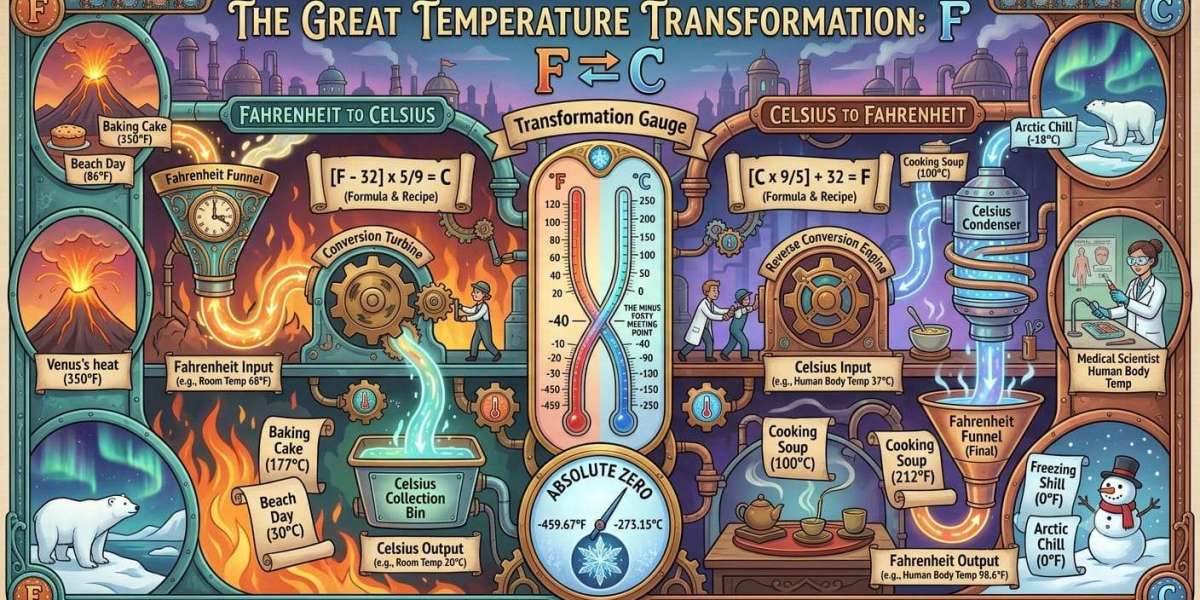
Here’s the deal. To convert Fahrenheit to Celsius, subtract 32 from the F number, then multiply by 5/9. That’s your go-to move.
Flip it for Celsius to Fahrenheit. Multiply C by 9/5, then add 32. It feels awkward at first. You get faster with a little use.
Fahrenheit to Celsius in words - subtract thirty two from the fahrenheit temperature and then multiply the result by five divided by nine or zero point five five six to get the celsius value quickly without any device handy in daily situations like checking oven settings or weather reports while traveling abroad and needing instant clarity.
Mental Hacks That Save You Time
Ditch the calculator often. Try this popular shortcut. Subtract 30 from Fahrenheit, then divide by 2. You land close enough for everyday checks.
Take 68°F outside. Subtract 30 gives 38. Divide by 2 lands at 19. Real answer sits at 20°C. Plenty good for deciding on a jacket.
You want tighter results? Subtract 32 first. Then multiply by 0.55 or 0.56. It gets you very near. Practice these and your brain starts guessing accurately without thinking hard.
Where the Two Scales Came From
Daniel Fahrenheit built his scale centuries ago. He picked odd points like brine freezing. Water freezes at 32°F and boils at 212°F on his system. Anders Celsius chose cleaner marks. Water freezes at 0°C and boils at 100°C. Most countries picked metric for science and trade. The US kept Fahrenheit because the 0-to-100 range feels natural for weather comfort.
Neither scale wins every argument. You bridge gaps when you know both.
Real Situations Where This Skill Wins
You bake cookies. The recipe says 350°F. Your new oven uses Celsius. Subtract 32 from 350, multiply by 5/9. You get about 177°C. Cookies turn out perfect.
A buddy travels to Canada. He sees 21°C and thinks it’s warm like 70°F. He shivers without layers. You avoid that mistake now.
Mechanics and HVAC techs switch scales daily for equipment. Home thermostats feel right when you match numbers across systems.
Mistakes People Make All the Time
Lots of folks subtract after multiplying. Wrong order ruins it. Always handle the 32 first for F to C.
They mix up 5/9 with 9/5 too. Double-check that fraction. Temperature changes skip the 32 offset. Just scale the difference directly.
You verify important stuff like food safety or health readings. Body temperature at 98.6°F equals 37°C exactly. Nail that one.
Faster Tricks for Daily Use
Memorize these anchors and you fly through conversions.
32°F equals 0°C. 68°F feels like 20°C room temperature. 212°F boils at 100°C.
From any anchor, add or subtract in 9°F steps for every 5°C. It builds quick intuition.
Double the Celsius number and add 30 for a solid Fahrenheit estimate. Reverse it the other way. You estimate weather or oven heat in seconds.
Tools That Help When You Want Precision
Your phone search bar handles it easy. Type “82 F to C” and you get the answer. Voice assistants do it hands-free too.
Still, learn the mental moves. You feel confident anywhere.
Cool Bits That Help You Remember
Water freezes at 32°F or 0°C. It boils at 212°F or 100°C. That 180-degree F gap covers 100 Celsius degrees. The math flows from there.
-40 sits the same on both scales. Crazy, right?
What the Numbers Show Us
Recent years smashed heat records. 2024 ranked hottest yet. People in many countries felt those Celsius jumps directly. You connect the dots better with both scales in mind.
Cooking videos mix units constantly. Travelers toggle apps. The more you practice, the less you notice the switch.
Make Your Own Quick Chart
Jot these down somewhere handy:
- 0°F ≈ -18°C
- 50°F = 10°C
- 77°F ≈ 25°C
- 104°F = 40°C
You expand it with numbers you use most. Keep it in your notes app or on the fridge.
Where Pros Use Conversions Daily
Chefs adjust ovens for international recipes. Wrong temp ruins texture or safety. Mechanics monitor engines. Gardeners check seed instructions from other countries. You gain an edge knowing the switch.
Practice Examples You Can Try Now
Convert 95°F. Subtract 32 equals 63. Multiply by 5/9. You get 35°C. Steamy day.
Now flip 25°C. Multiply by 9/5 equals 45. Add 32. You reach 77°F. Pleasant.
Do a few every day. You improve fast and it starts feeling natural.
Celsius to Fahrenheit in Action
You see 30°C abroad. Multiply by 1.8, add 32. You get 86°F. Pack light clothes.
The same shortcuts work backward. You handle both directions smoothly.
Why Some Folks Prefer One Scale
Fahrenheit gives finer steps for daily weather. People say the numbers match how hot or cold they feel. Celsius lines up neatly with science and water points. You pick what fits your life. Knowing both just makes you flexible.
Health, Safety, and Travel Wins
You check saunas, baby bottles, or pools. Accurate flips prevent accidents. Travelers convert comfort zones fast. 21°C feels mild. 35°C means serious heat.
Pack smart. Plan activities. Stay safe.
Keep Building the Skill
Switch your weather app between scales sometimes. Watch foreign news clips. Chat with friends who use different units. You pick up speed naturally.
FAQS
How close is close enough?
For weather or casual talk, rough estimates work great. Baking or lab work needs the exact formula.
What app should I grab?
Pick one with offline support and simple interface. Test a couple and stick with your favorite.
Do I ever need Kelvin?
Mostly in science classes or advanced work. Add 273 to Celsius when you do.
Can kids pick this up?
Absolutely. Use examples like beach days or ice cream melting. They catch on quick.
Do experts still do it by hand?
Many do for speed on the job. Tools help, but the brain skill never goes to waste.
You’ve got everything now. Grab those formulas. Try the hacks today. Next time temperatures switch on you, you flip them right back with confidence.
Share your favorite trick below. Try converting tomorrow’s forecast mentally. You’ll smile when it clicks. Temperatures connect everyone. Now you move between worlds easier. Go enjoy that perfect bake or smooth trip. You got this.