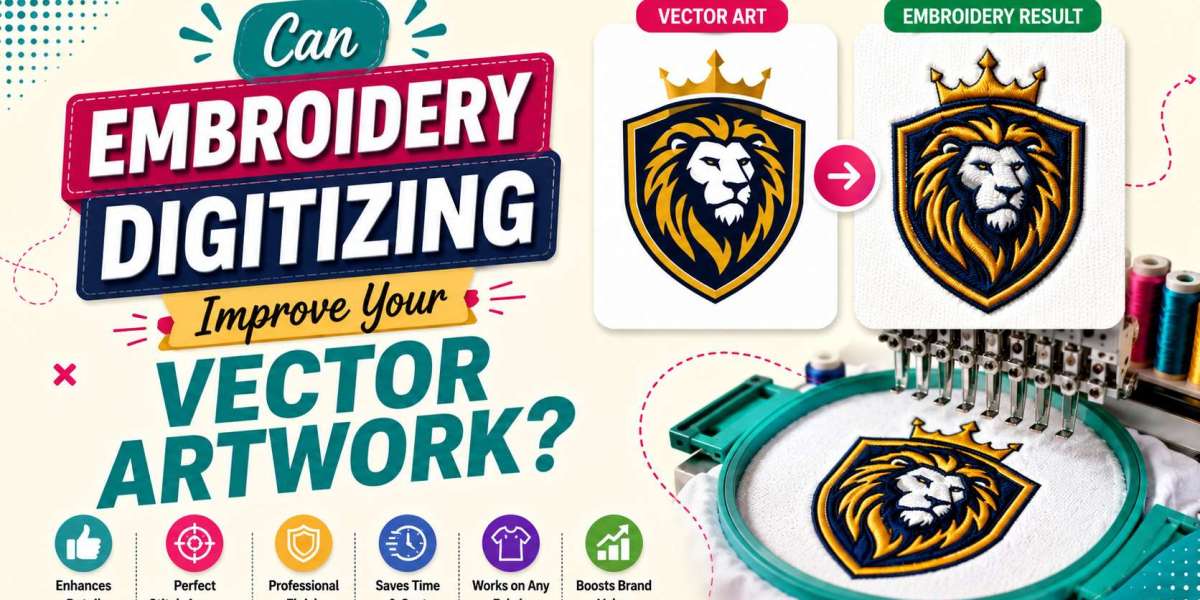

Yes, embroidery digitizing absolutely improves your vector artwork. It does not just convert your file. It rebuilds it from the ground up in a way that makes it work beautifully on real fabric. Your vector art looks perfect on screen, but a screen and a piece of fabric are very different things. Digitizing bridges that gap and makes your design come alive in thread. This is why so many brands, apparel decorators, and businesses trust the digitizing process to get professional results every time.
When you choose custom embroidery digitizing, your vector artwork goes through a careful transformation. A skilled digitizer studies your design, identifies every shape and color zone, and then maps out exactly how each element will be stitched. The result is not just a copy of your vector file. It is a smarter, fabric-ready version of it that holds up on any garment with clarity and detail.
What Does Embroidery Digitizing Actually Do to Your Vector Art?
Embroidery digitizing takes the visual information in your vector file and converts it into stitch data that an embroidery machine can follow. This means assigning stitch types, setting stitch direction, planning stitch sequencing, and adjusting stitch density for the specific fabric being used. None of this information exists in a raw vector file.
Think of it this way. Your vector file tells a printer where to place ink. That is all it does. It has no idea how a needle moves, how thread tension works, or how different fabrics behave under a hoop. Digitizing adds all of that knowledge to your design. It takes a flat image and gives it a physical intelligence that makes it work in the real world.
How Does Digitizing Make Vector Art Look Better on Fabric?
One of the most exciting things about digitizing services for embroidery is how they actually improve the way a design looks once it is stitched. Vector art on a screen has perfectly sharp edges and smooth gradients. But fabric is textured, flexible, and three-dimensional. Digitizing reshapes your artwork to look its best in that physical environment.
Here are the key ways digitizing improves your vector artwork:
Cleaner edges. The digitizer uses satin stitches to define borders and outlines. These lay down smooth, tight columns of thread that follow the shape of your design with precision. On fabric, this creates a sharper edge than you might even see on screen.
Better color separation. In your vector file, colors sit side by side perfectly. In embroidery, colors are stitched in layers and sequences. A good digitizer plans the color sequence so that each thread color lands cleanly without overlapping or creating visible borders between zones.
Texture and depth. Fill stitches add visual texture to larger areas of a design. Depending on the stitch angle and pattern chosen, the same color can appear lighter or darker just by changing the direction. This gives stitched designs a dimensional quality that flat vector art cannot achieve.
Stability on soft surfaces. Fabrics like fleece, terry, and polo stretch and shift. Digitizing adds underlay stitches beneath the main design to hold the fabric flat and give the top stitches a firm surface to land on. This is something no vector file can do on its own.
Does Vector Art Quality Affect the Final Embroidery Result?
Yes, absolutely. The quality of the vector artwork you start with has a direct impact on how well the final embroidery turns out. Clean vector art with well-separated shapes, solid fill colors, and outlined text gives a digitizer the clearest possible picture to work from. That clarity leads to more accurate stitch mapping and a better result.
I've noticed that designs with overlapping paths, unclear edges, or unadjusted gradients always take more time to digitize and often need multiple revisions. That is why digitizing service for embroidery professionals always recommend preparing your vector file carefully before submission. Remove hidden layers, merge overlapping shapes, convert text to outlines, and simplify fine details that will not translate well into thread.
That said, a great digitizer can often improve a design that is not quite perfect. They can simplify complex elements, strengthen thin lines, and adjust color choices to match available thread tones. This is one of the ways professional digitizing embroidery services add real value beyond just technical conversion.
Can Digitizing Fix Problems in Your Vector Artwork?
This surprises many people, but yes, a skilled digitizer can actually make your design stronger. Here is how:
Simplifying fine details. Tiny text, thin lines, and intricate patterns often do not stitch well at small sizes. A digitizer will identify these elements and either enlarge them, simplify them, or suggest an adjustment that preserves the look of the design while making it stitch-ready. The final result often looks more refined than the original.
Improving color for thread. Digital colors in vector files are built for screens, not for thread. Thread colors follow a different system, and not every digital shade has a matching thread equivalent. A professional working in best embroidery digitizing services will adjust your color choices to the closest available thread tones, which sometimes results in a richer, more vibrant final product.
Strengthening small lettering. Small text in vector art is a common challenge. Letters that look sharp at 10 points on screen may not stitch clearly at that same size. A digitizer can adjust the minimum letter height, thicken strokes, or switch stitch types to keep your text readable. That is an improvement the original vector file simply cannot achieve on its own.
How Does Digitizing Improve Consistency Across Large Orders?
One of the biggest advantages of professional embroidery digitizing services in USA is the consistency they bring to large production runs. When you have an order of 500 branded polo shirts, every single one needs to look exactly the same. A properly digitized file makes that possible.
The stitch file controls every aspect of what the machine does. Stitch count, thread color sequence, start and end points, and pull compensation settings are all locked into the file. Once a design is digitized correctly, it produces the same result on the first shirt and the five hundredth. That level of design consistency is something no manual or print-based process can match.
That is why many corporate brands, sports teams, and promotional companies rely on custom embroidery digitizing services in USA for their apparel needs. The investment in a quality stitch file pays for itself across every garment in the order.
What Makes a Digitized Vector File Better Than the Original?
Let's look at this honestly. A digitized file is not just your vector art in a different format. It is your vector art with expertise built into it. Here is what gets added during digitizing that simply does not exist in the original vector file:
Stitch type assignments for every element based on its shape, size, and position in the design.
Underlay layers that stabilize the fabric before the main stitches are placed.
Pull compensation adjustments that account for the natural shift of fabric under the needle.
Optimized stitch pathing that minimizes jump stitches and keeps the machine running efficiently.
Thread color sequencing that reduces unnecessary color changes and keeps borders clean.
All of these elements make the digitized version of your vector art more intelligent, more precise, and more production-ready than the original. That is not a small improvement. That is a full transformation.
How IDigitize Elevates Your Vector Artwork Through Expert Digitizing
When it comes to making your vector artwork truly shine on fabric, IDigitize stands out as one of the most trusted names among the best embroidery digitizing services providers in the USA. The team at IDigitize does not treat your design as just another file to process. They study it, plan it, and build a stitch file that honors every detail of your original artwork while making it stronger for production.
From complex logos to small left-chest designs, IDigitize handles every project with the same level of attention and care. Whether you need embroidery digitizing service usa results for uniforms, caps, jackets, or promotional garments, their files are built to run cleanly on any machine. That is the kind of reliability that growing brands need from an online embroidery digitizing service provider they can count on.
How to Choose the Right Embroidery Digitizing Service for Your Vector Art
Not every digitize embroidery service treats your vector artwork the same way. Here is what to look for when choosing a provider:
Manual digitizing over shortcuts. The best results always come from hand-mapped stitch files, not rushed conversions. Ask whether the service digitizes manually or uses bulk processing.
Fabric awareness. A great embroidery digitizing service near me or online will ask about your fabric type before starting. Different materials need different settings, and a provider who does not ask that question is cutting corners.
Revisions included. Even great digitizers sometimes need a tweak after the first test stitch. Choose a custom embroidery digitizing service that stands behind their work with free revisions.
Multiple file formats. Your stitch file should be delivered in the format your machine needs. A good embroidery digitizing services online provider offers DST, PES, JEF, and other formats as needed.
Sample proof before production. The best best embroidery digitizing service provider in usa teams offer a visual proof or test stitch image before you commit to a full run.
Final Thoughts
Embroidery digitizing does not just convert your vector artwork. It improves it, strengthens it, and makes it ready for the physical world of fabric and thread. From sharper edges and better color to improved consistency across large orders, the difference between a raw vector file and a professionally digitized stitch file is enormous.
If you want your brand to look its best on every garment, the answer is clear. Work with a team that understands both your artwork and the craft of embroidery. Give your vector art the upgrade it deserves, and you will see the difference in every stitch.
Frequently Asked Questions
Can embroidery digitizing actually improve vector artwork?
Yes. Digitizing adds stitch intelligence to your vector file, including underlay, pull compensation, and color sequencing, which makes your design look sharper and perform better on fabric.
Do I need a perfect vector file before getting embroidery digitizing done?
A clean vector file always produces better results, but a skilled digitizer can also improve artwork by simplifying details, adjusting colors, and strengthening small text for embroidery.
Why does vector art look different after embroidery digitizing?
The digitizer converts your flat digital shapes into physical stitch data. Stitch direction, texture, and thread depth add a dimensional quality that changes and often enhances how the design looks on fabric.
What is the benefit of using embroidery digitizing services in USA?
Embroidery digitizing services in USA offer manual digitizing, fabric-specific settings, fast turnaround, and production-ready files that ensure consistent, high-quality results across every garment in your order.
How does digitizing improve consistency for large embroidery orders?
A digitized stitch file locks in every setting, including stitch count, color sequence, and pull compensation. This guarantees that every garment in a large production run looks identical to the first.