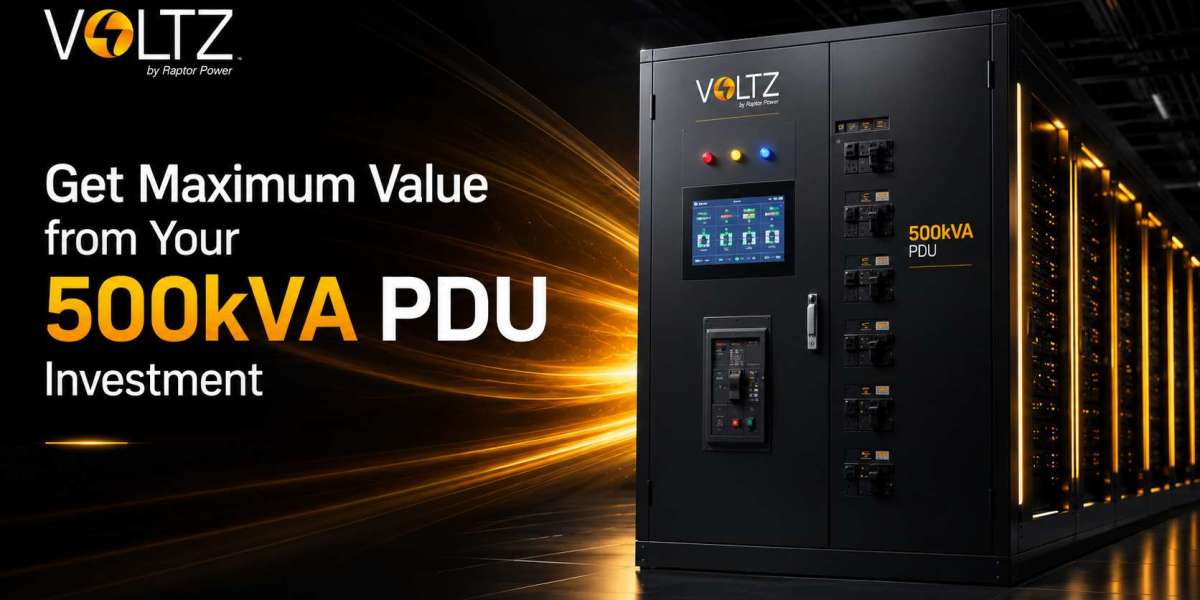

In the world of critical infrastructure, scaling up to meet the demands of high-density computing, cloud expansions, and intensive enterprise workloads requires serious power hardware. Purchasing a 500kVA PDU represents a major capital investment designed to act as the primary power distribution workhorse for your facility.
At this capacity, a Power Distribution Unit is responsible for stepping down and dividing massive amounts of electrical current, serving as the critical bridge between your main facility transformers and downstream equipment rows.
However, simply purchasing and installing a large-scale power panel does not automatically guarantee efficiency, safety, or lower utility bills. Without strategic management, high-capacity power systems frequently fall victim to hidden energy drains, unoptimized loading patterns, and thermal inefficiencies.
To achieve the best return on investment (ROI), facility managers must look beyond basic installation and understand how advanced electrical architecture can optimize every single watt. This guide breaks down the primary operational challenges that come with managing a large-scale distribution system, how smart engineering eliminates these problems, and why strategic component design helps you squeeze maximum value from your hardware infrastructure.
1. Minimizing Core Losses: The Physics of High-Capacity Transformers
A major portion of the efficiency loss in any large-scale power distribution system happens right inside the unit's internal isolation transformer. Because a 500kVA PDU processes massive blocks of electrical current, even tiny percentage inefficiencies can translate into thousands of dollars in wasted electricity every year.
The Problem: Continuous Energization and No-Load Core Losses
Transformers experience two primary types of energy drains: conductor losses (which change based on how much equipment is plugged in) and core losses (also known as no-load losses). Core losses occur continuously the entire time the transformer is connected to a live power source, regardless of whether the downstream server racks are drawing $5\text{ kW}$ or $400\text{ kW}$.
If your distribution hardware utilizes a standard, lower-grade transformer core, it constantly bleeds energy as waste heat. This creates a double financial penalty: you pay for the wasted electricity directly on your utility bill, and then you pay your cooling systems extra to pump that generated heat out of the building.
The Solution: Ultra-High-Efficiency Transformers
Maximizing the value of your infrastructure requires minimizing this baseline energy drain.
Premium Core Materials: High-performance distribution units utilize advanced transformer engineering made with high-permeability silicon steel or amorphous metal cores. These materials allow magnetic fields to shift smoothly, cutting continuous core losses down to the absolute physical minimum.
Eco-Design Compliance: Investing in units that meet or exceed international efficiency standards (such as Department of Energy amended standards) ensures that your power distribution network remains highly cost-effective, even during periods when your facility is only partially populated.
2. Eradicating Thermal Drains with Pure Copper Busbars
The choice of metal inside your high-capacity distribution panel plays a massive role in dictating the long-term reliability and physical longevity of your electrical room.
The Problem: Loosening Terminals and Voltage Drops
To show highly appealing, artificially low upfront prices, some budget-focused vendors construct internal conductive busbars and wiring runs using electrical-grade aluminum instead of pure copper. While aluminum is economical, it features a much higher level of electrical resistance and a higher coefficient of thermal expansion.
Under the continuous thermal cycles of a busy facility, aluminum expands and contracts drastically. Over time, this constant mechanical movement causes bolted internal connections to loosen. Loose connections create high-resistance "hot spots" that degrade insulation, introduce severe arc-flash risks, and cause unexpected hardware failures. Furthermore, higher resistance leads to larger internal voltage drops, meaning less clean power actually reaches your equipment racks.
The Solution: Standardizing on 100% Pure Electroplated Copper
Building a truly resilient infrastructure requires an absolute commitment to premium component materials. High-performance power systems from Voltz utilize certified, pure electroplated copper for all internal busbars, terminal blocks, and conductive paths.
Superior Thermal Efficiency: Copper features exceptional electrical conductivity, minimizing energy loss through heat dissipation and reducing the workload on your facility's cooling systems.
Mechanical Security: Copper maintains mechanical stability under extreme temperatures, ensuring internal connections remain tight across decades of continuous operation. This eliminates the need for frequent manual maintenance torque audits and removes a primary source of unexpected system failures.
3. Banishing "Stranded Capacity" Through Advanced Monitoring
Power is the single largest ongoing operational expense for modern high-density facilities. Yet, an alarming number of operations run completely blind, unaware of exactly how electricity is being consumed at the individual circuit level.
The Problem: Wasted Power Allocations and Phase Imbalances
When a facility deploys a basic, unmonitored 500kVA PDU, managers cannot see real-time electrical metrics down to individual breakers. To prevent an unexpected current spike from tripping a main breaker, management teams are forced to leave massive, defensive "safety cushions," leaving up to 30% of their actual power capacity completely unused.
This hidden waste is known as "stranded capacity." Furthermore, without continuous tracking, creeping phase imbalances go completely unnoticed, stressing your upstream transformers and leading to premature equipment wear.
The Solution: Revenue-Grade Branch Circuit Monitoring (BCM)
True power optimization treats integrated data visibility as an essential safety tool, not an optional luxury.
Real-Time Data Visibility: Advanced units feature factory-integrated, network-connected Branch Circuit Monitoring systems that track current, voltage, power factor, and energy consumption ($kWh$) with billing-grade accuracy.
Optimizing Allocation: By continually monitoring real-world consumption trends, facility managers can safely utilize their full power capacity, populating empty equipment rows with active machinery without needing to purchase additional hardware. Real-time alerts warn technicians about creeping imbalances early, allowing them to balance loads and perform predictive maintenance before downtime occurs.
4. Maximizing Floor Space with Front-Access Engineering
The physical dimensions and service requirements of your distribution hardware have a direct, measurable impact on the profitability of your real estate layout. Every square foot of space on your operational floor represents direct overhead cost.
The Problem: The Footprint Penalty of Legacy Layouts
Many traditional equipment manufacturers build wide, deep enclosures that require both front and rear physical access doors for routine maintenance, circuit additions, and breaker replacements. National electrical safety codes dictate that live electrical panels must maintain wide, clear working zones on all service sides. If an enclosure requires rear access, you are legally forced to leave a wide 36-inch to 42-inch empty aisle completely behind the cabinet. This empty "dead zone" wastes immense amounts of expensive real estate that could otherwise hold active, revenue-generating hardware rows.
The Solution: Slim, Front-Access Only Mechanical Layouts
Intelligent power design optimizes physical space through strategic mechanical engineering. By shifting to ultra-slim footprints utilizing front-access only terminal configurations, you transform your floor space efficiency.
Zero Rear Clearance: Front-access designs allow the distribution unit to be pushed completely flush against a concrete wall or placed back-to-back with other infrastructure hardware, cutting the legal space clearance requirement in half.
Maximizing Density: Reclaiming this floor space allows you to fit additional equipment rows into your existing layout. This drives up your total capacity and real estate efficiency without requiring an expensive, time-consuming physical building expansion.
Conclusion: Protecting the Foundation for Tomorrow's Workloads
Squeezing the maximum possible value from a major 500kVA PDU investment requires moving past basic upfront purchase prices and focusing deeply on material quality, transformer efficiency, and data intelligence. Choosing substandard conductive metals, unmonitored panels, or space-inefficient cabinet designs will inevitably burden your business with high maintenance costs, stranded power capacity, and unexpected system downtime.
Investing in a high-performance power platform from Voltz ensures your facility operates with maximum resilience and efficiency. By standardizing on certified copper internals, ultra-high-efficiency transformer cores, and high-accuracy circuit intelligence, you eliminate a major source of operational risk and establish a rock-solid foundation ready to handle the technical computing demands of tomorrow.
Frequently Asked Questions (FAQs)
1. What is the difference between transformer core losses and conductor losses?
Transformer core losses (no-load losses) are caused by the continuous magnetic changes inside the steel core of the transformer; this energy drain happens 24/7 as long as the unit is plugged into a power source, regardless of the load. Conductor losses (load losses), on the other hand, are caused by electrical resistance as current flows through the internal copper or aluminum windings, and this drain increases directly as more equipment is powered on downstream.
2. Why is Class-1 monitoring accuracy required for modern facilities?
Class-1 accuracy ensures that the integrated monitoring sensors within the power unit capture electrical usage metrics (such as Amps, Volts, and kilowatt-hours) within an extremely precise $\pm1\%$ margin of error. In multi-tenant colocation environments or modern corporate layouts utilizing internal departmental cost-allocation models, this high level of precision is required to provide fully verified, legally defensible consumption logs for fair billing and resource tracking.
3. What is "Finger-Safe" technology, and why is it required for active maintenance?
Finger-safe technology refers to an internal physical insulation and shielding layout rated to IP20 safety standards. This protective barrier completely covers and insulates all live internal electrical busbars. This shielding allows certified field technicians to safely install, remove, or adjust individual branch circuit breakers while the rest of the panel remains active, protecting personnel from accidental arc-flash contact without requiring a total system shutdown.
4. How do integrated Infrared (IR) Inspection Windows improve facility safety?
Integrated IR Windows are specialized, highly durable crystal viewing ports built directly into the solid steel exterior doors of the panel enclosure. These ports allow maintenance technicians to perform routine thermal scans of the internal busbars and terminal connections using a handheld thermal camera without opening the panel doors. This allows you to complete necessary safety audits safely in a fraction of the time, eliminating the expensive administrative overhead and specialized PPE requirements of traditional open-panel electrical inspections.
5. What is a "K-Factor" rating, and why does it matter for high-density equipment?
Modern computing power supplies draw electrical current in short, jagged pulses rather than smooth waves, creating a phenomenon known as harmonic distortion. This distortion introduces high-frequency electrical currents back into the system, generating excessive heat within standard, unrated transformers. A PDU with a specific K-Factor rating (such as K-13 or K-20) is uniquely engineered with oversized neutral lines and specialized core designs to handle these harmonic currents safely without overheating.
6. What is "Selective Coordination," and how does it safeguard systemic uptime?
Selective coordination is a precise electrical engineering approach that ensures your upstream and downstream circuit breakers are perfectly synchronized. Under fault conditions, only the specific branch breaker closest to the short-circuited device opens, completely isolating the local issue. This prevents a localized hardware short from traveling up the line and tripping the main panel feed, ensuring that neighboring equipment rows continue to run undisturbed.