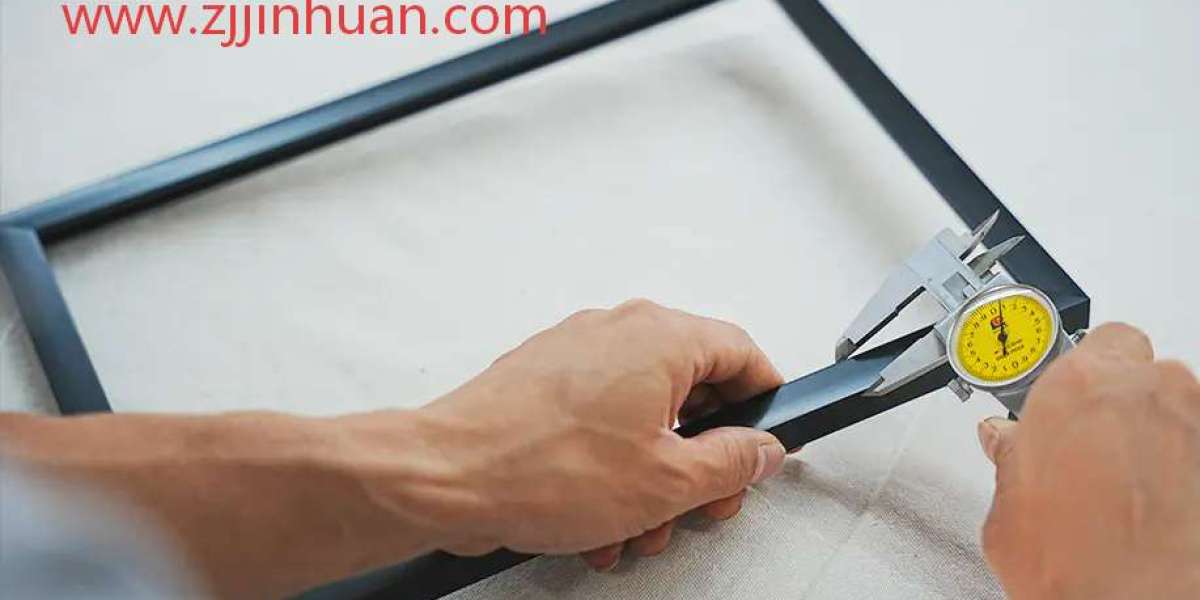

Ordering a frame online removes the immediate help of a store associate who might catch a measuring mistake before it becomes a costly error, yet the convenience of digital shopping also places the responsibility of accuracy squarely on the buyer's shoulders. A Custom Picture Frame from zjjinhuan, crafted by JinHuan, offers endless possibilities for size, material, and finish, but that freedom comes with a single non-negotiable requirement: the measurements must be exact. When a gap of just a few millimeters can make an artwork look loose and unprofessional, or a frame that is too small can damage the piece entirely, have you truly mastered the three critical dimensions that every custom order demands?
The first and most common mistake involves confusing the artwork size with the frame opening size. Many first-time buyers measure the outer edge of their print or photograph and assume that the frame will match that number exactly, yet a frame intended for custom production typically requires the opening to be slightly larger than the artwork to allow for expansion, contraction, and proper mounting. For a piece of paper or canvas that measures exactly twenty by thirty centimeters, the frame opening should actually be one or two millimeters wider and taller so the artwork sits comfortably inside without buckling or tearing. JinHuan's production team follows this industry standard, which means the buyer must decide whether they want the frame to show a thin border of the artwork's white edge or to cover it completely with a mat. This choice changes the required measurement entirely.
The second measurement that often goes wrong involves the depth or rabbet of the frame, which refers to the inner ledge where the artwork, glass, backing, and mat all rest. A standard frame might have a rabbet depth of only half a centimeter, which works fine for a single sheet of paper but fails completely for a canvas board, a layered collage, or a photograph mounted on thick foam core. A Custom Picture Frame from zjjinhuan can accommodate various depths, but the buyer must specify the total thickness of everything going inside. A stack that includes glass, a double mat, the artwork, a backing board, and a layer of protective paper might reach nearly a full centimeter in depth. Ordering a frame with a shallow rabbet means the backing will protrude, the clips will not close, and the entire project will sit unevenly against the wall.
The third critical dimension involves the mat opening, not just the outer frame size. Many buyers provide the outer dimensions of their artwork and assume the manufacturer will calculate the mat opening automatically, yet a custom order often asks for the exact size of the visible image area when a mat is used. For a photograph that measures fifteen by twenty centimeters, the mat opening should be slightly smaller, perhaps fourteen and a half by nineteen and a half, so the mat overlaps the edges of the photo by a few millimeters and holds it in place without adhesive. Failing to specify this mat opening size results in a mat that either covers too much of the image or leaves a visible gap between the photo and the mat edge. JinHuan's online ordering system provides space for both the artwork size and the desired mat opening, but the buyer must measure both with the same precision.
Another hidden challenge arises when measuring artwork that is not perfectly square or rectangular, such as a handmade textile, a pressed flower arrangement, or a vintage map with uneven edges. A frame built to custom specifications can still accommodate these irregular pieces, but the measurement process changes from finding the longest and widest points to deciding where the frame should sit relative to the content. For a circular piece of art, the correct measurement is the diameter, but the frame itself will be square or rectangular unless the buyer requests a specialty shape. JinHuan's product range includes standard geometric shapes, so a circular piece will require a square frame with a circular mat opening, which demands three separate measurements: the outer frame size, the mat opening diameter, and the artwork diameter.
A practical tip for avoiding measuring errors involves using a metal ruler instead of a fabric tape measure, which can stretch over time and produce inconsistent readings. The artwork should be laid flat on a hard surface, not leaned against a wall or held in the air, because gravity and angle can add or subtract a few millimeters from the true size. Each measurement should be taken twice, once at the top and once at the bottom for height, once at the left and once at the right for width, because no piece of paper or canvas is perfectly factory-cut every time. JinHuan's customer service team has seen orders fail because a buyer measured only one corner of a print that turned out to be slightly trapezoidal, so checking both ends catches these subtle variations before they become permanent problems.
The final step before clicking the order button involves adding a small safety margin to each dimension, typically one or two millimeters, to account for humidity changes or minor cutting errors in the artwork itself. A frame that fits too tightly will push against the artwork as seasons change, causing ripples or creases that cannot be repaired. A frame that fits slightly loosely allows the artwork to breathe and expand naturally, and the mat or mounting corners will keep it centered and visible. JinHuan's production facility, with decades of framing experience, builds each custom order to the specifications provided, which means the accuracy of the final product depends entirely on the accuracy of the initial measurements.
To see how JinHuan translates your careful measurements into a precisely crafted frame, visit their online store at https://www.zjjinhuan.com/ where a range of materials, colors, and profiles await your next framing project. A well-framed piece of art brings joy for years, but that joy begins with a single correct number on a ruler. When a few millimeters of measuring error can turn a treasured artwork into a misfit disappointment, would you trust your next frame to anything less than perfect precision?