
When you catch your reflection, those tiny red lines can feel like a persistent flaw that nothing seems to hide. They often emerge around the nose first, then slowly spread across the cheeks, resembling faint spiderwebs or distinct bright red threads that makeup struggles to conceal. This is an incredibly common experience; as we age or endure sun damage, many people develop these visible vascular markings on their face.
It is not merely a cosmetic issue. These exposed vessels can feel sensitive and flare up easily when triggered by sun exposure or hot beverages. Creams simply cannot erase them once the vein wall has been compromised. Light-based therapy offers the only real solution. Specifically, yellow laser treatment has become one of the most reliable options for clearing facial spider veins effectively.
In this guide, I will explain how the technology works, what the procedure entails, and if it is right for you. While the science is universal, if you search for yellow laser Singapore, you will find many clinics offering this specific care locally. Here is what you need to know before booking your appointment.
Understanding Facial Spider Veins
Spider veins are essentially dilated capillaries sitting just beneath the skin's surface. Medical professionals refer to this condition as telangiectasia. It happens when tiny blood vessels expand beyond their normal size, causing blood to pool and show through the skin as red or purple lines.
Unlike veins on the arms or legs, these sit incredibly close to the epidermis. This makes them notoriously difficult to conceal with foundation. Even light coverage tends to highlight them rather than mask them. Over time, they can multiply rapidly. You might start with three or four lines, only to notice ten appearing within a single year.
Common causes include genetics, sun damage, aging, and rosacea. Hormonal changes also play a significant role. For many, these veins appear after age thirty. By fifty, most have some visible presence. While this is part of natural aging, it does not mean you must accept it as inevitable.
Why Yellow Light is Superior for Vessels
Laser technology relies on selective photothermolysis. The principle is simple: certain wavelengths target specific colors in the tissue. Red blood absorbs green-yellow light best. This is the basis of all effective vascular laser therapy.
Yellow lasers operate around 577 nanometers, while some systems use 585 nm. Both fall in that green-yellow spectrum where hemoglobin peaks in absorption. When the laser fires, the hemoglobin in those small veins takes in the energy and converts it to heat. The vessel wall then coagulates and seals shut.
Your body gradually reabsorbs that sealed tube over weeks. The red line disappears because there is no longer blood flowing through it. Other lasers exist, such as pulsed dye lasers, but yellow wavelengths penetrate just deep enough for facial vessels without burning the surface. Too much penetration risks scarring on thin facial skin, while too shallow means ineffective treatment. Yellow sits in the perfect sweet spot. If you are considering yellow laser Singapore, you will find providers utilizing this precise wavelength range.
Facial vs. Body Laser Treatments
Facial skin responds differently than veins on the arms or legs. Face skin is thinner overall, and the blood vessels are more superficial. They also cluster closer together. A machine optimized for legs might burn the face even at lower settings.
Specialized facial handpieces exist to address this. They cool the skin surface while firing, protecting the outer layer. Most practitioners adjust fluence and pulse duration based on vessel depth. Small, fine capillaries require shorter pulses, while larger, deeper veins need slightly more energy.
If you search for yellow laser Singapore, you'll see various devices available. Some use dual-wavelength systems to treat both shallow and deeper vessels simultaneously. Single-wavelength machines often require multiple passes. Dual systems finish faster with fewer sessions. Both are safe when operated by experienced hands who understand the nuances of facial anatomy.
What Happens During the Procedure
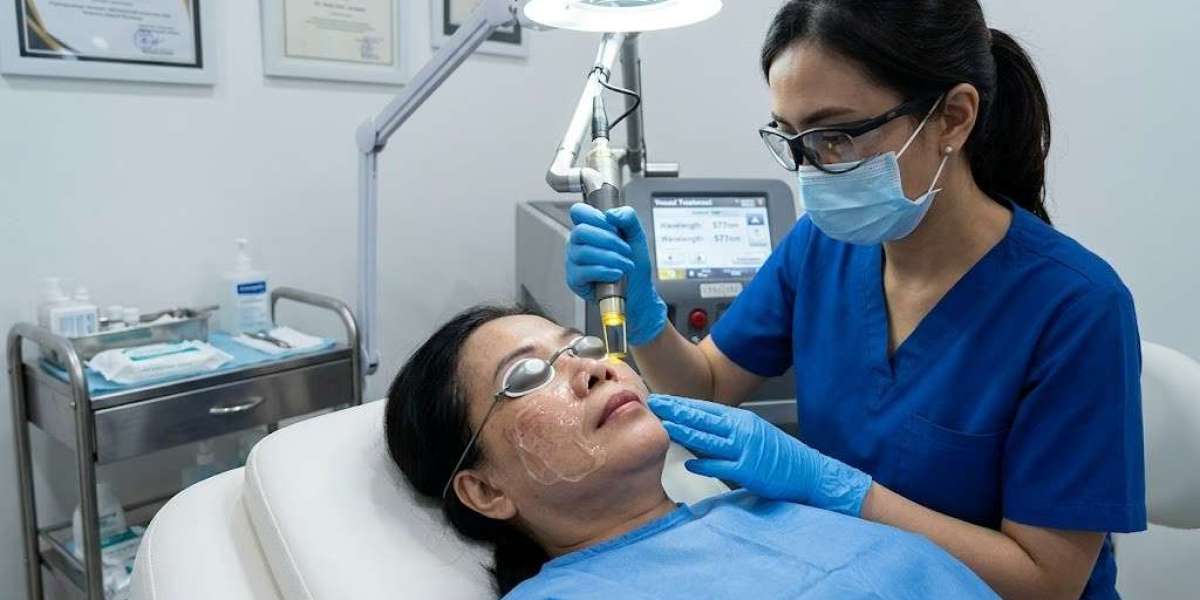
Most people worry about pain, but it is manageable. The clinic applies numbing cream before starting, which reduces surface sensation significantly. Then, the technician places the handpiece against your skin. You hear clicking with each shot. It feels like a warm snap, similar to a rubber band snapping but softer.
A session lasts fifteen to thirty minutes depending on coverage. You keep metal eye shields on throughout, as safety is non-negotiable with any laser targeting the face. Afterward, the skin looks irritated. Swelling occurs around treated areas, and some patients develop slight darkening of individual spots. This is temporary and expected.
You leave immediately. There's no overnight recovery required. Makeup covers any residual redness within an hour or two. Just avoid intense exercise, saunas, or direct sunlight afterward. Let the skin rest and settle into healing mode.
Recovery Timeline and Results
Immediate redness fades in twenty-four to forty-eight hours. Tiny scabs form sometimes, falling off naturally within five days. Don't pick at them; picking risks infection or scarring. Your skin needs to heal undisturbed.
Visible clearing takes time. Vessels don't vanish instantly. The body metabolizes the coagulated material over three to four weeks. Final results appear only after waiting long enough for full clearance. Patience matters here. Rushing back for touch-ups too soon leads to unnecessary treatments.
Most people need three to six sessions spaced monthly apart. Each pass removes remaining visible vessels. Deeper veins respond slower, while shallow ones fade quickly. Combination cases benefit from staged treatment plans. One session clears the worst, another cleans up leftovers, and a third ensures stability.
For maintenance, annual touch-ups may be needed. New vessels can form with continued aging or environmental damage. Prevention helps. Daily sunscreen prevents worsening, and avoiding extreme temperature shifts preserves your gains.
Limitations to Consider
This treatment doesn't stop all future veins from forming. Genetics drive some development regardless of intervention. If your family history shows early spider veins, expect recurring sessions later. Management becomes lifelong.
Deep cystic acne or active infections require caution. Treat those conditions first before using laser on the area. Inflamed skin reacts unpredictably to heat stimulation. Infection risk increases. Wait until inflammation subsides completely.
Pigmentation concerns matter too. Darker skin tones absorb different wavelengths. Yellow laser treatment generally targets hemoglobin, not melanin. However, improper settings can still affect pigmentation. Always consult an experienced provider familiar with your Fitzpatrick skin type.
Some people confuse redness caused by inflammation with spider veins alone. Rosacea creates diffuse redness. Laser fixes the visible vessels but not the underlying tendency. Medication or gentle topicals address the root cause. Combination approaches often yield better outcomes.
Availability and Choosing a Provider
If you search for yellow laser Singapore, you'll find several reputable clinics. Quality varies significantly between providers. Not every practitioner has experience with facial vessels. Ask about their specific training and how many treatments they've performed on facial veins.
Review actual before-and-after photos of similar cases. Don't rely on stock images. Look for results on real patients with comparable concerns. Also inquire about device specifications. Older models may lack cooling features newer machines offer. Newer equipment typically means safer, more comfortable sessions.
Cost considerations vary too. Pricing depends on number of sessions required and facility reputation. Compare value rather than price alone. Experience and safety matter more than cheap deals. Badly administered laser costs more to fix than investing in proper care upfront.
Bottom Line
Facial spider veins are common but rarely resolve on their own. Topical creams manage symptoms temporarily but cannot remove visible vessels permanently. Yellow laser treatment targets the source directly. It seals the vessels safely and effectively without damaging surrounding skin.
For most patients seeking visible improvement, it delivers consistent results. Recovery is minimal. Downtime is short. Professional expertise determines success more than the device itself. Choose carefully. Discuss expectations honestly. And plan for maintenance if needed over years to come.
Understanding what works—and what doesn't—helps set realistic goals. This isn't a single miracle cure for everyone. But for the right candidate facing persistent facial spider veins, it remains one of the best solutions available today.