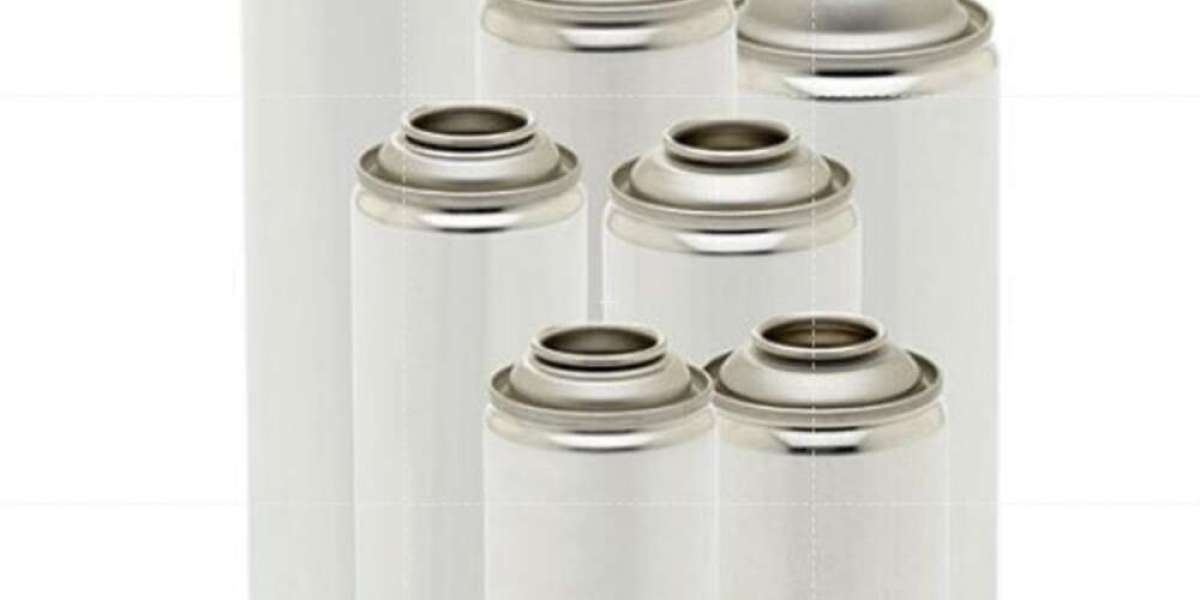

Packaging rarely gets the credit it deserves. Most people grab a can off the shelf, use it, and never once think about what holds it together or why it does not fail under pressure. Yet the construction choices behind everyday aerosol containers have shifted in meaningful ways over time, and the Two-Piece Aerosol Can is one of those developments that quietly changed how pressurised products are made and experienced.
Older aerosol cans were built from three separate parts. A body, a top, a bottom, each made independently and joined together during assembly. It worked. But more joins meant more potential weak points, more handling during production, and more variables to manage at every stage. Two-piece construction collapses that structure into something simpler: the body and base formed as one continuous unit, with only the top added afterward. That single change has a ripple effect across how the can performs, how it is made, and what it can reliably hold.
The forming process itself is worth a moment. Deep drawing takes a flat sheet of metal and progressively presses it into a seamless cylindrical shape, no welding, no attaching a separate base. The result is a lower section with no joint interrupting the surface. Pressure distributes evenly across that surface rather than concentrating around a seam. For anything that depends on consistent internal pressure over time, whether that is a cooking fuel canister, a medical spray, or an industrial product, that structural continuity is not a minor detail. It is the difference between a container that performs reliably and one that introduces uncertainty.
Manufacturing gets simpler too, in ways that matter at scale. Fewer components moving through a production line means fewer alignment issues, fewer inspection checkpoints at join stages, a faster path from raw sheet metal to finished can. Waste drops naturally when you are working with fewer pieces. That kind of efficiency appeals to producers across industries, not just because it cuts costs but because it reduces the number of things that can go wrong before a product reaches a shelf.
Then there is the surface itself. A seamless cylindrical body is genuinely easier to print on and decorate consistently. No seam interrupting the curve, no variation in surface tension from a join line running vertically down the side. Labels adhere more evenly. Printed graphics look cleaner. For consumer products where shelf presence matters, that visual regularity has real commercial value, separate from anything functional.
Aluminium is the material most associated with this construction format, and for good reason. It is light, it does not corrode easily, and it moves through recycling systems in many regions without needing special handling. Steel versions exist and carry different pressure and weight profiles suited to different contents. As sustainability considerations work their way into purchasing decisions across both consumer and industrial markets, the material story attached to a container carries more weight than it once did.
None of this means two-piece construction is universally the right answer. Some products require different pressure ratings, different materials, or construction methods that suit particular contents. Engineering always involves tradeoffs. But across a broad range of pressurised consumer and industrial applications, the logic holds: fewer seams, more consistent pressure distribution, cleaner surfaces, and a simpler production path add up to a container that is easier to make well and harder to fault in use. Bluefire builds its pressurised product range with considered construction standards. Those curious about what is available can take a look at https://www.bluefirecans.com/product/ .