
In the 21st century, hospitals have put forward new requirements for endoscopes, such as portability, miniaturization, and intelligence. Inspired by industrial portable endoscopes, medical portable endoscope systems have emerged. Currently, many companies at home and abroad have developed different products, but due to the early stage of research and development, the constituent modules have not yet formed a unified standard, and there are still some problems.
In the industrial field, portable endoscopes were first used for internal inspection and flaw detection of components. They consist of a handheld terminal, signal connection cables, camera modules, etc., and are convenient for engineers to carry and use. With the development of technology, their functions have gradually improved and the technology has become more mature. However, industrial portable endoscopes do not have high requirements for pixel, real-time image transmission and lighting sources.
Analysis of Key Technologies for Medical Portable Endoscopes
Power supply module
Medical portable endoscopes need to be powered by batteries. Currently, in China, large-capacity lithium batteries are mostly used. Due to the limitation of size, the battery capacity is limited, and the battery life is generally 2 to 4 hours. By using power management chips, interference in the circuit can be eliminated, and power can be supplied to all modules of the system. Low-power electronic components and circuit optimization reduce the system's power consumption, providing conditions for solar charging. Some products can be charged by solar panels or 220V mains electricity.
Front-end collection module
Front-end adapter: The medical portable endoscope is connected to various endoscopes through the adapter. It has a lens group inside to ensure complete, distortion-free and accurate focal length of the image. The lens group designs of different manufacturers are different. Aspherical lenses can optimize image quality and reduce size. The design needs to consider various factors and determine the parameter indicators according to the optical characteristics of different endoscope interfaces.
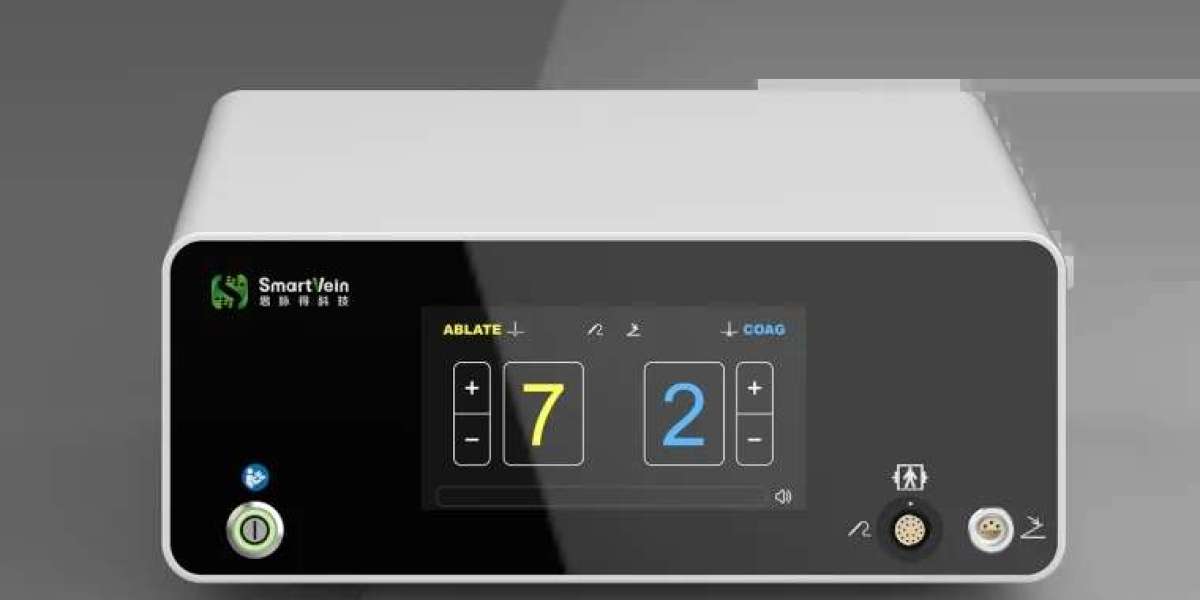
Image sensor: The image sensor converts optical signals into electrical signals. There are mainly two types: CCD and CMOS. Medical portable endoscopes mostly adopt CMOS sensors, as CMOS sensors have relatively lower costs. With the continuous advancement of technology, the performance of CMOS sensors keeps improving while their costs gradually decrease. This enables medical portable endoscopes to be launched onto the market at more affordable prices, benefiting more medical institutions and patients. Especially in some areas with limited resources, low-cost Disposable plasma surgical electrode equipment can bring new opportunities for the development of local medical services.
Cold light source module
Cold light sources have the advantages of long lifespan, low heat generation, and energy saving. They are an important component of medical portable endoscopic video systems. The characteristics of medical portable endoscopes are that the light source is integrated in the handheld terminal, requiring a small size, low power consumption, low heat generation, and good light parameters. LEDs, as light sources, have the advantages of low power consumption, small size, light weight, and extremely low heat generation. Currently, all medical portable endoscopes adopt LEDs.
Disposable plasma surgical electrode equipment https://www.smartveingroups.net/Disposable-plasma-surgical-electrode.html