
When considering aesthetic treatments, one of the most common concerns is whether yellow laser treatment can thin the skin. This worry is understandable, but it's important to separate fact from fiction to make informed decisions about your skincare.
The Origins of the Myth
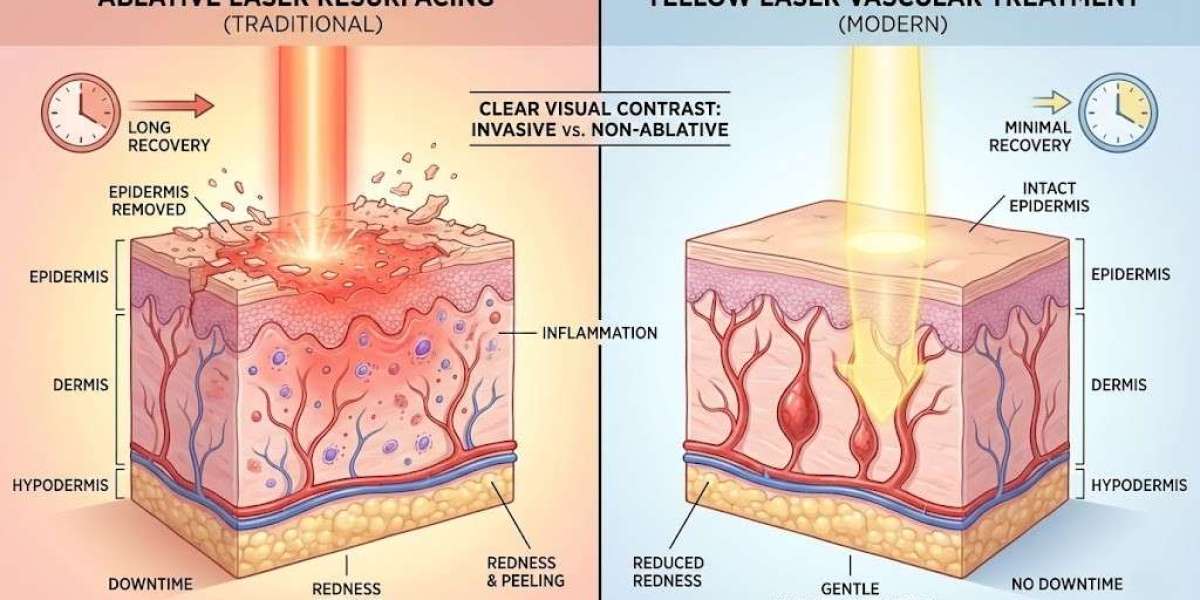
The idea that laser treatments might thin the skin has its roots in early laser technologies. These early devices were designed to resurface the skin by vaporizing layers of tissue. The healing process was lengthy, and during this time, the skin could appear thinner as it regenerated. In some cases, improper use or overly aggressive treatments led to long-term changes in skin texture.
Over time, the nuances between different types of lasers were lost, and all lasers began to be grouped together in people's minds. Yellow laser treatment, despite its unique properties and mechanisms, became unfairly associated with these older, more invasive technologies.
Understanding Yellow Laser Treatment
Yellow lasers operate at a wavelength of approximately 577 nanometers. This specific wavelength is particularly effective because it is strongly absorbed by hemoglobin, the pigment found in blood vessels. This absorption is key to understanding how the laser works.
The energy from the yellow laser is directed into the blood vessels that cause redness, flushing, and visible capillaries. These vessels heat up internally and gradually collapse or shrink. Importantly, the surrounding skin absorbs very little of this energy. The epidermis is not removed, and the dermis is not damaged. In essence, yellow laser treatment targets blood vessels, not skin layers.
The Distinction Between Thinning and Weakening
When people talk about "thin skin," they often mean different things. Some refer to skin that appears translucent and shows veins more easily. Others might mean skin that bruises or tears more readily. Still, others are concerned about a loss of firmness or collagen.
Yellow laser treatment does not cause epidermal thinning. It does not shave off layers of skin or reduce the thickness of the skin's barrier. In fact, the controlled heat from the laser can stimulate mild collagen remodeling over time. This is not a dramatic tightening effect, but it is certainly not a degradation of the skin.
Temporary Sensations vs. Long-Term Damage
After a yellow laser treatment, some patients may notice temporary sensations such as tightness, dryness, or sensitivity. These sensations can be alarming, especially if you are already worried about skin thinning. However, these effects are temporary and are part of the normal healing process.
Mild inflammation can affect skin hydration and temporarily disrupt the skin barrier. Redness can also make any texture changes appear more pronounced. With proper moisturization and sun protection, the skin usually returns to normal within a few days. This short recovery period is often mistaken for structural damage, but it is not.
The Real Causes of Skin Thinning
To put things in perspective, true skin thinning typically results from chronic biological processes. Long-term use of topical steroids is a significant factor. Aging itself reduces collagen and elastin levels. Sun exposure gradually degrades the skin's dermal support. Hormonal changes and certain medical conditions can also contribute to skin thinning.
Laser treatments are not typically among the primary causes. In fact, chronic inflammation—characterized by constant flushing, redness, and vascular instability—can accelerate skin aging. Yellow laser treatment is often used to address and calm this type of inflammation.
The Long-Term Safety of Yellow Laser Treatment
Yellow lasers have been in use for many years, especially for treating rosacea-prone and redness-dominant skin. These are some of the most sensitive skin types. If yellow laser treatment caused skin thinning, it would be evident by now.
Instead, clinicians continue to choose yellow laser treatment because it is gentle, predictable, and safe for delicate areas. It is commonly used on the face, where more aggressive treatments would be inappropriate. The long track record of yellow laser treatment speaks volumes about its safety and efficacy.
The Importance of Technique and Protocol
The role of the aesthetic clinic is crucial here. Any energy-based treatment can cause problems if used too aggressively or without considering the skin's response.
Over-treatment is the real risk. This can happen with any device if sessions are too frequent, settings are too high, or if the skin's signals are ignored. When the skin does not have time to recover, irritation can compound.
Good practitioners adjust the settings conservatively, space treatments appropriately, and monitor how the skin responds over time. When treatment respects the skin's biology, long-term damage is unlikely.
Comparing Yellow Laser to More Aggressive Treatments
It helps to understand what yellow laser treatment is not. It is not ablative resurfacing, nor is it a deep chemical peel. It is not designed to aggressively remodel skin thickness.
These more aggressive treatments intentionally create controlled injury and require longer recovery periods. They have their place, but they also come with different risks. Yellow laser treatment falls into a gentler category, focusing on vascular correction rather than tissue removal.
The Long-Term Benefits for Reactive Skin
Another often-overlooked aspect is the long-term benefit for those with reactive skin. Persistent redness keeps the skin in a low-grade inflammatory state. Over time, this inflammation weakens the skin barrier and increases sensitivity.
Reducing redness can improve overall skin behavior. Fewer flare-ups mean less barrier disruption, better tolerance of skincare products, and improved healing. In this context, yellow laser treatment can support long-term skin resilience rather than causing harm.
When Caution Is Still Appropriate
This does not mean that yellow laser treatment should be used carelessly. Active infections, uncontrolled inflammatory skin conditions, or certain photosensitizing medications require caution or delay. These are standard medical considerations, not concerns about skin thinning. A proper consultation at an aesthetic clinic should identify these issues before treatment begins.
The Bottom Line
Yellow laser treatment does not thin the skin when performed correctly. The fear stems from outdated laser myths and confusion between very different technologies.
Yellow lasers target blood vessels, not skin layers. They do not remove tissue or strip the epidermis. Used appropriately, they often calm inflammation and support healthier skin over time.
As with any procedure, outcomes depend on how thoughtfully it is used. A careful aesthetic clinic focuses on long-term skin quality, not just short-term clearing. If skin thinning were a real risk, yellow laser treatment would not be trusted for the most delicate faces. The fact that it is used in such cases tells you almost everything you need to know.