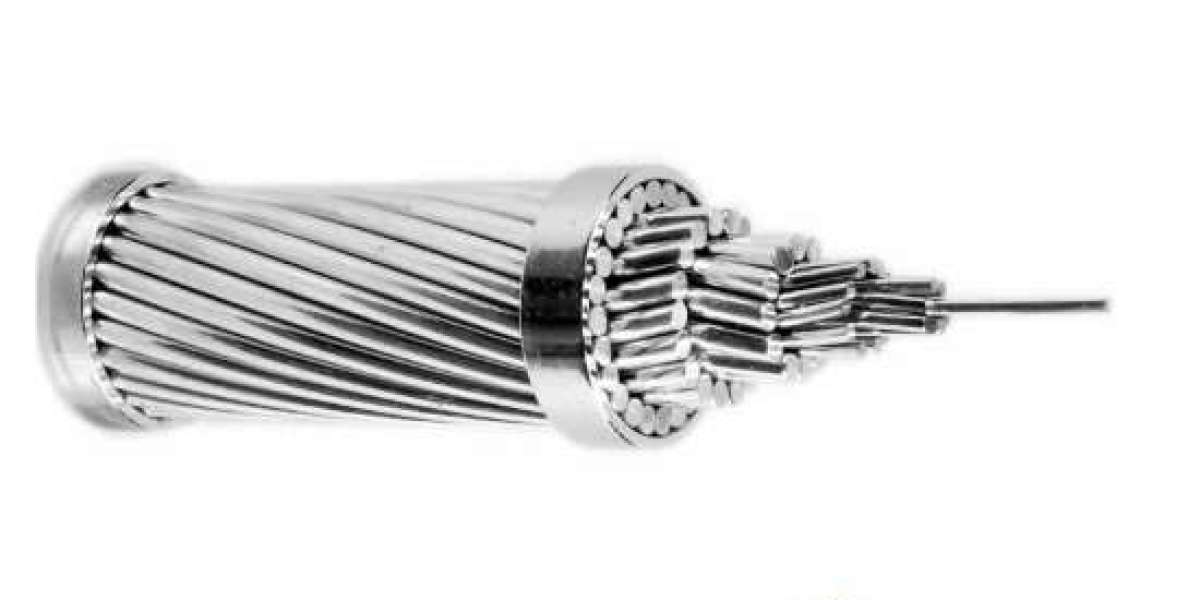

AAAC Cable and Wire systems are widely used in modern overhead power distribution networks due to their strength-to-weight ratio and corrosion resistance. However, in a recent field case study from a coastal distribution project, unexpected conductor sagging was observed shortly after installation, raising concerns among engineers and procurement teams.
The issue was not related to material failure but rather a combination of thermal loading, span miscalculation, and improper tensioning during installation. This case highlights how AAAC conductors, despite their advantages, still require precise engineering design to avoid operational issues.
Advantages and Design Expectations
AAAC Cable and Wire offer significant advantages over traditional aluminum or steel-reinforced conductors, especially in corrosion-prone environments.
In this case study, the expected performance benefits included higher corrosion resistance and reduced maintenance requirements, which are typical for AAAC conductors. The key advantages include:
- High resistance to corrosion in coastal and humid environments
- Improved strength-to-weight ratio compared to AAC
- Better electrical conductivity stability over time
- Lower long-term maintenance costs for utilities
However, the field incident demonstrated that even with these advantages, mechanical behavior such as sag must be carefully managed during design and installation phases. Improper assumptions about thermal expansion played a major role in the observed issue.
Technical Specifications and Field Observations
AAAC Cable and Wire technical performance is highly dependent on alloy composition, conductor stranding, and installation tension parameters.
In the studied project, the AAAC conductor followed standard ASTM B399 specifications with a typical aluminum alloy structure designed for medium-voltage distribution. Key technical parameters included:
| Parameter | Typical Range |
|---|---|
| Material | Aluminum-Magnesium-Silicon Alloy |
| Conductivity | ~52.5% IACS |
| Tensile Strength | 300–350 MPa (varies by grade) |
| Operating Temperature | Up to 90°C continuous |
| Standard | ASTM B399 / IEC 61089 |
Field inspection revealed that sagging exceeded design expectations by 8–12% after peak summer load conditions. The root cause was traced to underestimated conductor temperature under load, which directly increased thermal expansion and reduced mechanical tension.
This demonstrates that AAAC conductors require accurate ampacity and temperature modeling during the design stage.
Durability and Maintenance Considerations
AAAC Cable and Wire durability is generally high, but long-term performance depends heavily on environmental conditions and installation accuracy.
In this case, the conductor showed no signs of corrosion or structural degradation, confirming that material durability was not the issue. Instead, mechanical deformation due to sag became the primary concern.
Key maintenance insights from the case include:
- Regular thermal imaging inspections to detect overheating lines
- Periodic tension checks in long-span installations
- Monitoring seasonal load variations affecting conductor expansion
- Ensuring proper clearance compliance after installation
One critical finding was that sagging reduced ground clearance below safety thresholds in some mid-span sections, requiring post-installation re-tensioning. This highlights the importance of proactive maintenance planning even for high-durability AAAC systems.
Application Insights from the Field Case
AAAC Cable and Wire are commonly used in overhead distribution networks, especially in areas requiring corrosion resistance and moderate mechanical strength.
In this project, the conductors were installed in a mixed coastal–urban environment with long spans between poles. Ideal applications include:
- Coastal power distribution lines
- Urban secondary transmission systems
- Rural electrification projects with medium spans
- Industrial feeder lines exposed to humidity and pollutants
The sagging issue primarily occurred in longer spans exceeding initial engineering assumptions. This reinforces that AAAC conductors perform best when span length, tension, and temperature coefficients are accurately matched to real-world conditions.
FAQs
1. Why did AAAC Cable and Wire sag more than expected in this case?
The sag was caused by thermal expansion under high load conditions combined with insufficient initial tensioning during installation.
2. Does AAAC conductor quality affect sagging performance?
Material quality affects tensile strength, but sag is more strongly influenced by installation design, span length, and operating temperature.
3. Can AAAC Cable and Wire be used in long-span transmission lines?
Yes, but careful mechanical design and higher-grade alloy selection are required to control sag in long spans.
4. How can engineers prevent sagging issues in AAAC systems?
Accurate sag-tension calculations, temperature modeling, and proper installation tensioning are essential preventive measures.
5. Is sagging a sign of conductor failure?
No, sagging is usually a mechanical behavior issue rather than structural failure, especially in AAAC conductors.
6. How often should AAAC lines be inspected?
Inspection frequency depends on environment, but coastal or high-temperature areas should be checked at least twice a year.
AAAC Cable and Wire systems remain a reliable choice for modern distribution networks, particularly in corrosive or high-moisture environments. However, this field case study demonstrates that unexpected sagging can occur when thermal behavior and mechanical tension are not precisely engineered.
For engineers and procurement professionals, the key takeaway is that conductor selection alone is not enough. Proper system design, accurate load forecasting, and installation control are essential to fully realize the advantages of AAAC conductors in real-world applications.